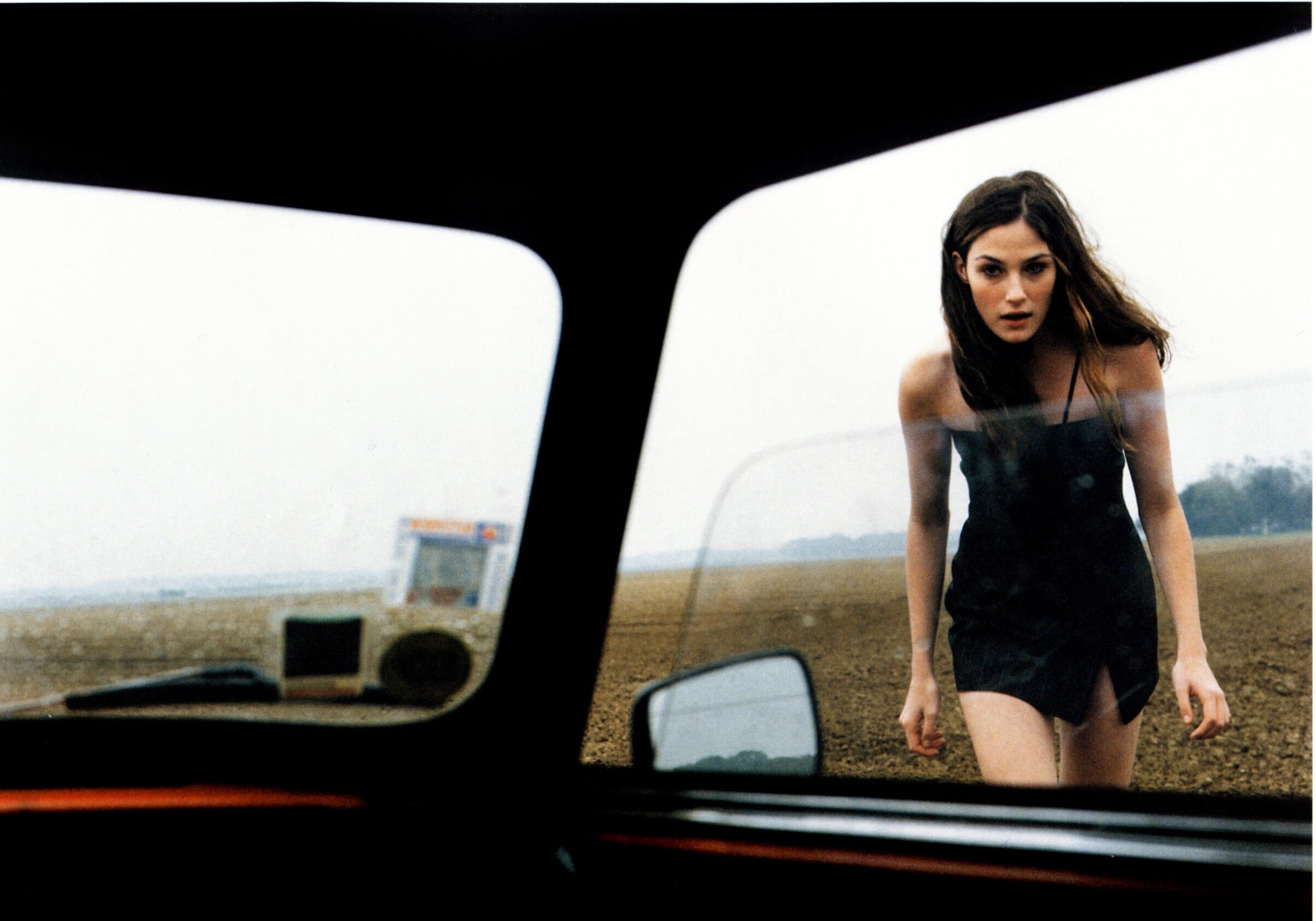
In Conversation With Model Haylynn Cohen


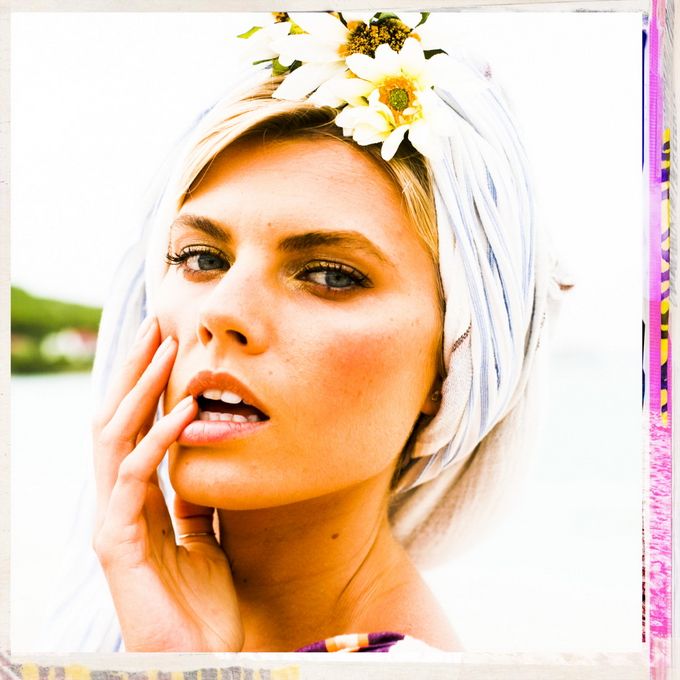
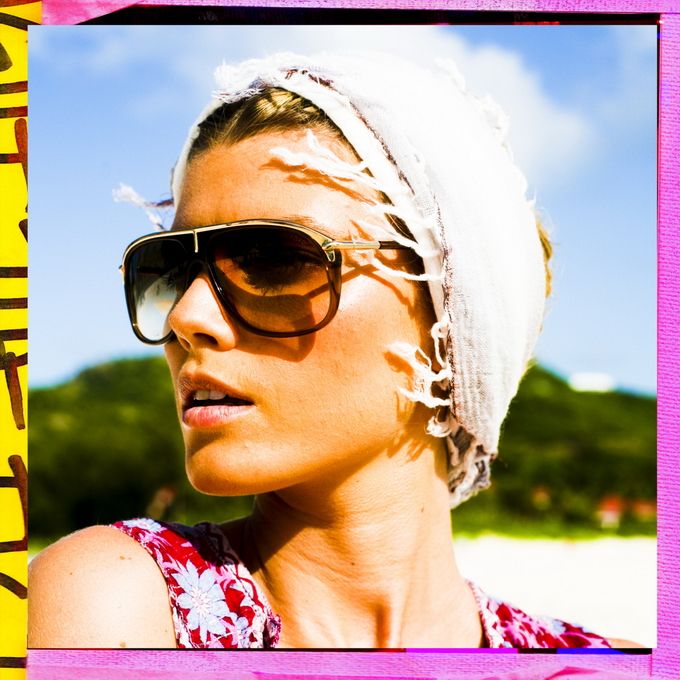
Brooklyn native Haylynn Cohen was discovered while skateboarding in a park and the rest is fashion history. Appearances on Vogue and in campaigns for Versace, Gap and Tommy Hilfiger soon followed. I caught up with Haylynn at her Malibu home to reflect on her career and find out what she is up to these days.

Can you talk about how you were discovered. What was your first job?

Sure. I was 15 in 1995. I had cut school from Lincoln High in Brooklyn and was skate boarding in Washington Square Park. I went to get a hotdog when Barbara Pfister, a casting director, approached me with a Polaroid camera. She said, “Hey, I’m casting for a Gap campaign with Mario Testino. Can I take your Polaroid”? I said no. She offered me a check for $200. I took the check and she took my photo. I went home and told my dad about the Gap shoot and he thought it was a scam. Two days later Barbara called me to say I’d booked the shoot. I took my skateboard with me and that was it.

Did you get an agent right away?

Mario took my dad and I to DNA and we sat down with them. They wanted me to drop out of high school and move to Paris. My dad, who is on the Board of Education, didn’t want to see that happen to me at 15 so we parted ways and I thought that was it. I’d had a fun experience and now it was over. I was fine with that ending.

We know now that it didn’t end for you. How did you go from walking away to getting signed?

Well, I went back to high school and a month or two later Barbara Pfister called me back for a shoot with Nathaniel Goldberg for W magazine. I showed up and several heads of top agencies were there. Some even sent gifts to my grandma and family, which I found odd. My dad set up some meetings but everyone wanted me to drop out of school and go to Paris. Faith Kates, the owner of Next, was putting together the new faces division. Tasha Tilberg was on the board as well as Emily Sandberg, Georgina Grenville and Sara Ziff. Joel, the head of the new faces division, and Faith said they would work around my school schedule. So I signed right then and there.

So what was it like at the beginning?

Every day we’d get a casting sheet, the call sheet and we would go to the appointments. We had our part. At the very beginning that was staying slim and being on time. Agents at the beginning know much more about the strategies of the job.

Who were some of your biggest supporters at the beginning? 

My agents were for sure because they wanted to get paid. A lot of photographers: Nathaniel Goldberg, Mario Testino, Juergen Teller, Craig McDean, Fabio Chizzola; There were so many. Designers would book you year after year after year. Nian Fish was also a great supporter.

Did you feel professional pressures with a seemingly quick ascent to the top?

No, though it was not a slow build, I stayed in school. There wasn’t a pressure placed on me to succeed. I didn’t understand what was being built. The pressures were more personal. I was camera shy. I felt uncomfortable wearing dresses, makeup and heels. I didn’t like the attention but I went with the flow.

What about weight? Did you have pressures with that?

I saw a lot of the girls not eating. I knew some of them struggled with eating disorders. Fortunately I didn’t struggle with weight or fitting the clothing until I turned 27.

What happened at 27?

My body changed. I grew up.

What was your experience with substance abuse?

I definitely went out at night. As a model I had a lot of access. It goes with the job. It wasn’t predatorily motivated, it was just there.

What about traveling. Did you experience loneliness?

I started traveling at 15 and my dad did go with me at first. The most difficult thing to leave behind was my friends and my first boyfriend. That hurt. A lot of models leave their hometowns, states and countries. I was fortunate in that New York was my home.

How did you cope with traveling alone?

I had art projects I would do in hotel rooms. I spent a lot of time alone. I’m not inherently social. I read a lot. During runway seasons I was with a clan of other professionals that I knew which was nice.

Models do travel alone. How did doing runway shows bring you together?

We had a common experience that bonded us. We all knew what it was like to run the circuit and sustain the demands of doing runway. We stayed at certain hotels and worked long and late hours, often from 6 AM until 2 AM having to walk the shows and complete the fittings for the next days shows. You know, we all shared that. We stuck together. We supported each other. I spent a lot of time with some models. 

Did modeling support your growth?

It did. In a way, modeling saved me. I had little direction at that time in my life. I was a skater kid. I one hundred percent rebelled against modeling and did everything I could to destroy it. I brought that to the table. Modeling did give me money but more importantly modeling gave me the freedom to explore. I experienced a lot and it gave me a work ethic.

Why were you so against it in the beginning?

It was definitely my nature at that time. I didn’t like what I thought fashion was about. I was like a kid rebelling against their parents. I rebelled against work. I rebelled against anything that came across my path.

Once your career took off did anyone talk about its expansion?

Creating a career of longevity was a big problem for fashion at the time. I think that was a big mistake that agents made with girls.  Most agents did not think long term. It was the era of the “it girl” and there were new ones every season. At that time the focus was making a name for the girl as quickly as they could to make the most money they possibly could before she was replaced. The pace was so fast. A lot of models burned out. I think the smarter agents are pursuing that conversation now.

Your moment certainly lasted a lot longer than most. At one point you were in an enviable position with editorials, runway and campaigns. Then you made a switch to shooting catalogues. Can you talk about that moment?

There was a conscious decision when I was about 22. I’d been working for eight years at that point. Eventually it was going to end and I wanted to use the opportunity to make money. My agent told me I could do Saks Fifth Avenue three days a week and make money but Mario Testino would stop booking me. I’d just been on the cover of French Vogue and she said it wasn’t a good idea. I’d been told my time would be over sooner rather than later so I took the money when I was at the height of my day rate and before it was off the table. I wanted the stability of having regular clients.

The general conception when you see a girl on the cover of Vogue is that she’s making a lot of money to be there. Is this a misconception?

Generally speaking, yes. There is a misconception that a girl who is shooting strong editorials is making a lot of money. When you see a girl over and over in magazine spreads she’s not making tens of thousands of dollars. She may take home a check for $250 and sometimes her travel expenses are covered. The money comes after a lot of strong editorial shoots with great photographers.

So let’s say she’s been doing really great editorial. What happens then?

Once they know that you’re bankable and fun to work with, they’ll say maybe lets book her for a Prada or Gucci campaign. Campaigns pay well. That’s where the money is for an editorial girl, that and runway shows. It’s definitely a strategically longer game with higher stakes than catalogue models.

How do you stay grounded?

It’s very difficult to lose focus of the ground because your nose is always hitting the pavement. There’s a misconception that models need only be beautiful and everyone around them will make their career happen. It’s very hard work actually. Decisions must be made that can make or break a career. Expectations are high and it’s constant.

Your first step into a new line of work happened when you opened a restaurant.

I needed space for something else to occupy my mind. The industry can be completely encompassing. I wanted to have a place to go to at night and hang out with my friends. So I did it. My boyfriend at that time helped. We had all my favorite foods. I cooked in the kitchen. I waitressed. I bartended and I modeled. All my friends would come and hang out after hours. It was really fun. It was a nice hangout.

There’s a renaissance of the mid-nineties models. Are they coming back on their terms?

They’ve made their money and have a name and can be a lot more selective. It’s a special moment seeing those faces again.

Do you have any plans to return full-time to modeling?

There are great clients that I enjoy working with and when they call I like to do it because it’s a good time. We know each other.

Thank you for talking with me. One last question that everyone wants to know, what are you doing now?

I’m into a lot of home renovations at the moment. I just finished a house that I love. It’s a challenge and every house has a problem that is messy and needs to be solved. It’s alive for me. I have two children and my life is simple and full. I enjoy it.
2013: The Year in Review

From Scott Lipps to Ben Watts to Paul Boche and Sibyl Buck, 2013 for The Cultural Omnivore was a year of bigger than life characters that reminded us why we love fashion. While the world was introduced to newcomers James Gatenby, Alex Michels and Maggie Maurer, feature interviews with the filmmakers of Girl Model and Versailles ’73: An American Runway Revolution pushed boundaries and challenged viewers to reflect and consider a more serious side of the fashion industry. Additionally, Rachel Blais and Edythe Hughes both have used their platform to advocate for model’s rights and be of service to their community respectively. For the more health conscious reader, Roger Frampton, Catherine McCord and Dana James provided a cornucopia of information.

I would like to thank everyone for their continued support and promise to deliver plenty more in 2014.

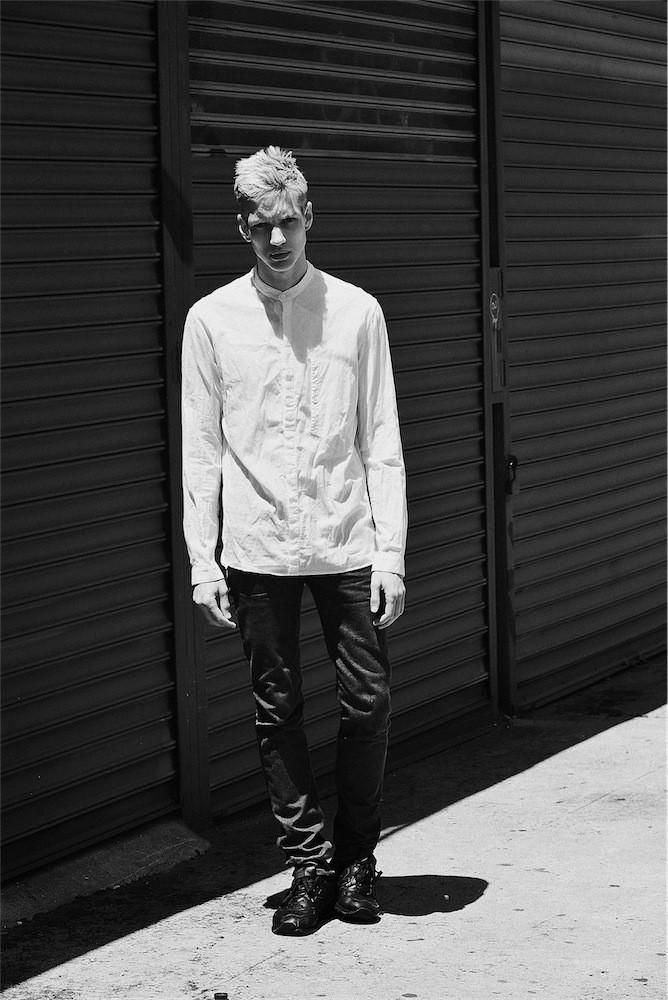
Paul Boche – Teutonic Beauty

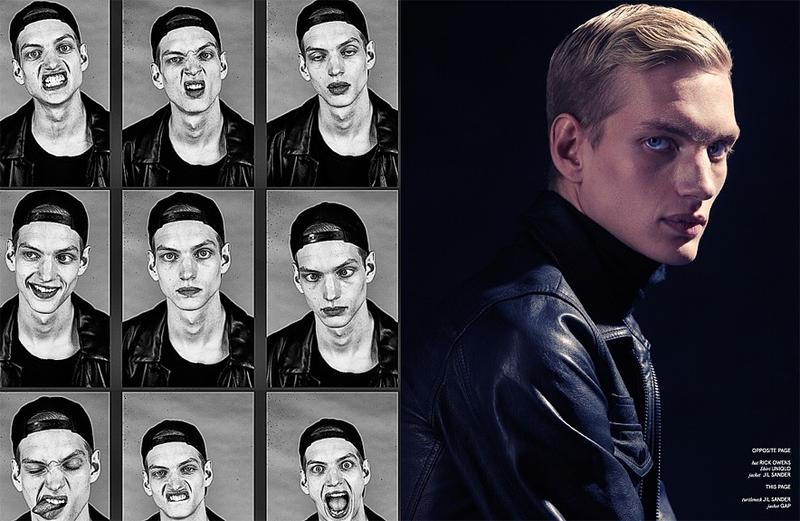
With cheekbones that could cut glass and bee-stung lips, Paul Boche has silently been climbing the ranks in the modeling industry. A starting role in the upcoming spring Kenzo campaign will further secure Paul a place in the upper echelons of fashion.  I spoke with Paul about his plans for the future and how his creative vision has evolved.

How were you discovered?

Some years ago I was doing a mandatory internship in Berlin.  I was still in school and had to take a two-week internship of my choice. During my lunch break I was scouted by someone who worked for an agency in Berlin.

If you weren’t modeling what would you be doing?

That’s a difficult question. I probably would have gone straight to university after graduating from high school, started studying one thing, then switched to another until I figured out what I wanted to do.  I think that ultimately I would have found my way to the Arts one way or another.

How do you handle the isolation that comes with modeling?

I enjoy being by myself. I am in a relationship and love the idea that two people connect and share their lives. I also think it is important to know what to do with yourself when you’re by yourself. I read a lot, study for the projects I am working on, and so on.

How do you define success?

Being happy. Also, if you can move people with what you’re doing and make a living, that helps. I also think it’s important to be a good person to the people who love you.

How do you handle the scrutiny and rejection that comes with modeling?

I think to myself whatever and carry on.

What do you do to decompress from the pace of modeling and refocus?

I like to spend time in nature. I particularly love the desert and the woods.

What have you discovered about yourself through modeling?

I’ve discovered how important professionalism is.

What are your goals and aspirations for the future?

My long-term goals are to have a family.  In the meantime,  I am working on a movie that is filiming in March.  I am also successfully staging a play, that I’m also in, that same month.

What would people be surprised to learn about you?

I have webbed toes on my right foot.  It sounds worse than it is; you can barely notice them.

What do you think is the biggest misconception about modeling?

That models are stupid.

Paul is represented by Fusion Models

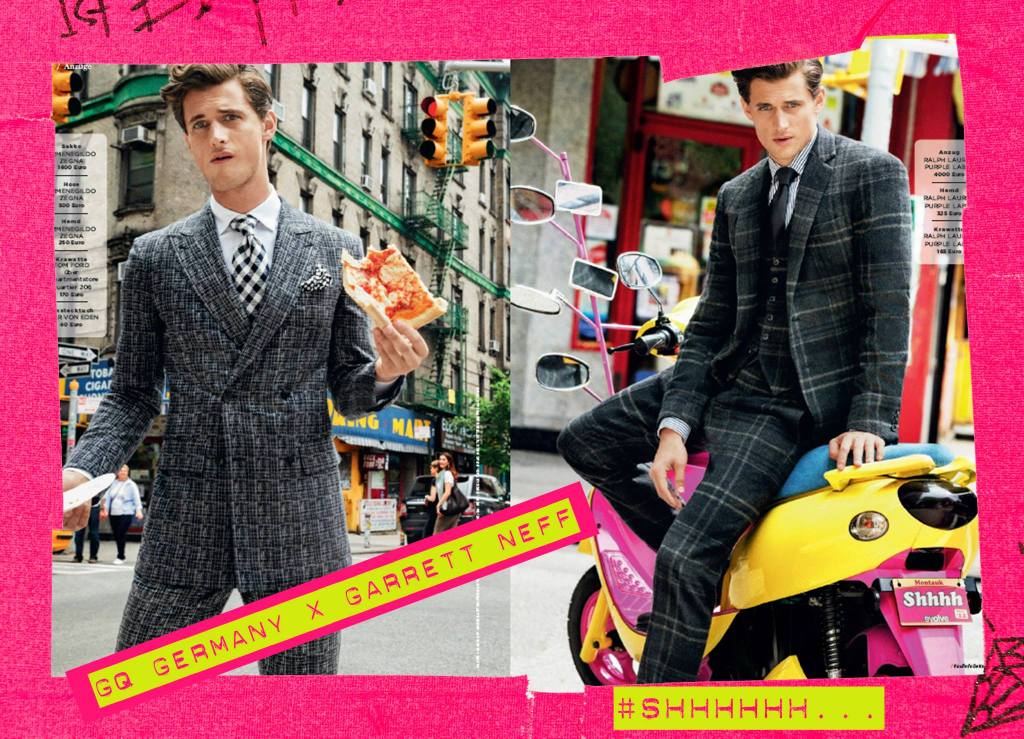
Shhh! Ben Watts Talks Fashion and Photography

English-born photographer Ben Watts was raised in Sydney, Australia before moving to New York in the nineties.  Most notable for his work with GQ, Victoria’s Secret, Rolling Stone and Gap, Ben continues to innovate and bring arresting images to the forefront of fashion. Ben spoke to me and Emily Sandberg about his foray into photography and how complacency isn’t in his vocabulary.

How do you think your upbringing in Australia influenced your style of photography?

I grew to love being outdoors, the bright colors and the energetic beach lifestyle.

When you first arrived in NYC, what was it about Hip Hop culture you found so fascinating?

I was fascinated by the energy, the flamboyant showmanship and the lifestyle.  It’s all very in-your-face and nothing modest about it.  I loved it.

Having shot editorial stories, advertising campaigns and portraiture,  is there one arena you feel more comfortable in than others?

I like to think that I am comfortable in all of them, although, I treat every shoot as a new challenge. There isn’t an easy day, but there is never a hard day when you love your job.

How do you feel about the evolution of photography to digital?

I think its great. It made photography and an immediate medium, taking away the anticipation of waiting on the processing.  Sadly though, it has killed Polaroid which was a major part of my love of photography.

Karl Lagerfeld said “[We are] easily in a period of over-retouching… Some models [end up] look[ing] as if they are coming out of a funeral parlor, all life taken out of the face, I hate that.” What are your thoughts on the idea that Photoshop has ruined fashion photography?

I agree. I do very little retouching to my images and I try to make them look the way I want when I actually take them.  The beauty of a model is who she is, not who you can make her with technology.

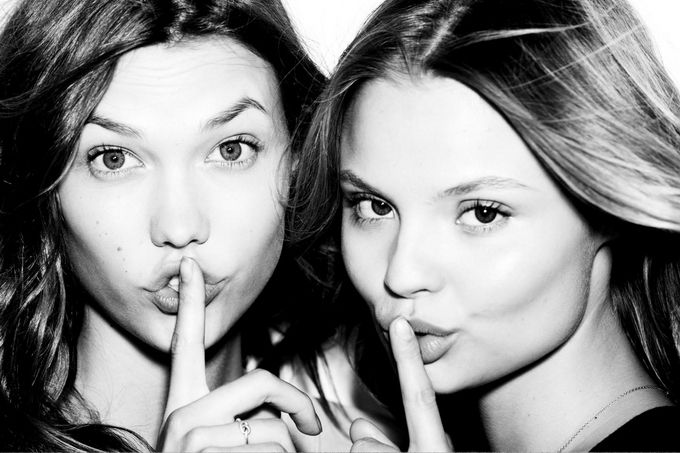
On Twitter you’re known for the #shhhhh photos where you take photos of models and celebrities making a shhh gesture. Where did the idea for this originate?

Shhhhh…

Your Photo Booth project started with a Hipstamatic lens and is now being strategically placed outside events. What do people love so much about this experience?

People love getting their picture taken!  They love the experience of a photo shoot and the attention.

Where did the idea for your branding of the diamond come from?

Just the opening pages of my last book Lickshot.  I was playing around with some tape as I have a tendency to do and that was that.

You studied Visual Communication at university and fell in love with scrapbooking and collage. How did you end up embracing photography and why?

Really it was a natural progression.  I love visual energy and it was only a matter of time before I started making my own images.

You once said, “Never become complacent in order to stay competitive”.  Tell us more.

This goes with anything for me.  You need to always challenge yourself in order to better yourself

Your relationship with MILK studios started with the conception around the space. Their space, internship program at Parsons and ART gallery has created a subculture in the photo community. Can you tell us more about the intention and your relationship with Ben and Rozzi?

I am not an owner or partner at MILK.  I have known Rozzi forever and we have both grown up in the industry together.  There is loyalty program that we share.

Follow him at @WattsUpPhoto and Facebook

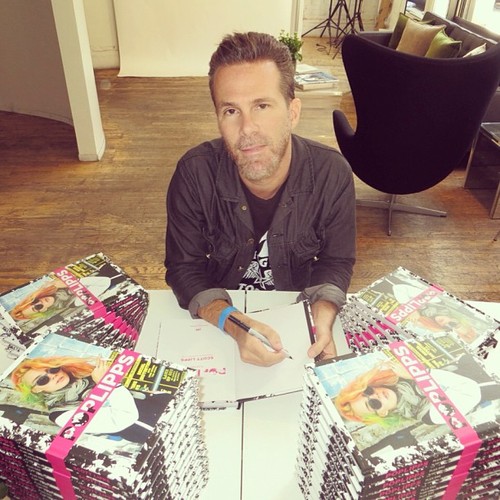
Scott Lipps On His New Book Poplipps: Plus One

Model mogul, Scott Lipps, represents some of the biggest names in the business.  Name checking the likes of Claudia, Eva, Helena and Bridget Hall, Scott’s presence isn’t just limited to managing one of the hottest agencies on the planet.  Scott’s influential blog is serialized in Interview magazine and now in his new book Poplipps: Plus One.  I recently caught up with him to get the low down on his new venture and what to expect from him in the future.

You have a dominant presence on social media.  Did you always want to create a book and how did Poplipps: Plus One come to fruition?

To be honest, it was from the urging of my publicist.  The blog was not my initial idea but when Tumblr put it on their spotlight and it started to get heat and develop a loyal following I devoted every morning from 7 – 8 AM, just about, to it over the last few years.  The book came about via the blog and the publisher actually offered us a deal after the first lunch meeting as he was familiar with it.  Colette and Fred Segal have signed on to the carry the book as well as lots of others so it’s really exciting!

How do you feel about the media’s preoccupation with celebrity?

Celebrity is a reality of our culture today.  Reality stars are on the cover of the biggest magazines in the world and people are becoming celebrities due in part to social media, it can’t be avoided.  You either figure out the future of where media is heading or you get left behind.  I’d rather figure out where it’s going.

How do you see this book as an extension of the Scott Lipps empire?

I’m flattered that you think it’s an empire but I do feel it’s a direct extension of the brand.  The book features countless models, supermodels, celebrities, musicians and lots of people we represent so it just further solidifies the ONE brand.

How is the perspective of this book unique?

I’ve never seen a book done from the perspective of an agent or manager or from the drummer’s perspective of being on tour.  Although there is a heavy emphasis on fashion here, there have been countless books on fashion before,  I think this might be the first photo book from this perspective

What projects can we expect to see from you in the future?

Definitely expanding the entertainment celebrity division we have, breaking more great models, more music from Courtney Love and more branding of the great people we work with.  Stay tuned, 2014 is around the corner!

Poplipps: Plus One is in stores now