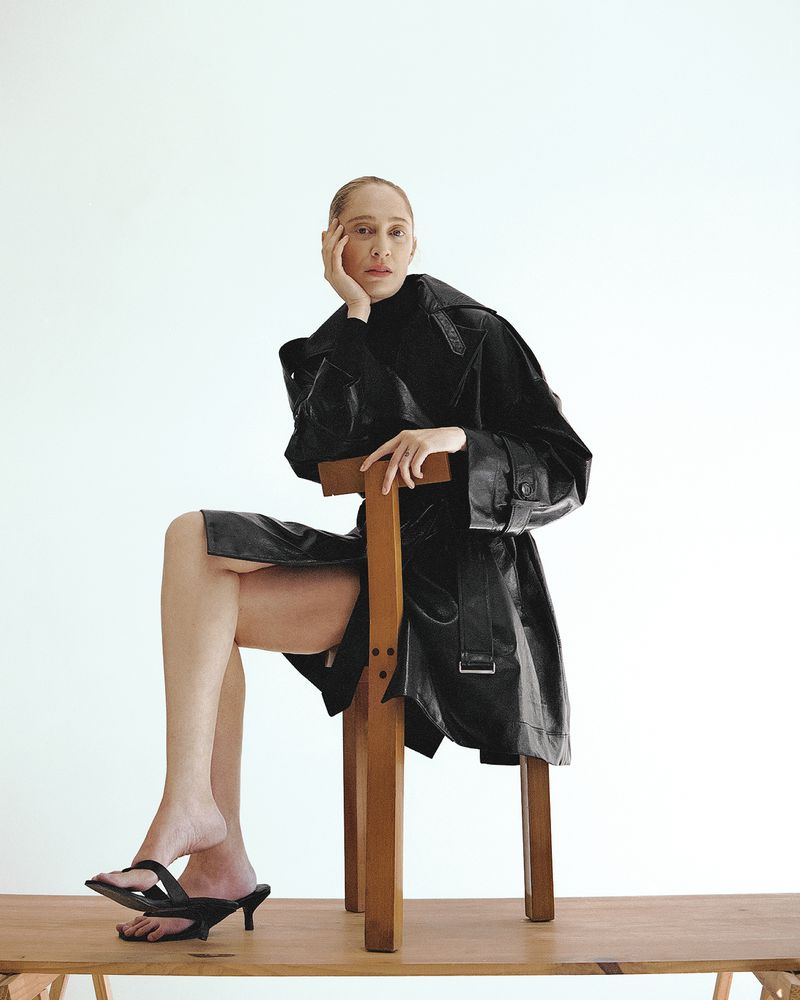
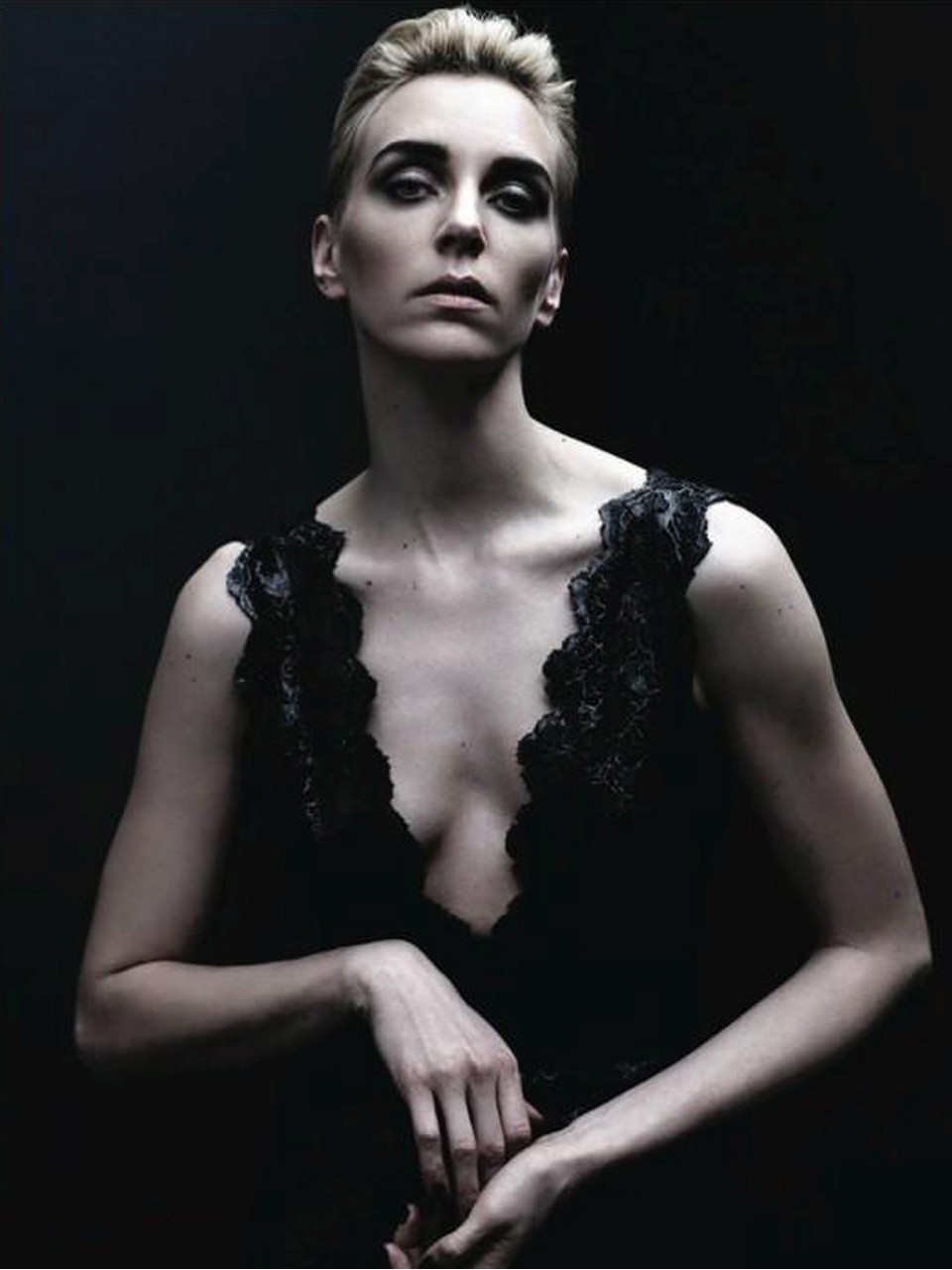
Leila Goldkuhl Gets Real

As an alumna of the most well known modeling show in recent history, Leila Goldkuhl defied naysayers debuting as an exclusive for the S/S 2016 Givenchy show. In addition to stalking the runways of every major fashion house, Leila has been immortalized in advertising campaigns for Tom Ford, Alexander McQueen, Calvin Klein and numerous others. Further cementing her career is a place on both Models.com’s Top 50 and Hot List.

The mother of three opened up about her career beginnings and the challenges of navigating the ever changing world of modeling while maintaining her authenticity.

You’ve had quite an impressive journey in the modeling world. What initially inspired you to pursue modeling, and how did you get your start?

I’ve had an impressive journey, and sometimes I have to remind myself of that. The world moves so quickly—we’re always focused on what’s next—and I’m trying to allow myself time to reflect on all the amazing opportunities I’ve had and understand that life ebbs and flows.

If I’m being honest, growing up I didn’t have a clear path in mind for where I wanted to go in life. Nothing I tried to focus on caught my attention. But I had this internal pull telling me that this industry was where I needed to be. I just didn’t know how to get there—until I did.

Competing on America’s Next Top Model must have been both thrilling and challenging. What was the most unexpected part of the experience, and how did it shape your career afterward?

If you had asked me this question even a few months ago, I might have skipped over it entirely. It’s only recently that I’ve allowed myself to be open about that experience. I’ve been with my husband for—I think—10 years now, and he had never watched the show until a month or two ago, when I finally felt ready to let him see it. That moment pushed me to speak openly about the whole experience on my TikTok account. It’s been really therapeutic to finally let that wall come down.

Feeling shame and the compulsion to reject the experience—that’s what I’d say was the most unexpected part. At the time, I thought ANTM was the only way I could break into the industry. But once it was all happening—like many things—it wasn’t what I thought it was going to be. I never imagined—after leaving the show—I wouldn’t want people to know I was on it. I felt that in order to have a career in this industry, no one could know I was part of the show.

Every career has its ups and downs. Can you share a moment where you faced a major challenge in the industry and how you overcame it?

There have been more ups and downs than I can count. It’s constant. I’d say the ongoing challenge for me is balancing motherhood and my career. I haven’t found the secret to overcoming that obstacle, but I’ve learned that you really need to advocate for yourself to make anything happen.

Social media is a major factor in a model’s career. How do you feel about the influence of platforms like Instagram on your career, and do you feel it has changed the industry?

Oh my gosh—I think about this a lot. I’d prefer to be on set with a crew, collaborating face to face. I love that modeling lets me show up, do my job, meet new people, and then go home. My life outside of work can be my own.

Social media changed that. Now we’re expected to have a constant online presence, which can take away from real life. I don’t want to sell my private life for clicks and views.

It’s also shifted budgets from traditional shoots to influencer content. The other side of that coin is that it gave everyday people a way to support themselves and allowed smaller brands to grow without massive ad spend. It’s a trade-off; one that, honestly, I don’t think falls in my favor.

If you could give one piece of advice to aspiring models trying to break into the fashion industry, what would it be?

A lot of times, it feels like success is based on luck—on who you know, and who’s willing to support you. Every story is nuanced and unexpected.

If you can go into it being exactly who you are, without trying to be who you think everyone wants you to be, it’s going to make the whole process so much easier and more enjoyable. And just enjoy every opportunity—as it’s happening and after it happens. This industry has a way of making you feel like you need to keep up with everybody else. There will always be judgment from the outside, but if you can stop that judgment from creeping into your own thoughts, you really can’t lose.

What upcoming projects or collaborations are you excited about, and what goals do you have for the future?

I’ve wrapped up a few projects I’m excited to see released. But more monumental—I’m preparing to launch my own mother agency! It’s something I’ve felt called to do, and it finally feels like the right time.

I’ve seen every side of this industry, and if I can use that experience to help guide other models, all the ups and downs of my own career will feel that much more meaningful. So keep an eye out for that!

While modeling has been a huge part of your life, what are some other passions or hobbies you pursue outside of the industry? How do you balance it all?

As a mother of three, a lot of my time is focused on my children. I’m incredibly passionate about motherhood and raising them. It doesn’t leave a lot of free time for myself, but now that my youngest is two, I’m finally starting to feel I have more space for hobbies and personal interests.

Last year, I picked up pottery and I immediately fell in love with it. I had to put it down when life got a little crazy, but I’m starting to pick it up again. I also have a love for curating unique and vintage clothing and small decorative objects.

In my tiny sliver of free time, I’ve been stocking and merchandising my pieces at a local antique mall—Oceanside Antiques and Collectibles. I’m still learning how to balance it all. Sometimes, I just have to put things on the back burner to focus on more pressing matters, and then pick them back up when the time is right.

Follow Leila on Instagram, represented by Marilyn NY
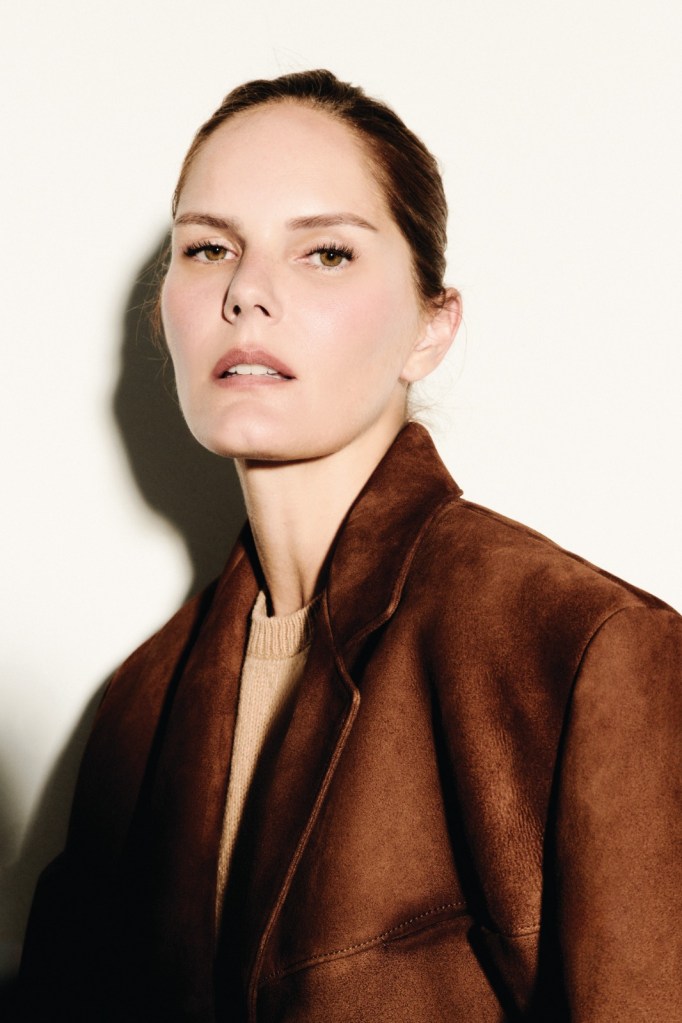
Marcelle Bittar: From The Runway to Redefining Wellness

A favorite of legendary photographer Mario Testino, Marcelle Bittar was part of a coterie of Brazilian models who dominated the runways in the early aughts. With sultry good looks and unrelenting sex appeal, Marcelle featured prominently in the pages of Vogue, on the runways of Europe, and in advertising campaigns for Ferragamo, Carolina Herrera, Armani and a slew of others.

In between managing an active modeling career and motherhood, Marcelle is a practitioner of integrative nutrition. In an era dominated by influencers hawking snake oil, breaking through the noise can feel hopeless. Taking an evidence-based approach to her consulting, Marcelle offers a no-nonsense alternative to trends and unfounded promises.

What drew you to study integrative nutrition after building a successful career in modeling?

After many years in the fashion industry, I realized the importance of taking care of yourself from the inside out. Becoming a mother also shifted my perspective—I wanted to understand more about how our bodies work and how to nourish them properly.  It’s not only about being skinny but about being healthy and happy with who you are. I’ve always loved learning, and integrative nutrition felt like a natural next step for me.

How did your time in the fashion industry influence your relationship with food, body image, and wellness?

The fashion world can be intense when it comes to appearance. It taught me discipline but also made me reflect deeply on what health truly means. Over time, I learned that true wellness isn’t about extremes—it’s about balance, self-respect, and listening to your body.

What does integrative nutrition mean to you, and how does it go beyond just what we eat?

To me, integrative nutrition is about seeing the person as a whole. It’s not just focusing on food, but also on emotions, sleep, stress, relationships, and lifestyle. It’s a more complete and compassionate approach to health.

Were there any personal health or lifestyle experiences that sparked your interest in nutrition and holistic wellness?

Yes, becoming a mother was a turning point. I wanted to be a better version of myself, for both me and my daughter. Also, after years of traveling and working nonstop, I felt the need to reconnect with my body and well-being in a more meaningful way.

What are some common nutritional myths or misconceptions you’ve encountered?

There are so many! One of the biggest misconceptions is the belief that being thin automatically means being healthy, and that’s simply not true. Health goes far beyond appearance. Another common myth is the idea that you need to completely cut out carbs or fats. Both are essential when chosen with quality and balance. 

And, of course, the misconception that healthy eating has to be restrictive, boring, or all about constant sacrifice. True nutrition is about nourishment, balance, and building a lifestyle that supports both physical and emotional well-being.

What impact do you think social media has had on health information?

Social media has made wellness more accessible, but also more confusing. There’s so much information and misinformation out there.

That’s why I believe it’s important to have qualified professionals sharing balanced, evidence-based guidance. Be careful who you follow!

What’s one daily wellness habit or nutritional tip you swear by that you think more people should try?

I believe everyone should start the day with presence—taking a moment to breathe deeply upon waking and setting a positive intention for the day. A big glass of water first thing in the morning is a must. Throughout the day, take care of your gut—it’s truly your best friend. Nourish your microbiome with fiber, fruits, vegetables, and fermented foods. A healthy gut means better energy, mood, immunity, and overall well-being. These small habits make a big difference in your energy, mood, and overall health.

What projects are you working on that you can share with us?

After taking some time off, I’ve recently returned to working as a model, and now I’m balancing my time between fashion, my nutrition practice, and motherhood, always making my family my top priority. I’m also focused on creating content that connects beauty, health, and lifestyle in an authentic and approachable way.

Follow Marcelle on Instagram

Leilani Bishop: Championing Conservation And Its Vital Role In Our Future

A quintessential beauty, Leilani Bishop epitomized the All-American aesthetic of the ’90s with cut-glass cheekbones and a doe-eyed accessibility as she fronted campaigns for Tommy Hilfiger, Ralph Lauren, and Versus among a slew of others. Immortalized on the cover of Hole’s album Live Through This, Leilani further cemented her place in pop culture as she embodied the manic prom queen as an homage to the classic 1976 film Carrie directed by Brian De Palma.

As co-owner and president of the Yacumama Forest Carbon Project, Leilani has dedicated herself to protecting and conserving the tropical lowland floodplain forest of Yacumama.

Walk us through your involvement with the REDD+ carbon project.

The land in the Peruvian Amazon on which the project is founded has been in my family for over 30 years. My father has always been a lover of the land and felt we are all stewards of this earth. The project originally started—and is still to this day—primarily a conservation project that the Yacumama Forest Carbon Project funds.  Originally, it was an eco-lodge and an outpost for non-governmental organizations (NGO’s) and scientists. My father passed away in 2024 and left the project to me and my siblings, so we are now directly responsible for all of the conservation efforts.

The REDD+ initiative has gained attention for its role in reducing emissions from deforestation and forest degradation. How do you believe REDD+ can create meaningful change in the fight against climate change?

Much of the destruction of the natural world and forests is driven by financial gain; hopefully, this will serve as an incentive for others to conserve rather than destroy.

One of the key goals of REDD+ is to balance the needs of local communities with environmental sustainability. How does the project ensure that indigenous and local communities benefit from these conservation efforts?

Our project is next to a local indigenous community that we have worked with before we were a REDD+ project.  The land and the waters that we are conserving are where they fish and hunt. We also employ members of the community and help with needs that may come up, such as health resources or building new water systems. 

Climate change is a huge global issue, and your work has a focused, grassroots approach. How do you balance the global urgency of climate action with localized, community-driven solutions?

It can all be overwhelming, but if we can all hyper-focus on our lives, environments, and our impact with our dollars it can make meaningful strides towards better practices. All areas need help so instead of spreading thin and trying to do it all, if we all can focus on our unique gifts and strengths, hopefully, it can all start to make a difference collectively.

What do you hope to see as the most tangible change in the next decade, both in the field of conservation and in terms of global environmental policies?

I hope that governments offer better protection for these lifelines, such as the Amazon and the oceans, so that we don’t have to—as individuals—fight loggers and corporate greed—which are getting support from corrupt governments.  As always, the problem is systemic, and we need countries and leaders to do better.

Beyond REDD+, what other projects or initiatives are you currently working on that you’re particularly excited about?

Since that has taken such a serious role in my life, I have been trying to have as much creativity in all other aspects of my life.  I’ve returned to improv and acting again, and I have some fun projects coming up. As well as exploring all the creativity I can, from writing to ceramics and of course modeling. I feel so lucky to have so many avenues I get to explore while the Amazon project gives me real purpose.

If you are interested in writing off your carbon footprint and/or supporting conservation in the Amazon, you can find us at Climate Trade.

Follow Leilani on Instagram, represented by Marilyn NY

Talytha Pugliesi On Modeling And The Future

“Growing up in Brazil was fun, although I don’t remember much”


Talytha Pugliesi, the Brazilian bombshell, broke onto the modeling scene in the early noughties making her debut at the Christian Dior runway show. She has starred in blue chip advertising campaigns for Valentino, Celine, Sonia Rykiel, and Thierry Mugler in addition to countless runway shows. Nowadays, the model cum actor spends her time advocating for marijuana decriminalization, and bringing awareness to mental health issues.

Tell us about your childhood growing up in Brazil.

Growing up in Brazil was fun, although I don’t remember much. I was really close with my two sisters. My mom was so young—she did the best that she could for us—but at the time, it felt more like an adventure. We didn’t have a lot of structure at home, and aside from my parent’s divorce and a few other struggles, things seemed OK. During that period, I remember using my grandmother’s corridor as a catwalk to practice my walk.

Tell us about how you got into modeling.

My sister says modeling had always been my dream. I can’t recall, but I think she’s right. When I was fourteen years-old, I enrolled in dance classes at a place where they also had “modeling lessons”. One day I was invited to participate in a contest they were holding and whoever won was offered a contract with Ford models. I then had to wait until I was fifteen and had my braces removed before I could start to work. I was really happy at the time. 

As a part of the Brazilian wave of models that dominated fashion in the early 00’s, what do you remember about that period of your life?

I remember working a lot with hardly any days off. I was living my dream, traveling a lot, and working with the best in the business. Life was a lot of fun, although now I can see I didn’t enjoy it as much as I should have. I also remember the energy that surrounded the successful models. It was like we were from another planet. 

Can you tell us about the challenges you faced navigating success at a young age.

I was really young when I left home, and I didn’t have the financial skills to handle the money I was making. My family wasn’t much support either because they didn’t know how to handle the business side of it. There was also the rejection that came after my success, the loneliness of being away from my family for long periods, and the different forms of harassment I faced that I didn’t realize until years later.

What was the moment you realised you had made it?

I think it was when I did the Gucci show when Tom Ford was still there. We knew it meant something huge at the time, and I felt so happy to be in it. There were many other moments but this one was really special. To be honest, I only recently realized what I had and how special that was. Sometimes life, and the business, puts you down and makes it hard to recognize your accomplishments. Today I see it clearly, but then I was filled with doubt.

Who were your biggest advocates?

My mom and my sisters. My brother was too small at the time. 

What did you discover about yourself through modeling?

I’m so grateful for my career and how everything went because it gave me the opportunity to learn and grow so much. I learned I’m strong, independent, resilient, beautiful—I didn’t think I was at the time—and that I’m still good no matter how I’m treated. Through modeling I built my self-esteem, self-love, confidence, my warrior side, and I learned a lot about rejection.

If you think of your life in chapters, what do you want to achieve next?

I’d love to live in Europe again, to feel healthy and stable—with my bipolar disorder—and to be at peace with myself. I also want to feel fulfilled doing something I love. 

What would people be surprised to learn about you?

I study shamanism, spirituality, and herbalism among other things. I’m an actress these days. I speak openly about mental health. I’m also an activist for marijuana decriminalization, and I constantly speak out against the Bolsonaro government. 

Follow her on Instagram

Hannelore Knuts On Modeling And Mindfulness

“I had no clue what fashion was.”


As one of the most successful and enduring models of a generation, Hannelore Knuts’s appeal has outlasted trends and the fashion industry’s insatiable need for novelty. The reluctant supermodel was doggedly pursued before she relented and agreed to give modeling a try. What chance did she stand against kismet? As a model, artist, and now mindfulness and compassion meditation teacher, Hannelore’s journey through self-discovery encompasses everything she does. I caught up with her via Zoom from her home in Antwerp to reflect on her beginnings, shortcomings of the fashion industry, and what place creativity has in a capitalist society.

Let’s start with how you were discovered.

I was a photography student at the academy where we also have a famous fashion department. I ended up on the catwalk there before anything else. A lot of people kept telling me I had a good face and could have a future in modeling, but I wasn’t interested. A few months later, there was a Post-it note dropped in the mailbox of my student flat—by an ex-student who then worked for Veronique Branquinho, who was having her first show in Paris—looking for models. I was a student who didn’t have any money and they were offering 500 Belgian Francs—which isn’t a lot but as a student it was to me—so I went for it. The bus left the next day and I went to Paris for free and get a free meal, so I thought it was good. In Paris there was an international scout, and a Belgian journalist who both spotted me. The journalist wanted to make a documentary about new models and she wanted to do it on me but I told her I wasn’t interested. Weeks later, she came back and told me she found other models to fill up the documentary but I was the one with the connection to the Parisian scout. I agreed to participate to get her off my back.

Would this have been the era of Anouck and Delfine?

No, that was way before. The documentary still exists somewhere in a far corner on the internet. The Parisian scout immediately saw I wasn’t interested—and to be polite—he suggested I visit an agency in Belgium. On the train homeI asked the documentary makers if we were finished but they insisted I register with a Belgian agency to complete the documentary. The next day I went to an agency and signed with them and went home.  Many weeks later, the agency called and told me they believed in me and that show season was starting soon and asked if I would go. I agreed to give it a try. My first show was Alexander McQueen in London, and then I went to Milan and did one casting and I got an exclusive for Jil Sander. Then boom I was doing seven shows a day. Suddenly I was on this roller coaster and there wasn’t a way to get off.

Were you aware how successful you were at the time?

I had no clue what fashion was.  It was pre-internet so the only way you knew about fashion was if you were really interested, and especially in a small town in Belgium Vogue wasn’t in any news. You had to go to a specific shop to buy it, so it’s not something you came across. The only thing I knew about fashion was Gaultier, because he designed Madonna’s conical bra, and Chanel. My first season was so overwhelming. I remember being angry at my agent and thinking when do we stop and eat? I was doing seven shows a day and then after Fashion Week in Milan and Paris I couldn’t go home because I had to do a photo shoot. At some point—maybe in my second season—I realized I knew Kate Moss and Naomi Campbell, and it started to dawn on me at what level I was. During my first shoot with Steven Meisel I didn’t even know who he was. 

He’s so influential in terms of making careers. Do you think it was a blessing you weren’t aware of who he was? Do you think you would have been too self-conscious to perform if you did?

Yeah. Especially in those times I was still figuring out who I was. I already felt like they picked the wrong girl. My insecurity and fear of saying no was bigger than my shyness. I thought I would just do this because I didn’t want to say no. Before I shot with Steven I shot with Inez and Vinoodh. That was a beautiful gift because they were Dutch and spoke Dutch like I do. I still had no clue what I was doing, but it was nice to hear that familiar language. They helped me a lot in finding comfort in front of the lens. They guided me and taught me how to hold my hands and how to point my ankle like this or that. It became very mathematical almost, and they gave me space to translate it into my own. It was really beautiful to have them as my teachers in a way. 

Who were your biggest advocates at the time?

Inez and Vinoodh, for sure, because they booked me for the Yohji Yamamoto campaign and I had a few photos in my portfolio. Obviously Steven Meisel, but there was also Steven Klein, Victoria Bartlett, and Martine Sitbon. As for models there was Stella, Erin, and Kirsten. I always also said to my agent that I wanted my career to be like Kirsten’s career. Stella and Erin were the first ones to approach me backstage.

That’s refreshing because you are all competing against each other to book jobs. Did you experience rivalry?

I never experienced jealousy or nasty behavior among the girls. Of course you’re disappointed if you don’t book a job—I want to pay my bills too or I want to have that job because my ego wants to be on that billboard—but I never experienced nasty behavior toward me. But it is true, that as a model, you do get to deal with rejection and comparison.

I think when you’re young, you try to find your own coping mechanisms.  After a while you realize you have to deal with it. I think that’s what you’re seeing now. It’s really good how girls are doing the work and how it could be a really beautiful example for everybody. We live in a competitive culture, and we think that it’s the best motivator. I hope we soon realize it’s not because you lose so much energy in competing. Sharing your doubts and helping each other grow is much more sustainable.

I read your Instagram post about wage transparency. So let me ask, how do you advocate for yourself? How do you say no I’m not doing that for free, and why speak out now?

Well, first of all, because of my own personal journey, I feel better in my skin. I meditate daily, so I have a clear vision. I am allowed to have a voice and it’s okay if you don’t like it but I’m allowed to have one. I haven’t been working that much—because I’m saying no a lot— and I know that is harmful to my career. You constantly think is this the end of my career? There is no end in a model’s career. If you ask me, then I’m a model again, and if you don’t, then I’m a mom or whatever I’m doing at the moment. I don’t know why I posted it specifically on that day. I had it ready for a long time. I posted it without thinking about what the consequences could have been. Maybe that’s good because things need to change.

It’s not only that my face has proven its worth in sales, but there is a skill to modeling. When I work with young photographers—who only work with young girls—the day goes fast because I know what I’m doing. I deliver more than they ask. It’s not only the profit they’ll make, it’s also the skill that I bring to the table and the added value. I think it’s a shame the craft is being lost. I’m not saying young girls are supposed to know how to do it—they need to grow into it. I look at my early modeling photos and I see a different model than what I am now.

I think people often forget you are somebody earning a living. There’s this perception that if you’re a successful model you should shut up and not complain.

Also, I’m not even getting paid. The things considered perks like going to parties or getting paid in samples doesn’t pay my rent. Everybody thinks I’m rich—and maybe I could have been—if I wasn’t 20 and not knowing how to budget. I had a period of time when I made money and that’s why I am not struggling, but I definitely need to have an income. I plan on living a long time and I don’t have enough money to just go sit on a beach for the rest of my life. 

It doesn’t add up and people try to make you feel guilty. When I moved back to Belgium people expected me to work for free because we were friends. Even if I was rich that doesn’t make me your property and you can’t just use. I wanted to make that clear to people. I’m a business owner and I’m trying to keep my business afloat. And the way it is structured now is not working. Yes, I could choose to go do another job, but that’s also easier said than done, and why should I have to? I actually happen to like this job.

The world is not only nine to five. People who like to paint are just as important as people who like to do plumbing or whatever. That’s another thing we keep forgetting, the value of creativity and the value of expression. It all has gotten down to numbers. It needs to be numbers, numbers, that’s what’s killing it. I hope we find a way and we just all have to wake up a little bit and try to stop this capitalist mindset.

Follow her on Instagram