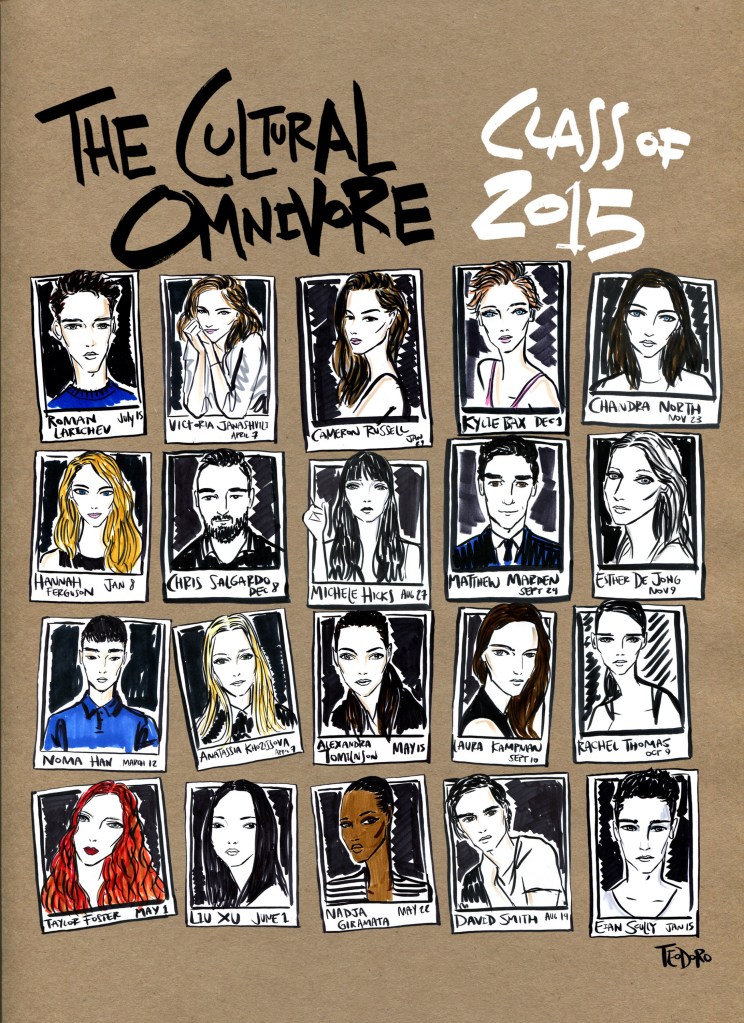
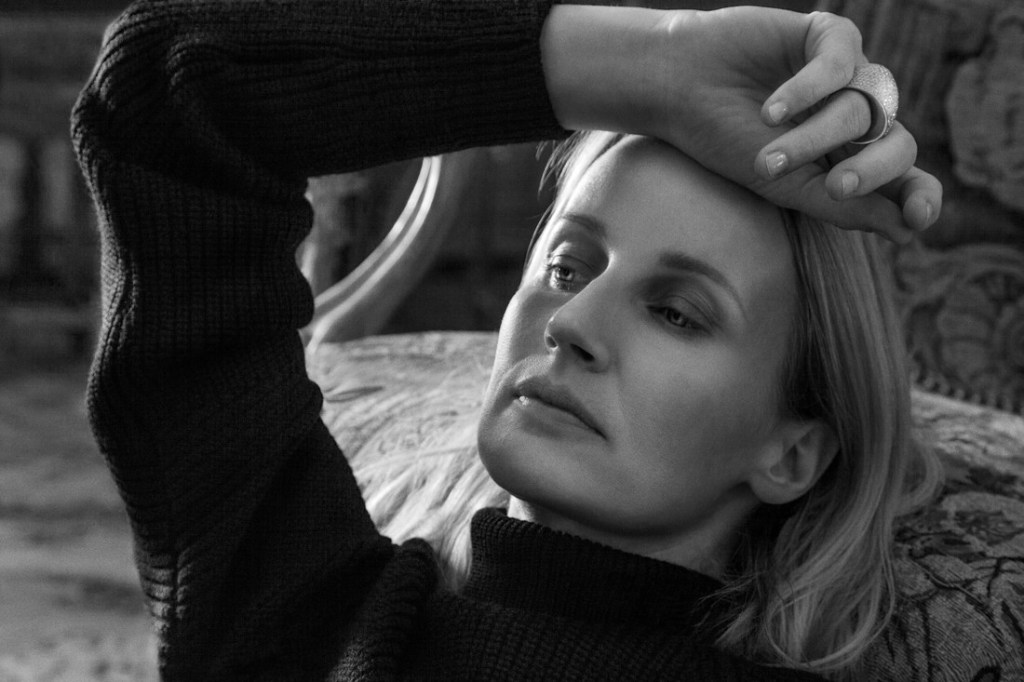
Two thousand and fifteen was a fantastic year for The Cultural Omnivore, thanks to everyone that has contributed, collaborated and encouraged me throughout this endeavor. I am so grateful for your continued support.
We spent a day in the life of Details Fashion Director Matthew Mardenas he espoused the virtues of hard work and patience . Photographer Victoria Janashvili celebrated the female form with the launch of her book Curves and Kiehl’s president Chris Salgardowaxed lyrical about philanthropy, activism and his book Manmade.
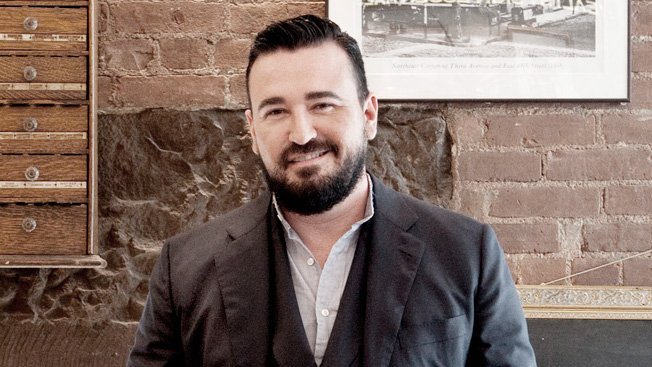
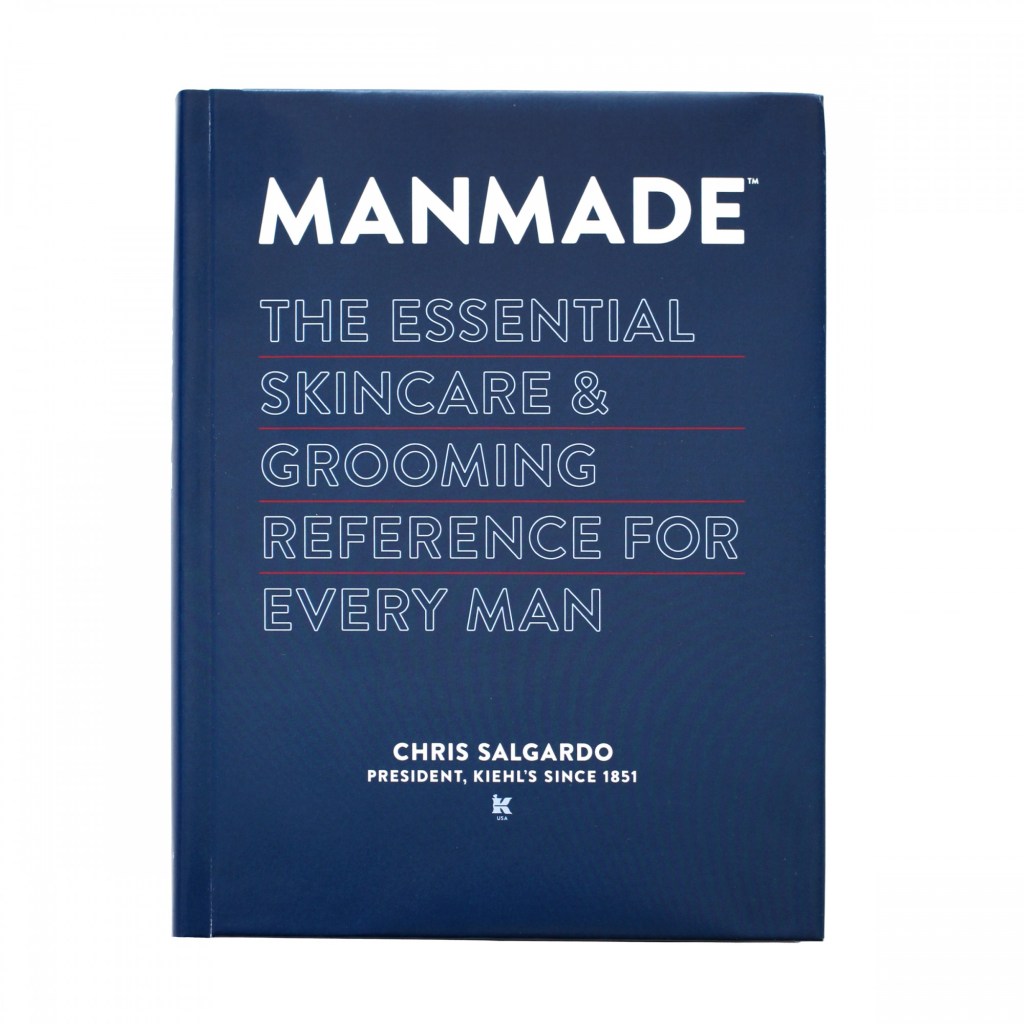
Chris Salgardo is at the helm of one of the world’s premier skin care brands. Not content with spearheading initiatives to challenge perceptions about social issues and raising money for HIV research, Chris recently released his first skin care manual for men, Manmade. I spoke with Chris by phone as we talked about the pillars on which Kiehl’s is built, his new book Manmade and why giving back to communities is at the core of everything that he does.
Philanthropy and activism have been a part of Kiehl’s heritage and DNA since the beginning. How did you choose what causes to support and why are these important to you?
One of the things that I loved about the Kiehl’s experience of the original flagship store was that it was very much community based. People could come in, they could hang out and there was always generous sampling. It was a place that you felt was your home away from home. In the 80’s when all of a sudden AIDS had become ground zero in places like San Francisco and New York, Kiehl’s began to support organizations like amfAR and Project Angel Food and others and it just became a part of the company.
When I joined the company I wanted to continue that tradition and really amplify it. For me there are so many great organizations but at some point you have to decide where you want to put your stake in the ground and clearly AIDS and HIV were very important. Also, I lost one of my closest friends to AIDS in 1996 so I understood that feeling of loss and wanting to do something. So that became one of our pillars. As a company that makes great products I felt that we had a real obligation to get those products back in the recycling stream so recycling and the environment became the second pillar. Also, children’s well being and hunger were an important issue. I find it alarming that in a country as wealthy as ours that we still have so many people going hungry. It’s not so much about the food but connecting people to food and breaking that cycle of hunger for families. It’s critical because if you are not eating properly you are not gonna study, you are not going to be able to keep a job, there is a whole cycle that comes with this. Then I’d say women’s issues. We started supporting ovarian cancer and I’m going to be doing my first motor cycle ride next year on behalf of breast cancer and so those are where we have really focused our energy. My grandmother always said, “If you can give back, you should give back” so we are always finding a way to do that and we do that through raising money. We do that from actually getting on the road and creating awareness.
I do a motorcycle ride, I’ve done it for six years now on behalf of amfAR. We’ve raised almost 1.4 million dollars because making noise is important too. Making sure that the organization and what they are fighting for is known because that’s a way to galvanize other people to get involved too. So, they are very important to us and we are going to continue to give back in any way that we can that makes sense for Kiehls and for our customers.
I think that these causes are all relevant and timely. Today is World AIDS day, the United Nations conference on climate change is taking place in Paris and women’s issues are at the forefront of political discussion.
Yes, thank you Craig I totally agree. The Ovarian Cancer Research Fund honored me last year for their 20th anniversary Legends Gala. I thought about it and I asked them why they wanted to honor me. They said it was because of everything I did on behalf of women. When I accepted the award I was asked if I knew anybody who has died of ovarian cancer. I said no but I don’t want to either. I don’t want to know anybody who is having to go through that. Unfortunately, with breast cancer, most of us know someone who has been affected by the disease. I lost one of my closest friends to it. It’s a hard way to see people go.
Let’s talk about the genesis of LifeRide. I know that was something that you created. Where did the idea come from?
It’s funny because everybody asks that. I have been a motorcycle rider for thirty plus years. My father was a California highway patrol man and when we started to expand Kiehls I put a motorcycle in every store. The flagship store had a collection of motorcycles the previous owner put in. I’ll never forget when I was in Texas in 2010 I was looking at some motorcycles and I thought if we could just get it on the road it would make some real noise. We already supported amfAR but I felt like I wanted to do more. I worked with my team and we created LifeRide. The first one was in California, and I have to tell you Craig, it was one of those things where everything was just going wrong. We were going to ride a short distance to raise money but people kept dropping out. I said to myself, if I am the only one riding I am okay with that because I am going do this regardless. Luckily, that wasn’t the case and I got a group of ten very devoted people who came along with me for that event which are still riding with me today. That’s how LifeRide was born and all of a sudden it really was creating a dialogue. We’ve ridden almost 10,000 miles at this point.
It sounds like the motorcycle is a metaphor for activism. The manifestation of noise makes me think of organizations like ACT UP in the eighties.
I think it’s still very unexpected and that’s exactly the point. I’ll do anything to get attention around this issue. There are 35 million people living with HIV and God knows I think we have buried about 40 million. It’s a problem. I just want to get people’s attention and get them on board and get them thinking.
I agree. I wanted to segue into a lighter subject and talk about your book Manmade. The men’s grooming industry is growing tremendously. Men are more aware and there isn’t a stigma about taking care of yourself. Why did you think that now was the right time for a book?
What you said is very important because the stigma is going away; it’s not gone but it’s going. As a teenager who had acne, it was a challenge finding products that would work and options were limited. It really affected my confidence because I didn’t feel like I looked my best. That stayed with me as a young adult and I faced all these questions that I think a lot of other people are faced with. Women have always had the luxury of, and I use that loosely, being able to cover it up but those sorts of options for men did not exist. From that point my love affair with skin care and how important it is began. When I came to Kiehls I had been a Kiehls user for 10 years. I absolutely love Kiehls because it works for me. When I became president, I started travelling and talking to the press more and all of a sudden men were coming up to me and recognizing me and asking me questions. I always wanted to write a lifestyle book and I thought I should really focus on skin care and grooming. There were two things that really drove me to do it. First, the questions were increasing and they were very similar. Maybe they just wanted it all in one place and easier to digest or maybe they just wanted it from a reputable source or it could be all of the above. Then there’s the trend in men’s skincare that is booming. I thought, now is the time to do this. I wanted Manmade to be a book that everybody should have but I wanted men to think of it as a manual, as a resource. I don’t know how you are with manuals but I skip around and I probably shouldn’t. Maybe that’s why my TV doesn’t work better.
Well, I don’t read manuals.What projects can you talk about that Kiehl’s is working on for the future?
Oh my gosh, we are always working on something. In the men’s market we are coming out with our first line of men’s anti-aging products. We also have our very first beard oil coming next year and it has been worth the wait; it’s great. One of my favorite products we are launching in January is our Ultra Facial Deep Moisture Balm. I took it with me to Alaska. Have you ever been to Alaska?
No, I haven’t.
Let me tell you this much, if you ever go to Alaska, and go because it is amazing, the minute you get off that plane your skin is dry. I don’t know how a lot of people do it. I rode around for 1,000 miles and it was cold. It’s 18 degrees on a motorcycle and I used this balm and it was amazing. It has edelweiss extract and creates a barrier for your face. It’s light weight but you get real protection so this is a real breakthrough in technology.
That sounds exciting. Shifting gears, what motivates and inspires you?
I have always been curious and I love to experiment and try things. Whether it’s a new adventure, riding around on a motorcycle in Alaska or working on my country house in up state New York that was built in 1772. I love to push myself and discover new things. I’d say what motivates me most is finding ways to give back. There is really nothing I think is more fulfilling. It’s good for your soul to be able to find ways to help others. I started that a long time ago out of grief because I lost a friend to AIDS. I didn’t think he was going to die but he did. I was volunteering, donating whenever I could and now I feel I can really amplify that and do so much more. It doesn’t have to be major, you don’t have to ride a motorcycle like I do. Find what you want to give back, what you are passionate about and start with the small things because what you may think is small, to the person receiving it, it’s huge.
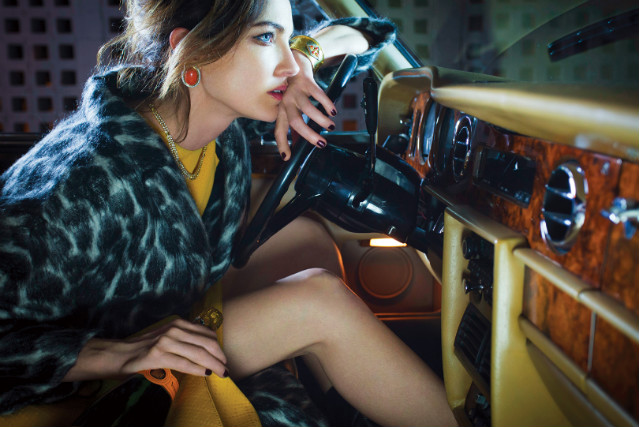
New Zealander Kylie Bax first found fame in the early nineties. As a protégé of legendary photographer Steven Meisel, Kylie’s gamine allure inspired many a designer. She has appeared in numerous blue-chip editorials, advertising campaigns and her visage has graced the covers of international editions of Vogue, ELLE and Harper’s Bazaar.
Now a mother, Kylie has returned home to New Zealand where she continues to model and breed horses. I caught up with her as she reflected on her career and much more.
Tell us about the transition from the Miss Thames Valley competition to signing with an agency and moving to New York.
You are asking me to dig deep into my memory bank. It seems so long ago now. I think it was a brazen decision on my part to go to New York. It wasn’t what everyone thought was the best idea for me, including my agency in New Zealand.
I was scouted by Elle Macpherson’s manager, at the time, in New Zealand. He was working for Women Management, a new, cool and trendy agency in New York. I had to bite the bullet and go with my gut instincts which were telling me that if I didn’t make it in New York then I may as well do something else and move on from modeling.
I saved my pennies through working small catalog jobs in New Zealand and bought a ticket to the States. I hardly had any money and the value of the Kiwi dollar to the American dollar was pitiful. I knew that the leap had to be one of faith and hard work.
How did you deal with the isolation of being in New York so far away from family and home?
I am not one for being scared to be out on my own. I love the sense of new adventures and making new friends plus discovering new countries and cultures. Of course, arriving in New York at midnight was certainly the beginning of a quest. My family has always been supportive and given me the feeling that I can do anything I try if I work hard at it.
Who were the greatest influences on your career in the beginning?
Oh, definitely Steven Meisel. He is a master of design and creativity and he boosted my self-confidence through his support of my burgeoning career. He was the first one to shoot me for two covers of Italian Vogue and a 23 page editorial. Pat McGrath did the makeup and it was her first major editorial too. Garren oversaw the transformation of my hair and gave me my famous short bleach blonde look. We had so much fun.
Before heading to New York, in my teens, Linda Evangelista was my modeling inspiration. I remember her D&G campaign as clear as if it was just this month. Little did I know then that one day I would be called Linda’s little sister. What an honor!
Modeling has become such an aspirational career. What are your thoughts on this?
It looks very glamorous to the outside eye, but it’s very hard work especially if you want to make it to the top. I think the grounds for being a top model stem from having a team of family and friends that collectively give you strength and love. Modeling is a loveless industry; one minute you’re hot and the next not, in and out of fashion like fashion itself. I don’t believe modelling is what it used to be. I was lucky; I think my era was a special one.
What changes have you noticed in the industry from when you started?
I think the term supermodel is used very lightly and the turnover of top models is fast. Faces are less familiar and names are not remembered or household names. Actresses adorn coveted magazine covers more often than models now.
What effect has social media had on fashion in your experience?
The concept that the amount of followers you have dictates if you get the job or not is far beyond what I ever would have conceived the industry would turn to. I understand it but am less likely to accept it so readily. However, one must follow trends. The public dictates what is in and who’s cool and not so much the art directors and editors anymore.
You are back in New Zealand breeding horses again. Tell us about your transition out of full-time modeling to breeding horses.
I still model. I’m the face of Paula Ryan clothing and still get countless requests for work in Europe and other places. However, my horses and what I was born into, which is the bloodstock industry, has always been a strong part of who I am. The first major campaign I signed on for was Escada and I used that money to buy a horse farm in Kentucky.
Fashion and horse racing have always been connected. One of the biggest fashion extravaganzas is the Kentucky Derby. New Zealand is a far cry from New York but it’s a superb alternative and such a wonderful lifestyle.
Do you feel like you have come full circle?
Yes, I’ve definitely set out and done what I said I would do when I was 20. I’ve had bumps along the way and it hasn’t always gone smoothly but the ride and journey has been unforgettable.
In retrospect, what did you discover about yourself through modeling?
That I’m stronger than I think I am. That I can achieve goals and I am incredibly lucky to have gathered so many amazing friends along the way. I think the friends I’ve made through modeling are pure gold. They are so lovely, warm, kind, artistic and talented and I’m glad I can call them friends. I’m insecure about my looks and I am grateful to my friends in fashion who gave me confidence in that department.
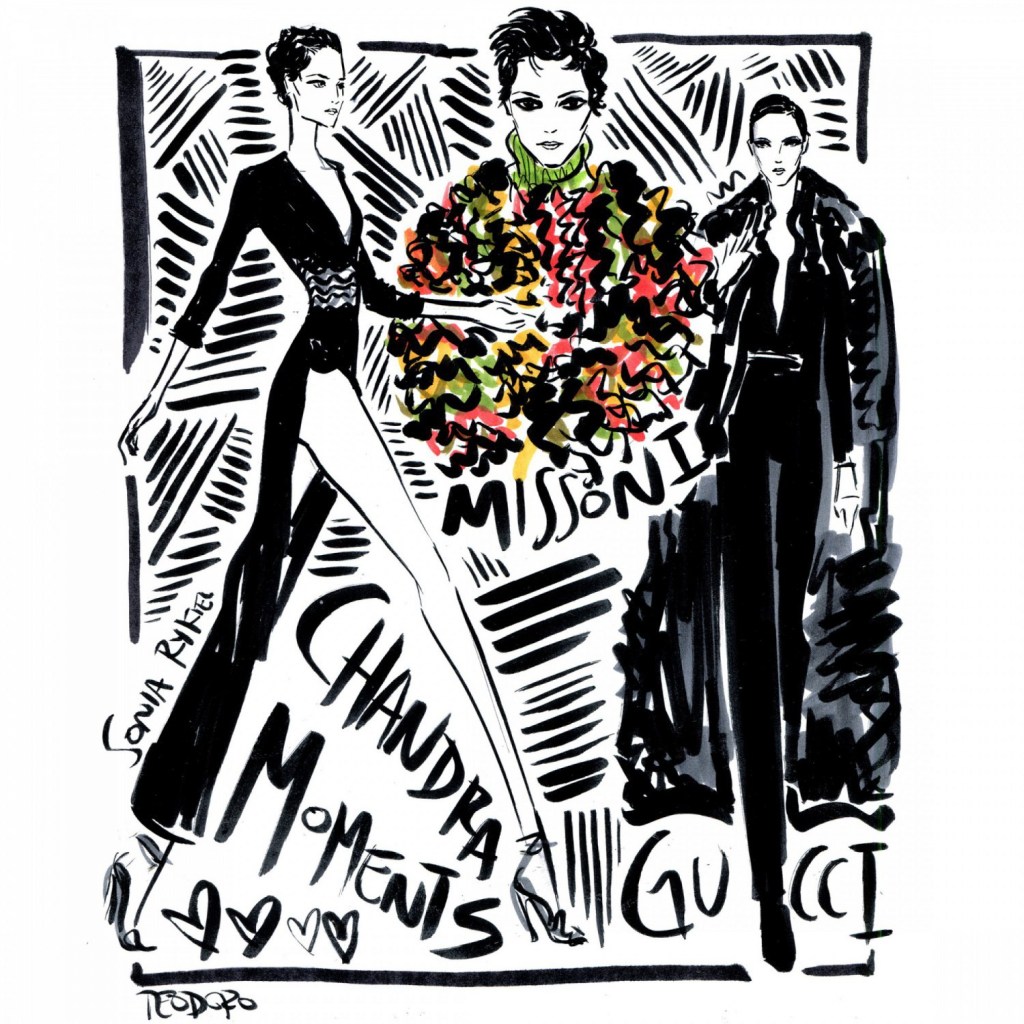
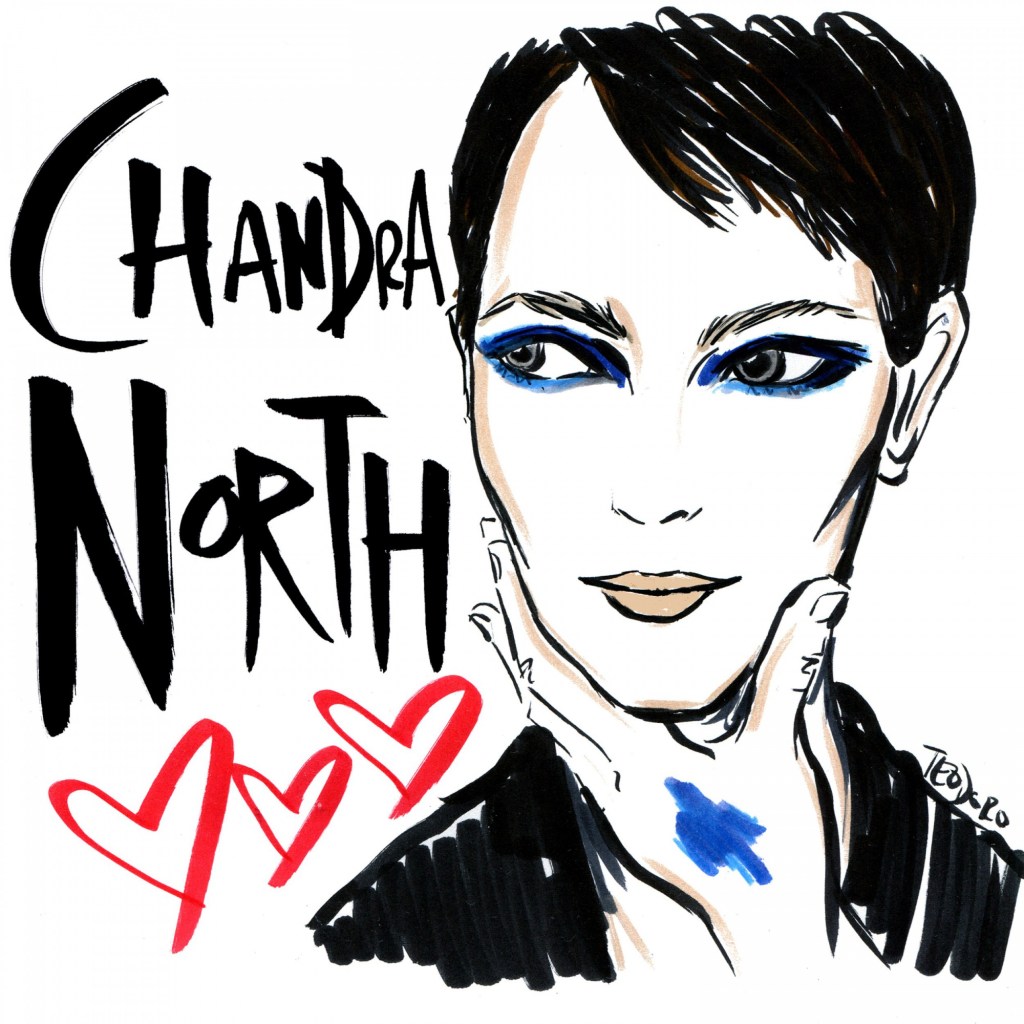
Texas native Chandra North’s aspirations of becoming a model seemed impossible after a number of setbacks. Rejected by the grand doyenne of fashion, Eileen Ford, for not having a nose worthy of the beauty industry, Chandra proved her detractors wrong and has appeared in advertising campaigns for Missoni, Valentino, Dior, Gucci and Alberta Ferretti. I caught up with Chandra by phone at her home in Dallas to talk about those challenging times and reflect on what she learned about herself through that experience.
When I was doing my research, there was a lot of mythology around how your career began.Did you always have an interest in fashion? I know that you made the transition to New York and then it gets gray from that point.
That’s a good way to put it. When I was growing up I did ballet for a long time. I did that for about 12 years and studied in San Francisco during the summer. I always saw myself doing ballet but in my mind and in my fantasies I was living in New York modeling. I always had an interest in modeling because my mom worked downtown in the couture department at Neiman Marcus so I was exposed to models. I remember when I was around 12, Karl Lagerfeld came and did a show in this theater with big sets and it wasn’t like a typical fashion show; it was a kind of presentation. My mom was really hoping that I would do something a little more artistic. She didn’t see the best side of models and so she wasn’t particularly encouraging about it but I can kind of see why she wasn’t. At the time I think she just wanted to see me finish high school. Anyway, around the time I turned 16 I chopped off all my hair and bleached it white blonde. I was at the swimming pool and this gorgeous guy approached me. He told me I had a good look and asked if I’d ever thought about modeling. I knew my hair was not exactly commercial looking but there was a model named Jenny Howarth at the time and there were some girls you would see in editorials that made me think maybe there was a place for me.
Did you think he was hitting on you?
Of course, but it turned out he was a gay. I thought it must really mean something because if he is not hitting on me, he actually thinks I can be a model.
That’s funny.
He was really honest and told me I wouldn’t be right for everything. He set me up with a friend of his, who was a photographer, and the photographer’s boyfriend did hair and makeup. I started doing shoots with them and they were so patient with me because I was so self-conscious. It is a lot different when you are on set and you realize everybody is staring at you. Not too soon after I dyed my hair a more normal color and I started doing shoots for catalogs and some stores here in Dallas. Then my agent, here in Dallas, took my book up to different agencies in New York. I had a lot of baby fat because I hadn’t grown into myself and I was turned down by almost every agency. Eileen Ford said I didn’t have a face for beauty and would never do beauty stuff which is funny because Kate Moss came around and you didn’t have to be 5 feet 10 inches. I had met Steven Meisel and he liked my work but my lack of height was a concern.
You’re 5 feet 8 inches, right?
Yeah, and they prefer people who are 5 feet 9 inches. Steven said I should think about going out to Los Angeles and become an actress. In the meantime, I came back to Dallas and started asking myself what I was going to do next. I didn’t want to live in LA, I wanted to be in New York. During this time the grunge movement was starting and I went back up to New York for the summer. I received a phone call from his studio and Steven was wondering if I knew anybody with long hair. My boyfriend had long hair so he came up and we did this story for Italian Glamour. Steven really loved his look so he went on to do that really famous picture in American Vogue with Kristen McMenamy.
So that was Daniel in the Grunge and Glory shoot?
Yeah, exactly. He had his moment, short-lived thankfully, because I didn’t want to date a male model. Then we went over to Europe to build my book and I was still trying to figure out if I wanted to model.
What was the defining moment that you knew you had made it?
Probably when I booked my first runway show.
So for you it sounds like it was more of a slow burn.
Yeah.
Do you think in retrospect that you appreciated it more because you had to work harder for it?
You could look at it so many different ways. I was fully aware and full of adrenalin, I mean there were so many pinch myself moments.
I think that it’s a very unusual experience to have in life and very few people, particularly at the level that you were doing it, experience that.
What’s interesting to me is that there are girls constantly posting pictures of themselves on social media and they are not necessarily models. They have this confidence but I wonder if they showed up on set if they would be able to handle it.
I think that there is a disconnect between what people think modeling is and what modeling actually is. Young girls in particular have access to social media that didn’t exist before. A lot of girls study what they think are the right angles and moves. In their heads they think what they are posting on Instagram translates but it doesn’t always work for high fashion.
Exactly.
People ask me if I think they can model and I tell them I am not an agent; I have no idea. I often ask them why they want to be a model and what they hope to get out of it.
Exactly. That’s the gray area, not to cut you off, but there were many times where I asked myself what I was doing. When I was 24 I had a hairdresser tell me not to tell anybody my age. Now, I think Daria was close to 30 when she started really doing well.
Do you remember there was some controversy when Agyness Deyn’s real age came out? It was so ridiculous because she was a great model. She’s so pretty. I thought that her age was irrelevant.
Right, it’s totally crazy.
You stepped back from modeling for a while and moved to upstate New York. In hindsight were you trying to extract yourself from that environment to have some semblance of a normal life again?
It was a baby step away from the city before I came back to Texas. There was this other part of me that thought, I’d been married for seven years and maybe I’m supposed to have a baby now. I didn’t want to wake up one day and think I forgot to have a baby. I missed the little things too like driving and big open skies.
Looking back on your career, what advice would you give to your younger self, to that girl in Texas struggling to make it?
First of all, I would tell myself to get some contact lenses so I can see. I would tell her to believe in herself no matter what and be patient and brave and stand up for yourself when you need to. God knows, if you don’t people are always willing to tell you what’s wrong with you, you know.
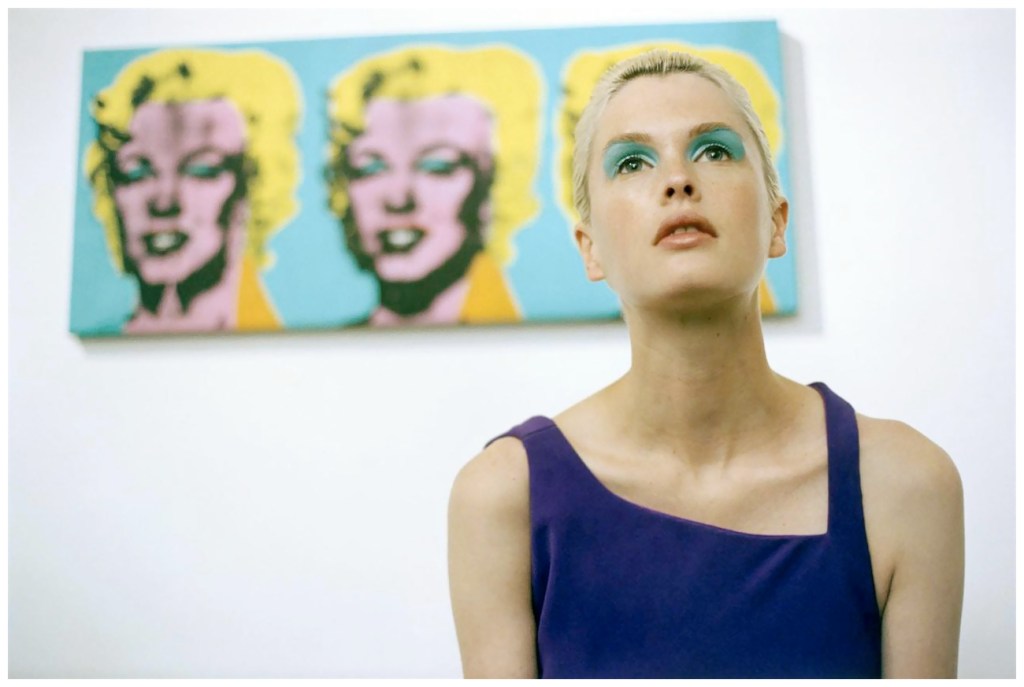
Esther De Jong emerged on the fashion scene in the nineties after a serendipitous meeting with photographer Anette Aurell. As fate would have it, Esther soon found herself at the epicenter of fashion’s coveted models of time. Still in demand some twenty years later, I caught up with her by phone as she reminisced on that magical moment in fashion.
I thought we could start when you were discovered. Tell us about that.
In 1995 I was studying in Holland and I felt immature and not quite ready for university, so I decided to go to Paris. I had friends from England, whom I met in Holland when they were exchange students, and now they were living in Paris. I bought a one way ticket and never looked back. About a month into back packing around and staying in hostels and on sofas I ran out of money. My friend suggested I become an au pair like her so I went to a nanny agency in Paris. They sent me on my first interview with Anette Aurell, a professional fashion photographer, and Richard her husband and their two wonderful children and they hired me. Annette had an editorial to shoot for i-D magazine and we all went to England while I looked after the children. The model didn’t show up and I was asked to step in and the rest is history.
So it was serendipity.
Yes it was.
When did you sign with an agency?
The pictures were published and I was introduced to the Marilyn Gaultier agency in Paris and I signed with them and their amazing team. My career took off pretty fast and I shot my first cover story after i-D magazine with Steven Meisel for Italian Vogue.
Was working with Steven the point that things really took off?
Correct, Steven is a big influence in the fashion business. He really helped me get started and gave me a lot of advice on the side as well.
You arrived on the scene during the post supermodel era. What was that time in fashion like and how would you contrast that to how things are now?
It was very different. The girls were much more individual looking. If you compare models like Nadja Auermann, Cindy Crawford, Carla Bruni, Naomi Campbell, Amber Valletta and Kate Moss, they were all very different. I think individuality was much more celebrated. The supermodels really carried the designers, shows and magazines and were the center of the business.
One of the big shifts is the move into digital. Do you feel that creativity has been stifled and the process is less organic?
I would suppose it has. I remember the days of shooting with Polaroids. Then you would shoot tons of film and sometimes you would get amazing results and surprises. Now you can look over the shoulder of the photographer and see what’s going on, and that way you try to get the picture you want. I also think retouching became much more prevalent, which is not always a positive gain.
How do you feel about that?
I am not a big fan. Often with retouching it is overdone, especially in beauty ads, and everybody starts to look alike. It’s more beautiful to see real women and girls with personality.
The nineties are in fashion again. How do you feel about the renewed interest in that period and how do you feel to be working all these years later?
I think it’s great. It has come full circle but I don’t think it will ever be the same. Some of us girls have stuck around and I think it’s wonderful. I just love seeing Cindy, Michele Hicks, Kirsten Owen, just to mention some, popping up left and right in great projects.
A lot of the models that are still working are now mothers and they have things going on outside of fashion. How do you feel about fashion embracing, I hate to use the term, older women?
I guess it is a very personal word and it is up to everyone’s interpretation what to think or feel with the term. We are older women and most of us have children and a past with fashion and I think it’s beautiful. I believe the consumer can relate . There was a time in fashion when models were getting very skinny and very young. Maybe that is when actors got a lot of advertising campaigns and covers. Which was also beautiful, real woman, like Cindy and Claudia.
Yes, gorgeous!
Those are not skinny girls. They are beautiful women, and always were and will be forever. I have always been naturally too skinny in my opinion and I’m happy I’m not as skinny because I am a little older and have a beautiful son. It feels really good.
I agree. I think that our societies preoccupation with youth is quite damaging. I think there has been a shift of late but it is still pervasive.
Yes it is.
Now that you are a mother, how has that changed the way that you model and the way that you see things?
It changed in a lot of aspects. I can’t just jump on a plane anymore. I am a single mother and whenever there is a job and I have to go anywhere I have to organize a babysitter or a tween-sitter in case Oscar is reading this.
Becoming a mother has matured me tremendously. I’ve always been a late bloomer and I never really saw myself having children until I got older. Then, after Oscar was born, I kept seeing myself having ten children, which unfortunately did not happen. Having a child changed a lot for me in a very positive way. Even though it has not been easy as a single mother, I think becoming a mother was the best thing that could have happened to me.
How has motherhood affected the choice of jobs you do?For example is nudity something that you wouldn’t do now that you are a mother?
I grew up in an environment where nudity was very much accepted. I have no problem with nudity, as long as it is elegant of course. I’ve shot nudes with photographers before and I would still for the right projects. We are all born naked and I think the body is beautiful no matter what age or gender.
Let’s talk about social media. It’s something that didn’t exist 15 years ago and now you kind of have to embrace it. What are your thoughts on social media?
I have to admit I probably should do more on social media. I like Instagram and I have my Facebook account but I don’t spend a lot of time on it. I use it to promote my modeling and connect with friends as everybody else does. Social media is great but I probably don’t embrace it as much as I should, which I am okay with actually.
I understand, I’m totally in agreement with you. Now you are living in New York and you have your son and you breed thoroughbreds, is that correct?
Correct.
Have horses always been a passion of yours? How did you get into that?
I grew up in Holland and my family raised and raced horses. When I had the opportunity to buy my own farm in France I imported Andalusians from Spain. I decided instead of the white Andalusians I wanted to breed the black ones. I imported four black mares and one stallion while I was modeling. Then I moved to the United States and brought some of the horses with me. I have always had horses no matter where I was, even when Oscar and I moved to Los Angeles for three years we would go riding at Griffith Park . We would spend hours in the park going up and down the hills and when we came back to the east coast I kind of stumbled into the thoroughbreds and bought my first mare and I was hooked.
Looking back on your career what advice would you give to your younger self?
My career took off very quickly. I went from being this naive girl from the countryside in Holland to being this naive high fashion model shooting four campaigns in one season. I might have been a little bit overwhelmed but I was very lucky and thankful I had a wonderful career and am still working. What would I have done differently? I turned down jobs that I should have said yes to because I didn’t understand the scope entirely. Maybe I should have rested more and partied less but you know, I had a wonderful career, met so many amazing people and nurtured wonderful friendships, so in retrospect I don’t think I would want to do anything different. I had a career that was dropped in my lap and I was very blessed with that. Hopefully I can enjoy it for some more time to come.