Susan Holmes McKagan On Modeling & Why She’s Not One to Kiss and Tell

Throughout the nineties Susan Holmes McKagan was part of an elite group of models that dominated magazine covers, international runways, and whose ubiquitous presence dominated popular culture. She was a perennial favorite of photographers Steven Meisel and Arthur Elgort, the latter of whose book I Love…she appeared on the cover. From her stellar modeling career, to swimsuit designer, to author, and multiple television appearances, Susan has maintained the type of traction few others have been able to emulate. I recently spoke to her by phone from her home on the West Coast. 

I thought that we could start with how you were discovered.

My older sister Cynthia modeled—I always thought she was much prettier and smarter than me, I just idolized her—and I thought it looked so glamorous and fun. I loved fashion, and I wanted to dip my toes into that world so she inspired me to try. I went with my mom on a trip to New York and we did all the things a mother and daughter would do on a trip there.  We went to see a Broadway show, went out for a lovely dinner at the Quilted Giraffe—an iconic restaurant—and it was there I was spotted. The whole restaurant had 10 tables and was very chic and exclusive. While we were dining, I stood up to use the restroom and was stopped and asked if I was a model and represented by anyone. It turned out to be the amazing fashion photographer Marco Glaviano. He happened to be there dining with Jodie Foster, so that was pretty cool. 

He suggested I go and see Eileen Ford the next day and tell her that he sent me. I was only 16 at the time and I lived in San Diego. I come from a family of scholars. My dad is thrice a Fulbright Scholar—he never left school, it’s his whole world—and my mom has a master’s degree. In their world modeling didn’t compute so we settled on a happy medium and I signed to an agency in Los Angeles and modeled locally in San Diego and LA. After high school I went off to Paris and got a modeling contract. I was poached by an agent in San Diego who wanted me to compete in the Elite Look of the Year competition.

When you arrived in Paris how well were you received there? Did things take off for you quickly?

In my mind I was the San Diego beach girl—the big fish in a small pond—on the cover of San Diegomagazine, who booked pretty much everything. When I arrived in Paris I thought I’ve got this. I did a job for Elle magazine and a couple of other shoots but it wasn’t an overnight thing at all. I’m grateful because I may not have been the biggest model, but I have longevity.

There is still a real thirst for models from the 90s today.  What do you attribute your longevity to and why do you think people are still so obsessed with that period in fashion? 

That was the era of the supermodels. The models were the ones on all the magazine covers, walking the runways, and were coveted. It was mysterious because you didn’t have cell phones or access like now. It was glamorous, romantic, and hard to get into. It was difficult to get into fashion shows or even meet a model. That increases the desirability and want to get closer to that circle even more, I suppose. I am very blessed that I am still working a lot today. I am doing more covers than I ever have, and I am walking in runway shows. I am very grateful and humbled.  

Outside of modeling, I know that you have your swimsuit line and you wrote a book The Velvet Rose. I wanted to talk a little bit about the book. The premise has parallels between your life and the protagonist. Why did you choose to write a novel as opposed to a memoir?

That’s an interesting question because the obvious direction I could have gone in was to write an autobiography.

Like a tell-all?

Yeah, but that’s not my style at all. I have never been one to kiss and tell.

I respect that.

I think sometimes you can convey more through a fictitious novel than a tell-all. Remember the Jackie Collins novel Rock Star? I wouldn’t typically read that and then everyone I knew was reading it. I wanted to write a novel because I have been working fastidiously at honing my writing craft. I have been writing front page articles for the Huffington Post for years, and with more time during COVID-19 I went back to college and recently completed my first graduate level class at Harvard University in Feature Writing. I am thrilled and proud to say I have a 4.0 GPA. I wanted to not only dispel a lot of fantastic stories I had within me, but to tell them in a way that wasn’t gossipy or throw anyone under the bus; that’s not my style. I am a writer’s writer—or at least I like to think that I am.

Can you talk about how you think the fashion industry has evolved? There have been periods where diversity in size was touted—Sophie Dahl and Crystal Renn being two that come to mind—but both lost weight and became ‘straight’ sized. There have been very few models of color at the top too. Do you think it’s better today?

I think there is some progress—which I love—and I think it has been much overdue. The last cover I shot for Glamour was with a black photographer. I can’t think of a time when a black photographer shot me in the 90s. I could be wrong, but off the top of my head I can’t think of one.

That’s a really interesting point. I think when we talk about diversity we are always framing the conversation in terms of what’s in front of the camera.

Yeah, he is from Haiti. He is great. You know, he’s going to put a different paradigm and spin on the fashion and the message in the photographs. Yeah, of course we need more models of ethnicity and size and age. We haven’t talked about ageism, how about that? I think in America they need to get on the horn a little bit faster just as they do in Europe and embrace older women. Maye Musk, Joan Didion, Carmen Dell’Orefice are beautiful women. At the same time, I hate the portrayal of women as either young and vibrant, or older with gray hair. What about all the women in the middle?

Follow her on Instagram
2020: The Year in Review

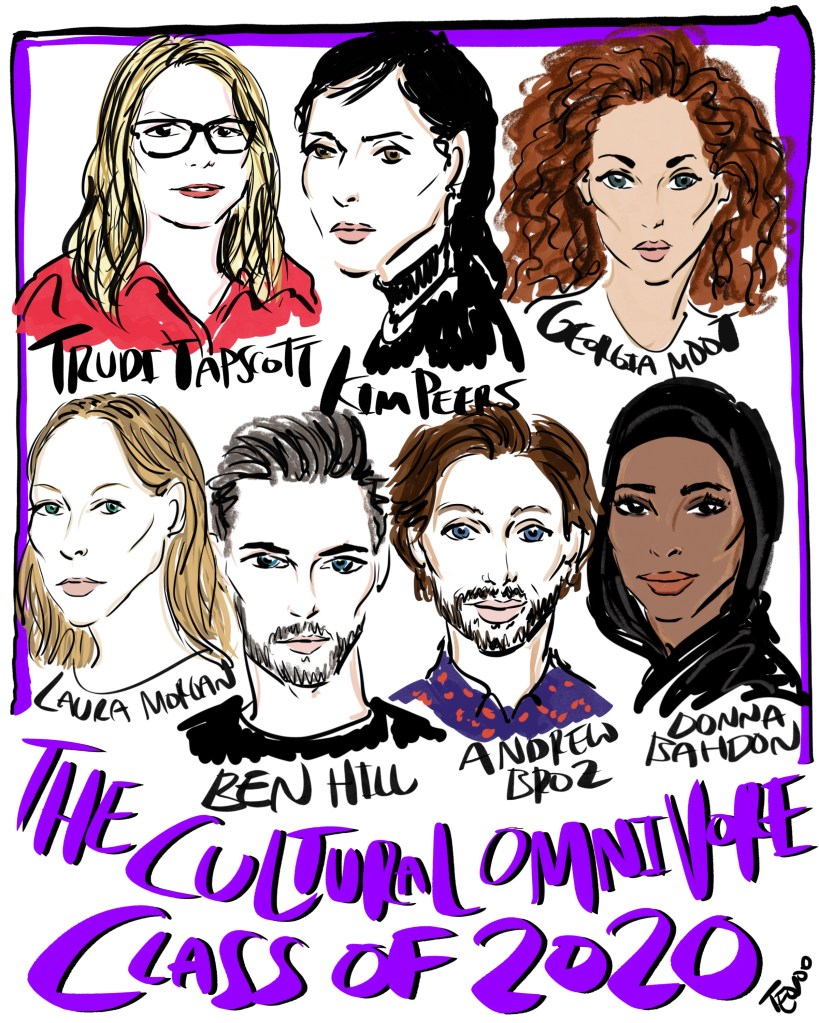
As I reflect on the events of last year I find myself at a loss to articulate the significance of where things have taken us. This blog has always been an outlet for me, a way to connect and share the stories of people I interview. I started off the year speaking with my friend and industry veteran Trudi Tapscott, and model Kim Peers before being derailed by a pandemic. As the chaos continued to throw things off kilter I spent the next few months in quiet reflection until, in late summer, I started to write again. Interviews with modeling legends Laura Morgan, and Ben Hill provided the type of insight and wisdom that only time and experience can afford us. Model Georgia Moot is an example of an intelligent young woman using her platform to further conversations about diversity, and mental health. And Andrew Broz—someone who has supported me from the beginning—shared the important work he’s doing. I don’t know where this year will take us, but my hope is that you are all healthy and safe.

Craig

Andrew Broz On His New Venture And The Road To Healing

A veteran of the fashion industry, Andrew Broz has worn many hats during his career. Using the knowledge from his time in the industry, Andrew has turned his focus to providing support and care through his new venture Life Landscaping to those struggling with mental health, eating disorders, and addiction issues. I spoke to him about the impetus for starting Life Landscaping and whether the fashion industry is ready to address the elephant in the room.

Tell us about the genesis of Life Landscaping.

I’ve always wanted to help others. I never imagined it would be in the capacity that I helping them now—Life Landscaping was never an intended plan—but I am thrilled that it evolved this way. As you know, Craig, I have been involved in the modeling and entertainment industries working as a child actor, and as a model in a small town in Pennsylvania since about 13 years of age. By 16 I had moved to NYC and was working as an agent at Company Management, and the world-famous Ford Model Agency. I was launching and managing the careers of Paris Hilton, Lizzy Jagger, James King, Christie Brinkley, and many others. By 25 I had already traveled to over 30 countries, and I relocated to Los Angeles to act as the Chief Operating Officer (COO) of Elite Model Management. During these years, I also owned my own firm, Andrew Broz & Associates, Inc., and we served as casting directors and consultants to clients such as Playboy, Vogue, Verizon, Target, Christian Dior, Lancôme, Nicole Miller, Versace, and dozens of others.  It was a lot of privilege and at a very young age, perhaps too much. I was living the dream life filled with money, travel, and glamour, yet I was inexplicably unhappy. There were a few major earthquakes in my life that included physical dis-ease: the loss of my home and assets, experiencing a traumatic divorce in a relationship, and finally, experiencing a complete loss of identity. I was spiritually starved, emotionally imbalanced, and experienced true dis-ease; I simply could not live like that anymore. I made the leap to begin a course of study to understand myself, my emotions, and psyche. Through this process, I have learned how to practice many skills that have helped me, which were not limited to just the traditional Western techniques. I believe in taking a balanced and holistic approach to any human being, including physical, mental, and spiritual aspects. Life Landscaping started very organically and I was blessed to have a wonderful business partner who supports my vision. We have a great team and are truly helping people who want to be helped. I am thrilled that I am now able to share my life experiences, education, and training with others to help guide them on their journey. The privilege of helping someone save their own life—or just become the best version of themselves—is beyond phenomenal.

Talk to us about the services you provide and what someone should expect.   

We provide a variety of services for people dealing with all sorts of issues including substance abuse, mental health issues, and eating disorders. We also provide support with improving general life skills. Our services are specifically designed for each individual and their needs. This is not a “one size fits all” world. So, let’s be more specific: we can provide rehab/detox placement. We can also provide detox and rehab in-home, in the event someone does not wish to go to a facility. We provide Intensive Outpatient (IOP), where you are not made to stay in an inpatient facility. We can also provide this through virtual treatment, as well as in person. We provide interventions, sober companionship and transport (flights, going to a shoot with someone, car rides, going to court, sitting in an apartment with you, attending a family reunion, and so on). We also provide recovery and sober coaching, and can even match you with a therapist virtually or in person. We know that when we are working with someone they are going through one of the hardest periods of their lives, so we work hard to make the process as easy as possible and we handle all of the confusing and stressful aspects such as insurance.

You’re working with a lot of modeling agencies and their talent. How has your background in the fashion industry influenced your approach to handling their treatment?

My background in the fashion industry makes all the difference for people in the industry who are searching for any level of help. I remember seeing therapists and spending over half my time just attempting to explain the modeling industry to them. I remember me feeling very judged because I wasn’t grateful enough for my fabulous life.  My team and I work with models, agents, photographers, designers, and stylists. Our clients are thrilled when we understand their perspective and the language they speak, and know that I truly can empathize without judgement. I am elated to be able to take my experience and knowledge working in the modeling and fashion industries and custom tailor a program for someone in those industries to improve their health, life, and wellbeing. We can also accommodate people of various income levels to help them reach their mental health goals without the stress of money.

Do you think the industry is more open to dealing with issues around self-care than say 10 years ago, and if so, how?

Great question, Craig. Yes, I certainly do. I never speak in absolutes, but the stigma of mental health and addiction has decreased tremendously. Generally speaking, the fashion industry is fairly progressive. There is still a great amount of work to be done, but things have been shifting in the right direction. Last week, California Governor Gavin Newsome signed off on a bill granting individuals with any mental health issues significantly better rights and advantages than they have ever experienced in the past. This can be if you suffer from either anxiety, depression, or both. You do not have to be unable to function in society to have a mental health issue. It is not a big deal anymore unless you choose to make it one.

What other modalities have you integrated into your treatment programs in addition to the standard ones?

We work with a tremendous amount of treatment modalities, as I mentioned earlier: one size does NOT fit all. We utilize Dialectical Behavioral Therapy (DBT), Cognitive Behavioral Therapy (CBT), Trauma-based therapy, EMDR, Family Systems Therapy, Hypnotherapy, Mindfulness-Based Therapy, Music Therapy. Psycho-Drama Therapy, Somatic Therapy, Sound healing, and many others.

The stigma of addiction is largely perpetuated by silence and ignorance around the disease. What are you doing to address those issues?

As I mentioned, that stigma—although still in existence—has decreased. Our organization has shared stories of peoples’ sobriety journeys and offered mental health tips via social media to create a sense of community support and awareness for this once taboo subject. 

For anyone looking for help but doesn’t know where to begin, what advice would you offer?

Just simply call us. It’s easy: 1-800-530-3100. We will listen, hear you, and create a program for you that makes sense and is affordable. It’s overwhelming, and daunting if you do not have someone guiding you; that’s what we do.

What are your goals moving forward with this endeavor?

Things have been going very well, fortunately, and I am very lucky to have found a team that is fantastic to work with. My main goal is to help as many models, agents, and anyone in the modeling and fashion industries in any of the MANY above-mentioned areas. But, we welcome calls from people from other industries, as well; it is not just limited to modeling and fashion. I’m looking forward to hearing from more of you and working with you. I feel so lucky that I am able to help others in a business that has played such a massive role in my life.

Learn more here

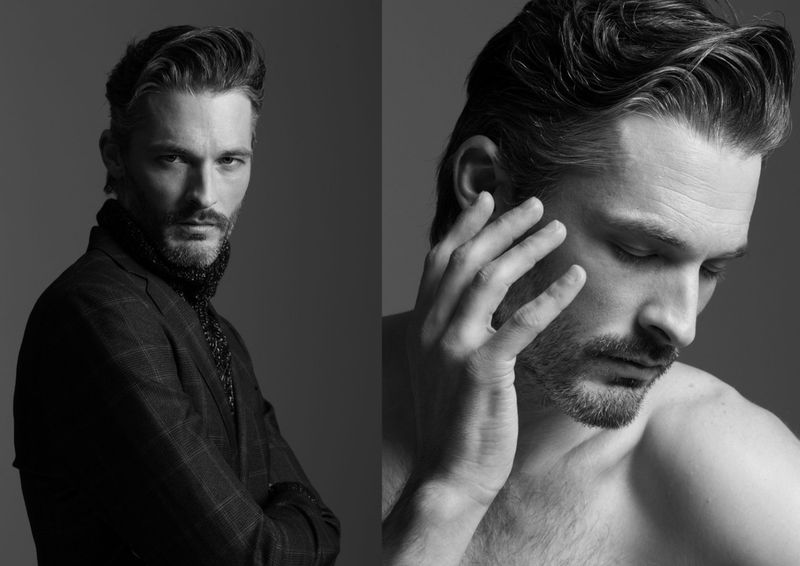
Modeling Icon Ben Hill Reflects On His Legendary Career

I spoke to Ben late one evening as he called from an undisclosed location in New York. Thoughtful and considered in his responses, his uninhibited Southern charm only served to enhance this natural born raconteur’s tales of his early days in New York, and his musings on the current state of the industry. As one of Models.com’s Industry Icons, his portfolio of blue-chip campaigns and editorials is extensive and the envy of any aspiring model.

You’re originally from Georgia, right?

I was born in Athens, Georgia and I grew up in a small town called Washington, a lot of people don’t know that, they think I’m from Sugar Hill where my mother lives. I return as often as possible to spend time with her and my family when I can. Unfortunately the pandemic over the past year has meant less visitation as I did not want to risk their health.

When you were growing up was modeling a career you considered?

It wasn’t something I thought to do whatsoever. I wanted to be an actor, and I am still studying toward that goal. I did the college thing—I went to Augusta State University—and then I did an apprenticeship program at Georgia Tech when I was working for an electrical company as an industrial electrician. I started off doing an engineering program before realizing it wasn’t for me. After doing that, I picked up everything I had and moved to New York to try and become an actor.

Is that where you were discovered or did you pursue modeling once you arrived?

Well, that’s the funny thing. I always hear people’s discovery stories and I think, I really don’t have one.  The fact is, when I moved to New York—like everyone else—I was struggling to make ends meet because it was very expensive . I moved to the border of Washington Heights and Spanish Harlem on Amsterdam Ave. & W. 151st St. That area had a lot of culture and I experienced so many things I would not have had the opportunity to experience in Georgia. It opened my eyes and heart to a much bigger world.

I made friends with the locals, and I had two roommates who were modeling, one of them was Swedish and the other was South African. While I was taking acting classes and auditioning, I noticed that they would go out and they would talk about how they made enough money in one day to last for six months while I was beating the streets. Eventually I put acting on the back burner, and the jobs are few and far between. I needed to make money so that’s how it started. I called all the agencies that I could find and started going to open calls. Quite a few people turned me down until two very commercial agencies took me on but I wasn’t under contract as they wanted to see how I did first.

I was 220 pounds at the time—I was a big guy—so I decided that I was going to have to get in model shape to get signed to a fashion agency and to start making money like these other guys. I lost a lot of weight, and then I went to Next Models in New York and they suggested I try shooting down in Miami.  They were my first real agency and I spent a season down there where I met the iconic photographer Bruce Weber.

When you met Bruce was it to shoot for Abercrombie & Fitch?

I went to see him for another project he was casting.  It was stressful for me because I was told that he could make or break your career at the time. I met him and I got along great with him—he is a dog lover, as am I—and he booked me for Abercrombie, and things took off from there.

Was there a point that you realized that you had made it?

When I shot Abercrombie I realized this was something that I had potential to succeed with. Right after that I booked the Polo Blue fragrance campaign with Doug Pickett and Lonneke Engel. They didn’t run my images but it was a blessing in disguise because I did the Chaps campaign right after that before things started to slow down for me.

So, what happened?

I was optioned for so many projects but I just couldn’t seem to get a confirmation, it was really strange. I am not a person that ever gives up; if I start something I’m going to finish it. I had agents telling me I was too this or I was too that and I discovered it was because they didn’t want to hurt my feelings or scare me away. I have heard umpteen excuses, but I believed in myself and I found a few agents around the world I could trust my career with and get positive direction from. 

So what do you attribute your longevity to?

Persistence. There are so many people that will tell you in your life that you can’t do something, that you are not good enough, or you are too this or you are too that, and I don’t accept that as an answer.  That’s an excuse, not a solution. I can hear excuses forever on out, but in my mind, it still doesn’t tell me what the main problem is, in this case why I wasn’t working. Instead of listening to whatever everyone else was telling me I started listening to myself. Everyone seems to have an opinion in this industry, and I respect that, but I also realized the only opinion that really matters is my own and the way I feel about myself. If I am happy and I am confident with myself I can take direction well from those who have earned my trust. 

That’s a very healthy and balanced outlook to have. Models are often treated as a commodities— particularly the females—there is no concern for their well-being.  

The thing is, I always used to tell myself that I can hear these things, and I can do these things, and the fact is—if it is a business—then it is my business and I am the one that is self-employed and ultimately the responsibility lies with me. I started helping a lot of other models as well by sharing my experiences. The funny thing is that I was actually really good at giving advice to the other models, and putting them at ease, and getting their confidence up. Then I decided to apply all the advice that I was giving to all these guys to myself. I did, and miraculously I started to work again.

How do you feel about modeling today compared to when you first started?

It seemed like it was a lot harder to get into the business at that time as standards for models were quite different than they are today. The industry has changed quite a bit. Social media has pulled back the curtain and the mystery and allure has turned imagery into content intended for likes and not imagination and creativity.

Do you feel like it was a more creative time in fashion?

It was definitely a creative time, but there was a lot of hardship. Back in the day it was all film, it wasn’t digital. Digital photography didn’t really start taking off until about 2004. During that time, of course, the lure of our industry was pretty big, and we were very restricted on what we put out there because we were still wanting to keep things timely, new and exciting. Photographers and other creatives no longer have the freedom they used to have, and models no longer have the time to develop to become “super” and many times are replaced by real people, social media stars, or clients who are always wanting to move on to the next best thing to validate their lack of creativity.

I think, particularly now, modeling is very much an aspirational career. If we go as far back as America’s Next Top Model it planted a seed and shaped what people thought modeling was.

Yes, and the perception of everything changed. If you roll it back to 2008 when Facebook came out, and you think about when the Kardashians started to become popular on TV, that’s where people started to follow rather than lead; everything has become homogenized. The goal is likes and followers to get bookings rather than your look or career status. Luckily, I have been in this business long enough to be able to collaborate with some of the best photographers and designers, and sadly, that type of work is no longer appreciated as the fashion is fast and knocked off, and print has been replaced with a scroll on your phone. I think the pandemic has encouraged us to slow down, take a look at the pace we are moving and how we are living, and social unrest and injustice has brought a greater focus on inclusivity. I hope moving forward that inclusivity will not be just a trend but a part of our DNA no matter what your race, age, or gender is.

Follow him on Instagram

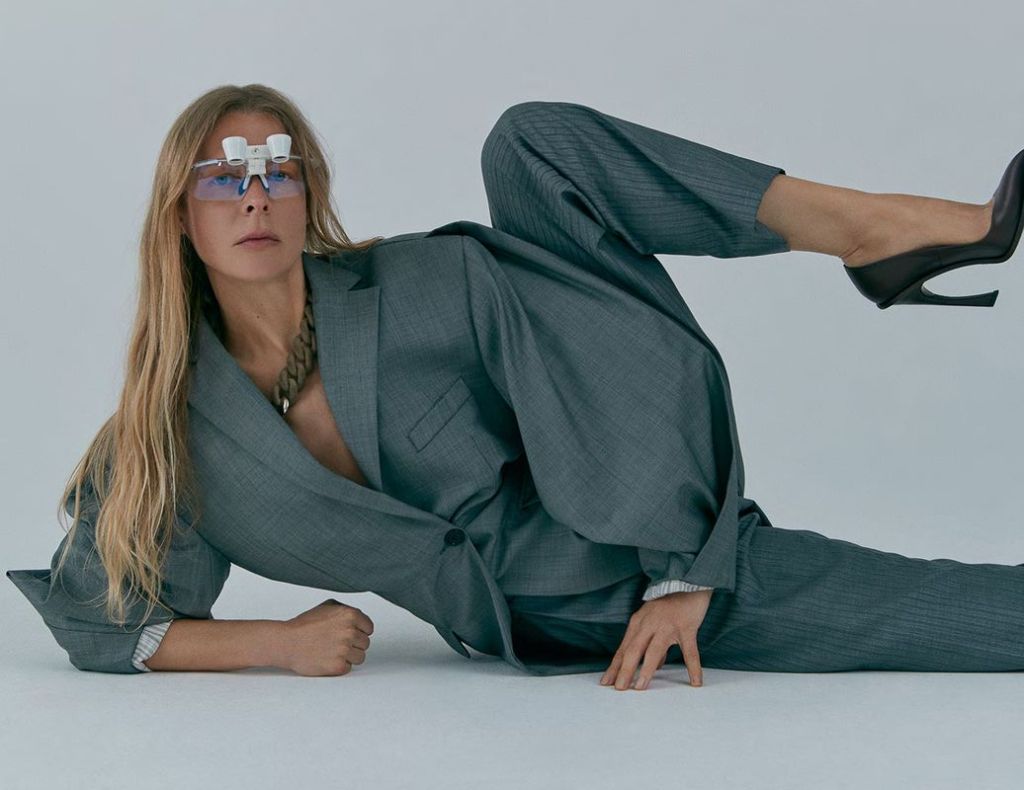
Artist And Model Laura Morgan’s Philosophy on Life is Not to Be Ignored

Laura Morgan the lithe, flaxen-haired beauty with a steely gaze has a philosophy on life many of us should take heed of, “You create the life you live in. No one will give you what you want. You have to go get it.” Before I was introduced to Laura last summer I had a superficial knowledge of her work—most notably as Alexander McQueen’s in-house model—but to define her as just another model would be myopic and underrate a career spanning the past 20 years. In addition to appearing in ad campaigns for Helmut Lang, and Celine she has worked on three Madonna world tours, and done costume design on award-winning video and movies.

Collaboration is a constant theme that runs throughout your career. Talk to us about how you’ve approached, managed, and maintained these types of relationships.

Different projects require different types of collaborative approach. However, what runs through all of my collaborative work is the need to treat everyone as I would like to be treated myself, to be patient, open, and never forget that it takes the hands and talents of the many for a project to be completed. No matter the job title all involved are equally important and should be treated that way.

What prompted you to return to school and study fashion design, film, and music in a more formalized setting?

I had got to the point with modeling where I was so stifled I got sick. I basically had a nervous breakdown. I left New York City and went back to the U.K. to be with my family and friends. I have never ever in my life felt so empty. Looking back the emptiness gifted me space to fill myself with new experiences, and I was so raw I could feel what was right. Life had seen me leave school earlier than most, and my trust in the system was virtually non-existent. However, I was at a loss, exhausted, and needed some guidance. There were three things that I loved: music, characters, and design. I really enjoyed the film and music courses I took but once I was at Saint Martins doing design I discovered how much I had learned from working with Lee and his team, and all the other designers I had had work relationships with. I also recognized how much I enjoyed building characters through clothes. I decided that was where my interests lay, and I noticed my money was rapidly running out. I left and went back to N.Y. and became first assistant to Patti Wilson and then to Lori Goldstein. I worked on editorials for Vogue, W magazine, music videos with artists such as Missy Elliott, fashion shows, and ad campaigns. That was my transition to being on the other side of the camera career wise. I continued on that track for the next 12 years. I have associate costume designed three Madonna world tours, four studio movies—of which one was Oscar nominated. I was a stylist and costume designer in my own right for Vogue, ID, and Vanity Fair. I won two prestigious awards for my costume design work for short film and music video. My own art benefited from the lessons I learned with film and music, and continues to support me in what I create today. I have not gotten any better in being in formalized settings. I’m a real hands-on learner which has its pluses and minuses.

Talk to us about the importance of art in your life and what it means to you.

I would kill myself without creating it and experiencing it. It is not a choice for me. It’s as essential as breathing.

How did the Situationist and Dadaist artist movements influence your approach to life?

It validates my belief that all life is art.

Having worked across many mediums do you feel that one is a better expression of your self than others and why?

No. Since I quit working 24/7 nine months of the year for someone else, I have a lot more time to see my own artistic process. I go to whatever my body tells me is the best form for the expression to be released. I’ve really noticed how apparent this is from the project I am working on with my brother, Will Morgan, who is an incredibly talented artist. I don’t want to say too much about the project as we will be having an exhibition and a book release for it. I see the feeling and I want to share what it is that I am seeing. For example, I have a feeling—let’s take rage—I connect with it and ask how it needs to be released into a physical manifestation. My mind and my body work together to get the rage released. It could be to go out and photograph something that represents that feeling, it could be picking up a pen and allowing that rage to draw, it could be creating a scene of moving images, it could be sounds compiled together, or words spoken. I renovated a broken 1800s house—a livable sculpture that allowed me to physically demolish some of the issues I had around having a home—to create my very own safe space. I had no idea consciously that was what I was doing, I just knew I needed to do it. In hindsight I could see what it was about. I want to grow my skills of expression, I want the voices inside of me to be seen and heard, no longer caged within. I know how much it helps me in my life to see and hear other people’s voices being released. As I said earlier, all life is art. All we do is a creation.

You said “You create the life you live in. No one will give you what you want. You have to go get it.” For anyone reading this who feels stultified, what advice would you give them to actualize their dreams?

Meditate. Be kind to yourself. Acknowledge that going for what you want is scary and it can make you feel vulnerable. We don’t make mistakes, we make choices that are correct at the time. Maybe later they don’t make the same sense as they did but that doesn’t mean they were wrong. Every experience expands your growth. Seek out people who support and love you and reach for them when you don’t feel strong enough to keep the demons at bay. Stay connected to your dreams. Write them on paper or keep them as a screensaver. Keep coming back to your guiding principles and trust that the universe has you. I have received most of what I have wanted and it has always shown up in a way that was different to how I thought it would look! Be open, say yes when it feels right and say no when it doesn’t. Rest, and laugh at yourself a lot.

How do you find balance in a world with so much noise?

My mainstays everyday are to journal on three pages of A4 paper as soon as I wake up followed by yoga—even if its just 5 minutes, it’s imperative to feel my body—and meditate for at least 5 minutes. I spend at least an hour on my own in nature. I discuss things a lot with those I can be my true self with, and I often binge watch too much telly.

What do you hope to achieve in the next chapter of your life?

I want to carry on building, learning, teaching, experiencing, expanding, meeting, digging, and sharing.

Follow her on Instagram