Rose Van Bosstraeten on Slow Fashion & Sway

“I have no idea how I’ve lasted so long”


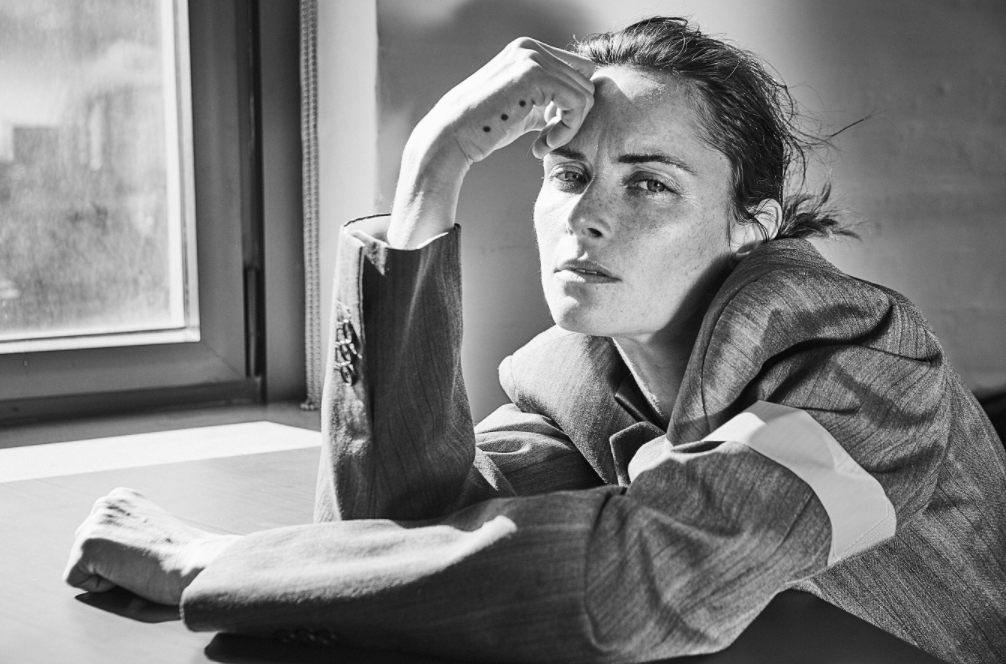
The industry veteran, and long-time favorite of Nicolas Ghesquiere, reflects on two decades in fashion and co-founding Sway, a boutique of sustainable and fair made goods.

Talk to us about your childhood.

I had a happy childhood—there were five children; three girls and two boys—and we lived in a big house in the countryside near Brussels. We always had friends and family stay with us during the holidays, and with five kids it was never boring. I took ballet, but honestly, I was more interested in playing soccer, which I did in school. I also sang in our school chorus and we made it on TV, which was a big deal in the early nineties. Around the age of 13, my father abandoned us—those were rough times— and then I started modeling around the age of 14.

You’ve had the type of career longevity aspiring models dream about. Why do you think you’ve lasted so long in such a fickle industry?

Thank you. I have no idea why or how I’ve lasted so long. When I started modeling in the late nineties, we thought it would only last for a few years. In the end, I’ve been doing this for over two decades. At the time I knew there was a limited time to work as a model. Luckily, views on beauty and style have evolved and wrinkles and different body sizes are no longer taboo. In my case, I was at the right age when that evolution started and that’s probably why I’ve worked longer than usual. About seven years ago it started to be cool to call back older models on the runway. I’m glad because the fashion industry needed this. When you look at the diverse group of models on the runway now, it’s absolutely amazing!

Talk to us about the genesis of Sway.

My younger sister and I own Sway, a boutique of sustainable and fair made goods. All of our items are organic or recycled and meet fair working standards. It all started in 2017 when our friends sold their sustainable shop in a great location. We both jumped at the opportunity because it was still a niche at the time. We wanted to break down all the negative perceptions about eco-friendly clothes and make more people aware of what they buy and where their clothes are made. We adapted the style and renamed it Sway. Since then we can happily say a lot more brands work sustainably. It is our job to filter through the greenwashing and choose the best brands for our customers.

For those who don’t know, tell us about what slow consumerism is and why it’s important to you.

Slow consumerism is an alternative to fast fashion. For the consumer, it is a way of investing and taking care of built-to-last items. It promotes a more sustainable way of living and consuming. It’s about respecting ethics and the environment, and not buying an item that will last one wear and then end up in the landfill. It actually influences a big range of your everyday habits—which is a good thing—and is necessary to save our planet and ourselves. 

What are the core tenets of Sway?

Every item we sell must meet fair wage standards for everyone involved in the process of making the clothes and fabrics. Many of our brands are members of the Fair Wear Foundation, and most of our brands are made in Europe. We also sell goods from artisans in Belgium. Another tenet is that every item must be recycled or organically grown. It should have the lowest possible impact on the environment, and on the people who make the clothes. We don’t aim for high fashion at Sway; everyone should be able to afford sustainable clothing. 

How do you decide what brands you want to collaborate with?

The collaboration depends on the tenets above, and if the brand’s style matches what we believe our customers are looking for. 

How has your business pivoted during the pandemic?

At first, we were really shocked and we thought how could you not be open?! This had never happened before to any business. Luckily, we invested in a brand new website in 2019 and we focused on our social media presence. We shot our collections, wrote blog articles, and stayed positive. After all, the world was on hold, so why panic? Our customers didn’t mind our approach, and the pandemic offered an opportunity to reflect. Conscious consumerism is a part of it. We’ve met many people who’ve decided not to buy fast fashion anymore.

What are your plans once travel is a reality again?

As a model, I’ve traveled the world, and it has taught me a lot. I would love it if my daughter could see the world as I did. We’re not making too many plans now for long-distance travel. For our next family trip, we’ve decided to take more road trips or travel by train and less by plane. It’s less exotic to stay in Europe, but it has so many aspects and exciting places to offer. We are visiting France this summer if it is OK to travel.

What would people be surprised to learn about you?

I’ve always been a tomboy and I guess I still am a bit. I love gardening—I’m a nature lover—and I couldn’t live in a city. Probably not too many people know this about me. 

Follow her on Instagram

Se Oh on Vulnerability, Identity, & America’s Reckoning With Race

“Being creative makes me feel grounded”

As America faces a wave of anti-Asian violence with Stop AAPI Hate reporting 3,795 incidents between March 19, 2020 and February 28, 2021, I spoke to Se Oh about how he’s feeling during this time, and how he balances modeling with his passion for set design.

This is a particularly terrifying time for the Asian community in America. How are you feeling in this current climate?

I feel vulnerable like everyone else. What worries me more is how the news further objectifies us rather than humanizes us. 

What actionable steps can someone reading this take to be an ally?

I think the perception of Asians must change first—and soon—stereotypes and all. Assess your own perception of Asians first, then be keen to see how Asians are portrayed in the media. Are we empowered or muted? Celebrated or fetishized? Bring your observations to the table when there’s a discussion pertaining to the issue. I’m a firm believer of how these conversations within communities—small and big—can ultimately influence the collective conscience of a nation.

In addition to modeling you’re also a set designer. Do you identify with one career more than the other, and how so?

If there’s one thing I know—without a doubt in my mind—it’s that I love making things. Being creative makes me feel grounded.

How did you get into set design?

I started working in theatre when I was a senior in high school for the missing credit in extracurricular activities. It literally changed my life because I felt like I found a place where all my interests—building, painting, drawing, music, and performance art—intersect. I felt right at home.

How has your background influenced your approach to design?

I understand things through imagery much better than literal definitions by nature. I think that does affect the way I design because I get bored quickly with hyper realistic sets. I’d either pitch for an abstract direction from the start, or I’d try to instill some sort of emotional statement in what initially appears to be a harmless kitchen set.

How much of your method is instinctual versus technical?

I like to think with my hands. Either I’m doodling, or I move on to making crude sketch models to turn my ideas into a tangible form. I try hard to not worry too much about the machinery; there are technicians capable of figuring that out for designers anyway. The biggest challenge for me when I’m designing is to ignore the pesky rules, like gravity. 

Where do you source your ideas, and what inspires you?

I love so many things, music, architecture, fine arts, even pretty birds. I also love listening to other creative people speak in interviews. I think I watched i-D’s The Fifth Sense episode on Es Devlin at least 100 times on YouTube.

When you’re commissioned to work on a project how much autonomy are you granted and what is your methodology?

It’s important to me that the process is kept fluid and conversational, like dancing. I can present to the director what makes my heartbeat faster, but if the director doesn’t respond the same way, then it’s crucial for me to pull back. Otherwise the dance is spoiled, and that’s not fun for anyone.

What’s the biggest misconception about what you do?

I’m more familiar with people’s ignorance than their misconception about what I do; which is fine. Maybe more people will become interested in live performances after having been confined at home for so long.

Follow him on Instagram

Introducing Hannah Matheny

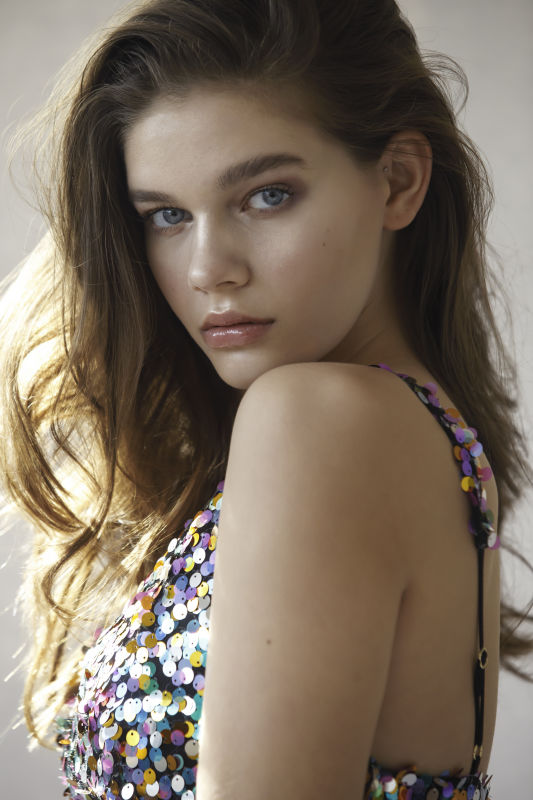
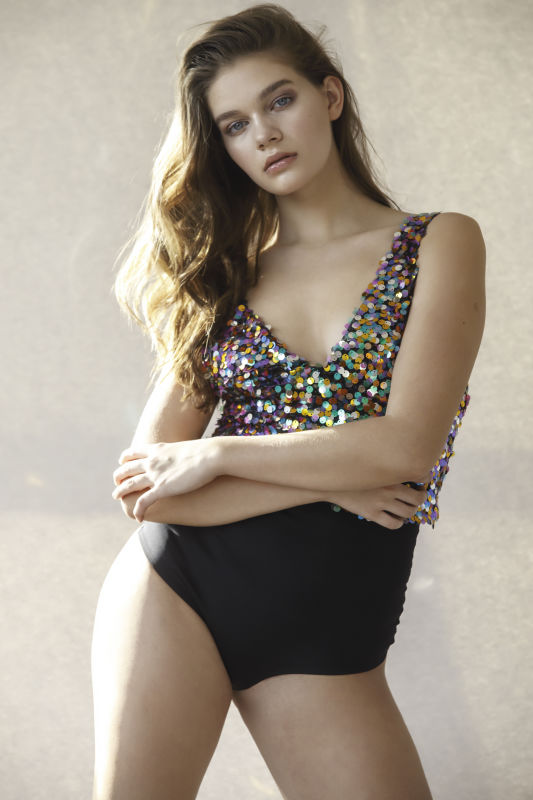
North Carolina native Hannah Matheny may be a newbie on the block, but her dedication and discipline—rooted in her love of dance—will stand her in good stead. After laying the foundation with The Model Coaches, Hannah signed with Muse’s Curve division—home to activist and body positivity champion Charli Howard.

Tell us about what your childhood was like.

I grew up in North Carolina and spent most of my time in school and the dance studio. I was very busy throughout my adolescence, as I was also involved in various clubs, volunteer experiences, weekend dance competitions, and I worked as a cashier in a grocery store. I started dancing when I was four and it helped me develop discipline, an appreciation for the arts, and a foundation for my future modeling career. At the same time, dance also initiated habits of disordered eating, and body image issues that I continue to work on to this day—especially remaining in an industry plagued with similar ideas. I left the South when I was 17 to attend college, and I found independence and opportunity in New York City.

Talk to us about how you were discovered.

The moment I reached 5’10”, classmates, friends, and even strangers on the street began to comment on how my height could easily lead me into modeling. I did not give their suggestions a second thought until I moved to Manhattan to attend college. After hearing further comments from my new friends—and living in a prime location—I finally looked into it. That’s when I found Trudi Tapscott. After attending a live coaching event held by The Model Coaches I signed on, making them my mother agency, and my journey began.

You worked with The Model Coaches before being signed to an agency. Talk to us about how that prepared you for modeling.

Anyone who shows curiosity about my modeling journey in the hope of beginning their own career knows that the first thing I will recommend is a mother agency. The Model Coaches specifically prepared me with resources that I would never have considered on my own. I had very little experience before I signed on with Trudi and The Model Coaches; however—within a few months—I learned the basics of shooting with a photographer, preparing digitals and a portfolio, interviewing with agencies, rehearsing a runway walk, and finding authenticity in everything that I present. After just those few months with The Model Coaches, I was fully prepared to sign with Muse Curve in New York City.

Before signing with Muse’s Curve division did you feel pressure to conform to a “straight” size?

I knew it was going to be a challenge being an “in-between” or midsize model from the get-go. I questioned where I fit into the modeling world. In the past, because of pressure I felt from society and myself, I had tried to work toward that smaller size, but I found that it was essentially impossible. I am not built to be a “straight” size model. After finding an agency who never expects me to change my body, and continuously provides me with equally welcoming clients and jobs, it was much easier to accept that myself. All that said, the modeling industry does still have some growing to do.

What misconceptions did you have about modeling when you started this journey?

The biggest misconception I had before entering the industry was that modeling was easy. I find a lot of people—even those who speak to me about it now—believe that. Just standing in front of a camera and smiling, right? In reality it’s much more difficult than it looks. Practicing poses, speaking to the camera, training for the runway, spending entire days on set beginning at the crack of dawn, going to castings daily just to face rejection, and waking up sore from a photoshoot were all things I had not previously thought about. After my first few shoots, interviews, and castings, my respect for people in this industry grew so much.

Who are your role models and what about them has inspired you?

I was lucky enough to grow up with a family that encouraged me to discover my passions and run with them no matter how risky or non-traditional they were. My entire family is inspiring to me, always demonstrating that you can do anything and everything that you want. I was fortunate enough to enter the modeling industry after necessary changes to diversify began. Black, Indigenous and People of Color (BIPOC), and plus-sized models have paved the way for people of all races, sizes, and abilities to gain visibility on social media and in fashion. Seeing people that look like you and who are proud of their bodies—as well as their character—is so important. Charli Howard, an English curve model, is one of those people for me.

What do you hope to get out of your career? 

I have so many dream modeling jobs that include walking for various designers, shooting covers for magazines, and appearing on billboards. It is a dream being able to continue to create art with my body, like I once did with dance. I never want to leave the world of creatives. Models, photographers, agents, and casting directors are some of the most innovative, artistic, kind, and compassionate people I have ever met. I am already beginning to feel the impact of my modeling career, despite the fact that I am still beginning my journey.

What are your goals for the future?

As a person with far too many interests to choose, I can only hope to do a bit of everything that I love during my lifetime. Modeling is the main priority at the moment; however, as I work full-time, I also attend an online university part-time studying Psychology and Women, Gender, and Sexuality Studies, as well as intern for a relationship, sex, and mental health therapist. A dream would be to incorporate my interests, potentially gaining a platform where I can speak on my mental health, queerness, and body acceptance journey, and be a role model to anyone who may relate to my experiences.

What would people be surprised to discover about you?

I am vegan and I have been for a little over four years, and I care a lot about sustainability. I typically thrift my clothes and shop from sustainable small businesses when it’s possible. As for my groceries, I try to buy in bulk when I can and carry all my reusable jars and bags to a food co-op store in Union Square to fill them up. I also love to cook. Right now I am obsessed with making vegan penne alla vodka, various curries, and a chili my dad curated a recipe for.

Follow her on Instagram

Tasha Tilberg on Sustainability & The Importance Of Being Connected To Nature

As one of the most prolific models of the nineties, Tasha Tilberg—the classic beauty with street cred—was as easily at home on the international runways of Europe as she was adorning billboards as the face of CoverGirl. With over two decades in the fashion industry under her belt—and no signs of slowing down—the Canadian beauty spoke about sustainability and following in the footsteps of her ancestors as a steward of the land.

The last year has been challenging for people living through a pandemic. How has your perspective changed during these times?

It’s reaffirmed my beliefs that food security, and sustainability are very important—especially in small, remote communities like where I live. It is also proving that people can still be productive while working from home, and that people don’t need to fly around the world constantly for meetings.

Tell us about how you were discovered.

I went to an agency in Toronto when I was 14. My sister took a fashion class in high school and encouraged me to try it.

At the beginning of your career you purchased a farm when you were just 16 years old. Talk to us about that and the importance of being connected to nature for you.

I had traveled to Japan and earned enough for a down payment on my old farm. I had always dreamed of having a farm and working with the land. My parents had a farm, but they sold it before I was born. My paternal grandparents had homesteaded near Thunder Bay, Ontario by a crossroads called Sunshine. I think being a steward of the land is deep in my DNA. Being connected to nature is in all of us, but sometimes—when we urbanize ourselves too much—we forget what the smell of forests and summer meadows are like. I believe all people can feel rejuvenated by being immersed in a natural environment.

The word sustainable gets banned around a lot without specificity. Talk to us about what sustainability means to you.

Sustainable can mean different things on different levels. On a farm—such as mine—economical and environmental sustainability go hand in hand. My goal is to create a closed circuit where we grow nearly all the food we need to sustain ourselves as well as all the food for our livestock. We strive to eat seasonally, preserving our summer gardens by canning and drying foods, and extending our growing seasons by use of greenhouses. Using manure to enrich the soil is as ancient as keeping livestock. We also compost or feed our kitchen waste to our chickens so that really nothing is wasted. This is small scale family farm agriculture. Selling our excess veggies to other families is another way of connecting and sharing, and keeping our communities fed locally, and not by trucking all of our food long distances.

There’s a coterie of models that have attained cult status in the industry. Why do you think you’re considered a cult model?

Am I? That’s cool—I had no idea–this is a hard one to answer. Maybe my winning personality? I think I came up in a time of real change in the industry. People enjoyed working with models with different personalities, but they also wanted you to be a blank slate. I rebelled and wanted to represent an otherness in fashion at that time, or I refused to ignore myself. I was always open about being in the LGBTQIA+ community as well. I started getting visible tattoos when I turned 15, and I loved to cut my own hair—especially undercuts—but it wasn’t always appreciated by clients.

What do you think are the common misconceptions people have about you?

I’ve always tried to be pretty open about who I am, so I’m not sure what kind of misconceptions there would be about me. Possibly they would be misconceptions about models in general. Generally, I know many models who are modest, thoughtful, and are striving to make the world a better place.

You’ve achieved the type of career longevity young models can only dream of. What do you attribute your success to?

I took many breaks for many reasons. I needed to recharge, and possibly it made people miss me. I was never fully immersed in the fashion world. I have spent my time enjoying parties and different aspects of life on the road, but I took time away to replenish my spirit and to build my family and home. I worked hard to acquire skills that gave me different perspectives, and it made me feel connected to nature and the generations before me, like gardening, spinning, and weaving wool.

The industry has changed so much since you began in the 90s. In what ways do you think the industry has made progress and what work still needs to be done?

I think there have been wonderful strides forward for the fashion industry. There has emerged greater visibility and diversity in this industry. It’s always evolving, and there is still a long way to go. Holding brands accountable for how they source materials—and the environmental impact—as well as livable wages, are the next important elements that need to be addressed.

In retrospect, what have you discovered about yourself on this journey?

I have discovered that there are many ways to cultivate happiness. I learned that I am really good at my job—I didn’t always feel worthy or like the job—but I always had a strong work ethic, and now I really enjoy it when I work. I feel I can fully represent myself, and feel respected. I’ve enjoyed growing up, maturing, and learning all the lessons life has thrown at me.

What are your hopes for the future?

I hope our world can find some balance. That our future children can have a world that has wonderful natural areas and wilderness untamed by humans.

Follow her on Instagram

Susan Holmes McKagan On Modeling & Why She’s Not One to Kiss and Tell

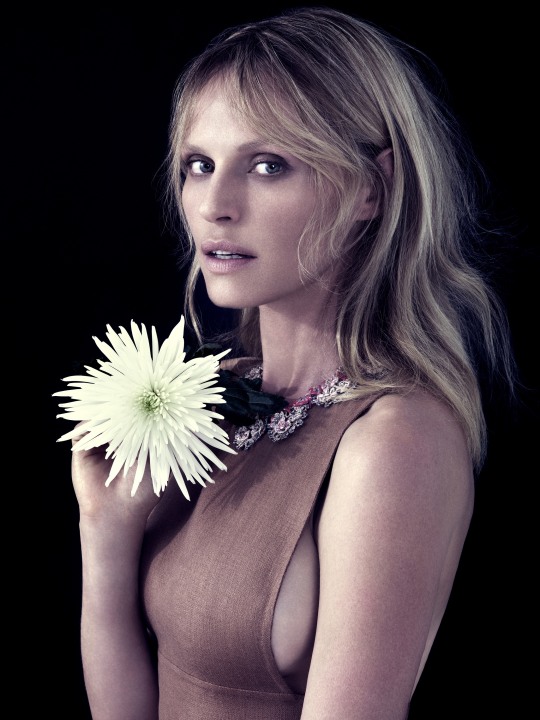
Throughout the nineties Susan Holmes McKagan was part of an elite group of models that dominated magazine covers, international runways, and whose ubiquitous presence dominated popular culture. She was a perennial favorite of photographers Steven Meisel and Arthur Elgort, the latter of whose book I Love…she appeared on the cover. From her stellar modeling career, to swimsuit designer, to author, and multiple television appearances, Susan has maintained the type of traction few others have been able to emulate. I recently spoke to her by phone from her home on the West Coast. 

I thought that we could start with how you were discovered.

My older sister Cynthia modeled—I always thought she was much prettier and smarter than me, I just idolized her—and I thought it looked so glamorous and fun. I loved fashion, and I wanted to dip my toes into that world so she inspired me to try. I went with my mom on a trip to New York and we did all the things a mother and daughter would do on a trip there.  We went to see a Broadway show, went out for a lovely dinner at the Quilted Giraffe—an iconic restaurant—and it was there I was spotted. The whole restaurant had 10 tables and was very chic and exclusive. While we were dining, I stood up to use the restroom and was stopped and asked if I was a model and represented by anyone. It turned out to be the amazing fashion photographer Marco Glaviano. He happened to be there dining with Jodie Foster, so that was pretty cool. 

He suggested I go and see Eileen Ford the next day and tell her that he sent me. I was only 16 at the time and I lived in San Diego. I come from a family of scholars. My dad is thrice a Fulbright Scholar—he never left school, it’s his whole world—and my mom has a master’s degree. In their world modeling didn’t compute so we settled on a happy medium and I signed to an agency in Los Angeles and modeled locally in San Diego and LA. After high school I went off to Paris and got a modeling contract. I was poached by an agent in San Diego who wanted me to compete in the Elite Look of the Year competition.

When you arrived in Paris how well were you received there? Did things take off for you quickly?

In my mind I was the San Diego beach girl—the big fish in a small pond—on the cover of San Diegomagazine, who booked pretty much everything. When I arrived in Paris I thought I’ve got this. I did a job for Elle magazine and a couple of other shoots but it wasn’t an overnight thing at all. I’m grateful because I may not have been the biggest model, but I have longevity.

There is still a real thirst for models from the 90s today.  What do you attribute your longevity to and why do you think people are still so obsessed with that period in fashion? 

That was the era of the supermodels. The models were the ones on all the magazine covers, walking the runways, and were coveted. It was mysterious because you didn’t have cell phones or access like now. It was glamorous, romantic, and hard to get into. It was difficult to get into fashion shows or even meet a model. That increases the desirability and want to get closer to that circle even more, I suppose. I am very blessed that I am still working a lot today. I am doing more covers than I ever have, and I am walking in runway shows. I am very grateful and humbled.  

Outside of modeling, I know that you have your swimsuit line and you wrote a book The Velvet Rose. I wanted to talk a little bit about the book. The premise has parallels between your life and the protagonist. Why did you choose to write a novel as opposed to a memoir?

That’s an interesting question because the obvious direction I could have gone in was to write an autobiography.

Like a tell-all?

Yeah, but that’s not my style at all. I have never been one to kiss and tell.

I respect that.

I think sometimes you can convey more through a fictitious novel than a tell-all. Remember the Jackie Collins novel Rock Star? I wouldn’t typically read that and then everyone I knew was reading it. I wanted to write a novel because I have been working fastidiously at honing my writing craft. I have been writing front page articles for the Huffington Post for years, and with more time during COVID-19 I went back to college and recently completed my first graduate level class at Harvard University in Feature Writing. I am thrilled and proud to say I have a 4.0 GPA. I wanted to not only dispel a lot of fantastic stories I had within me, but to tell them in a way that wasn’t gossipy or throw anyone under the bus; that’s not my style. I am a writer’s writer—or at least I like to think that I am.

Can you talk about how you think the fashion industry has evolved? There have been periods where diversity in size was touted—Sophie Dahl and Crystal Renn being two that come to mind—but both lost weight and became ‘straight’ sized. There have been very few models of color at the top too. Do you think it’s better today?

I think there is some progress—which I love—and I think it has been much overdue. The last cover I shot for Glamour was with a black photographer. I can’t think of a time when a black photographer shot me in the 90s. I could be wrong, but off the top of my head I can’t think of one.

That’s a really interesting point. I think when we talk about diversity we are always framing the conversation in terms of what’s in front of the camera.

Yeah, he is from Haiti. He is great. You know, he’s going to put a different paradigm and spin on the fashion and the message in the photographs. Yeah, of course we need more models of ethnicity and size and age. We haven’t talked about ageism, how about that? I think in America they need to get on the horn a little bit faster just as they do in Europe and embrace older women. Maye Musk, Joan Didion, Carmen Dell’Orefice are beautiful women. At the same time, I hate the portrayal of women as either young and vibrant, or older with gray hair. What about all the women in the middle?

Follow her on Instagram