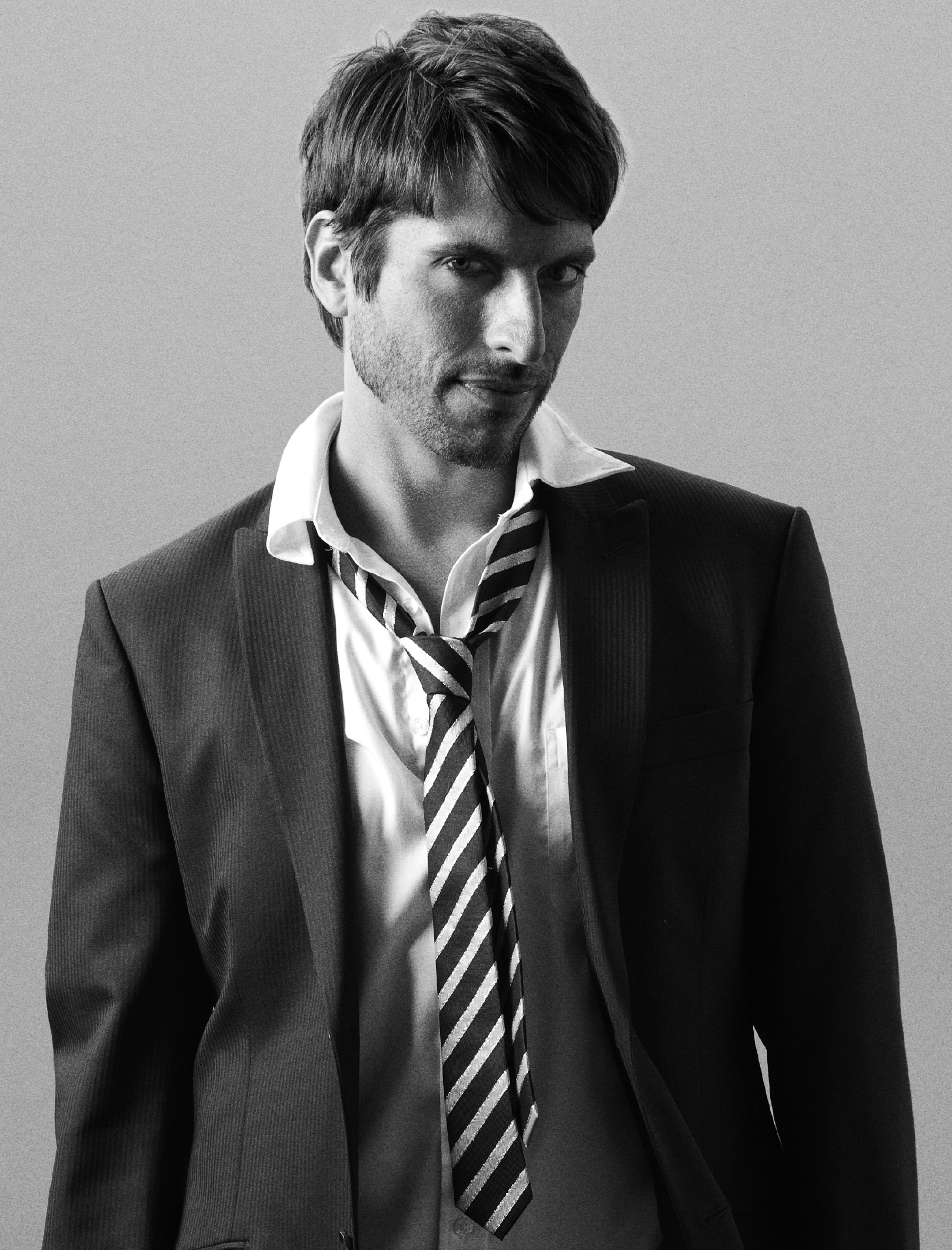
John Stapleton – MAC Senior Artist

Brooklyn native and L.A. transplant John Stapleton is a former model cum  Senior Makeup Artist at MAC. I spoke with John about MAC’s holiday 2011 collection, the MAC AIDS fund  in addition to talking about MAC’s collaboration with ice skating star Johnny Weir.  Here John shares his top beauty tips for creating a glamorous look this holiday season

Tell us about the Kids Helping Kids Tree Teddy Holiday Ornament.

This has to be the coolest tree ornament I’ve ever come across. It’s a silver teddy bear holding a VIVA GLAM I limited edition gloss.  One hundred percent of the proceeds benefit the MAC AIDS Fund which benefits people affected by HIV/AIDS.

What was the inspiration behind the palate in the Holiday 2011 collection?

The inspiration was definitely influenced by the winter whites we have recently seen in fashion, but putting a twist on it by glamming it up with glimmer and shimmer.

How can I incorporate sparkle into my everyday look?

There are a few simple ways to incorporate sparkle into your usual makeup. Don’t over sparkle! Choose one or two features to add some shine to. Try one of the MAC Cosmetics Glitter and Ice Beauty Powders swept across the cheekbones to bring some glimmer to the face. If it’s the eyes you are looking to showcase, try one of the metallic Technakohl Liners in Silver Skates. Apply inside the eye to add some alluring light or bump up your lipstick with an application of Dazzleglass in She-Zam to make lips pop.

The eyes are the window to the soul.  For anyone who wants to really glam it up this season what’s an easy to apply holiday eye?

Start with a Technakohl Liner in Fancy Moves and line inside the eyes. Line the top of the eyes thickly with the pencil and blend it up onto the lid. Choose a smoked purple shadow like Hold That Pose on the lid and blend it into the crease. Coat the lashes with black mascara.

How much of this collection was inspired by Johnny Weir and how did your partnership materialize?

Johnny has been a fan of the brand for some time. Johnny’s sense of style and outrageous interest in fashion is just the right amount of glitter we needed to add to MAC’s snowglobe-inspired collection.

What are the essential MAC grooming items every man needs in his attaché case?

Oil Control Lotion is a wonderful moisturizer and is masculine packaging. Take it one step further with some Studio Moisture Tint SPF 15. This will even out skin tone and take away the winter blues by instantly refreshing your face with a more bronzed look. Last but not least, lip conditioner is a must-have.

Can you tell us about your path to becoming a Senior Artist with MAC?  What do you love about the company?

After a stint as a model I switched careers and applied for a job at MAC. A friend of mine was leaving MAC and suggested I put my painting skills to good use.  That friend was Tarina Tarantino; she was leaving to create her own jewellery line and I went on to replace her at the Beverly Center store. I worked as an artist there for a year and moved into the training department. After four years in training I got the job of Senior Artist. Now I get to do the collections every season and feel shorter and shorter as the girls get taller and younger every year!

The Dazzlespheres! are a great holiday gift.  What’s the difference between the crushed pigments and the pressed pigments people typically use in an eye shadow? How does the application differ?

The crushed metal pigments are a unique blend of loose pigments and glitter. These are pure color. They definitely pack more punch than your standard eyeshadow. I find the best way to apply these products is with a firm brush. Try using a MAC Cosmetics Paint Pot as a base so the crushed pigment has something to stick to.

What products are essential to protect your skin from the harsh winter air?

Scrub!  Slough off dead skin cells softly with a loofah then moisturize.  MAC Complete Comfort Cream has tons of nourishing botanicals; the marine based formula imparts a soft glow while providing hydration.  Don’t forget SPF! Skin can still burn in the winter so it’s best to wear at least an SPF 15.

What’s the best way to apply the Technakohl liner to make my eyes appear larger? Can it be applied on the lash line, on top of it or directly on the water line of the eye itself?

It can be applied all ways. It’s great for inside the eye or to line the top. I love using a kohl liner to create a base for a smoky eye. Just line the eye thickly and buff it up toward the crease.

Every cent of your Viva Glam lipstick goes toward the MAC AIDS fund benefiting women, men and children affected by HIV/AIDS everywhere.  Why is philanthropy a core value of MAC?

The MAC AIDS Fund is the heart and soul of the brand.  There are so many of us in this industry that have been affected by this devastating disease and why not make an impact by selling something as simple and beautiful as a lipstick.   Buying a Viva Glam lipstick (indicated by its unique red packaging) is a conversation starter. Putting it on your lips and spreading the word can help crush this disease.

Follow him at @MAC_John_S


Michael Flutie – The Media Mogul

A prominent authority in the modeling industry for the discovery, development and management of models for more than 30 years, Michael Flutie has discovered and/or managed iconic faces such as Stephanie Seymour, Milla Jovovich and Cindy Crawford. Michael began his career in model management at 22-years-old for Elite Model Management in New York where he worked directly with international model mogul John Casablancas. His successes led him to Paris, where he worked with legendary model and model agent Louise Despoints for City Models. His scouting contacts across the country make him an invaluable asset to New York agencies.  Michael spoke to me about his new venture with the E! network, what it takes to make it in the competitive world of modeling and how tough love is sometimes the only option.

You helped develop Scouted for E! What insight into the industry can this show offer that is unique from other modeling based shows?

Fashion has, for the majority, been depicted and documented in major cities.  I’ve always felt that before New York or Paris or Milan, the true story begins with the discovery process of the model or talent.  I wanted to take the cameras to the heartland of America and show how a girl or boy is recognized for their potential; specifically, for those young kids who have never dreamed or thought that they were beautiful.  I’ve always believed that it is a Cinderella story and watching the work of the local scouts discovering new talent is really powerful.  I wanted the scouts to be recognized for their expertise in giving people a chance and making dreams come true.  Before supermodels and Hollywood stars attended red carpet events and graced the covers of magazines, they went to school, worked at fast food restaurants, shopped at malls and performed in high school plays.  The stars of Hollywood and Madison Avenue were all discovered and Scouted showcases the beginning of that process.

You were embroiled in a highly publicized legal dispute with model Amy Wesson over breach of contract in 1997.  What lessons did you learn from this time in your life and would you have done anything different in hindsight?

I was embroiled in trying to help somebody that I had scouted, created/developed, worked with and made into a very successful model, save herself from her own self-destruction from drugs and alcohol.  My position of taking a legal stand with her was my hard love approach to wanting to save her life.  The only way that I knew how to help, at the time, was to stop giving her bookings and stop feeding the ugly world that she got so involved in.   I froze her contract until she cleaned herself up.  I told her to not go to any other agency as I didn’t want her to self-destruct.  I hope that experience caused the industry to learn  that we have to be responsible for the young men and women who we introduce to the very fast-paced, financially-lucrative, glamorized adult world of modeling.   Amy knows that I really care and love her and was looking out for her best interests and we’re good friends now.

Amy Wesson for NARS

Throughout the 1980’s you worked with Cindy Crawford, Stephanie Seymour, Tatjana Patitz and others.  How has the modeling industry changed since the heyday of the supermodels?

The industry has become much more of a corporate business.  There are a lot more models than there used to be.  The opportunity to find an agent is easier with the Internet; you can submit pictures of yourself directly to the decision makers.  Also, the expansion into Western Europe has made the field much more competitive.  At the same time, brands are being much more cautious with their money, so celebrities have taken many more of the lucrative contracts that in the past would have gone to models.  Celebrities are the lure for consumers more than models.  As a result, they grace the covers of magazines more frequently than in the past.

You advocated for the fair treatment of models and even voiced support for a model’s union or guild to protect their interests.  What framework do you think needs to be created to support new models entering the business?

There is a need for programs in modeling agencies that support safe conditions for models.  I grew up in a time in the 80’s where there were closed backstage sets for a lingerie show and it was a very protective environment.  I feel as though this has changed and I think that we have to take a look at the working conditions today.  If, in fact, a young girl is working and home schooled, it should not be any different from a young actor working and being home schooled.  The industry itself has to breed and support wellness and wellness programs so that girls are healthy and work proper hours and in proper conditions.  I think that Paris and New York try to maintain regulations.  However, in the fringe markets, this is more of a problem.  An acknowledged guild in the industry could provide a great opportunity to set up and create standard guidelines for models to succeed without being harmed.  That includes everything from nutrition and diet to business management and long-term financial strategy.

Now, more than ever, girls aspire to model as a career choice.  What advice can you offer an aspiring model wanting to enter the fashion industry?

Find a really good agent that really believes in you.  Always be professional.  Study the industry.  Be very responsible to the profession in terms of the clients, photographers and stylists that you work with as they are your lifelines to prolonging your career.  Participate in the creative process, always take risks and don’t marry any man who doesn’t have a job and calls himself a producer.

Topshop Advertisement Withdrawn Following Complaints it Encouraged Anorexia

Media doesn’t tell people what to think but it does tell them what to think about.  Do you think the fashion industry is culpable of perpetuating an unrealistic body image?

It’s not just the fashion industry that is responsible for perpetuating unrealistic body images; it’s everyone in the public eye, from musicians, to actors, to athletes.  It is the responsibility of advertisers, brands and designers to represent true body types.  The fashion industry is definitely culpable of showcasing a specific model body type, but they are trying to do a better job at representing different figures.  For example, the Dove beauty campaigns or the cover of Italian VOGUE have increased the use of “real people” in brand communications allowing a much more honest representation of what people look like and what is healthy.

Do you notice diversification in the modeling industry as more companies enter non-western markets?

Yes, I do.  However, the same “It” girls are used in every show and campaign.

Social media has become an integral part of any business.  How have you integrated social media into your business and how do you plan to evolve your brand?

By producing television shows through my production company Madwood, like Scouted, and through our management company Flutie, that specializes in representing experts, I intend to evolve my brand with the knowledge I’ve been blessed with over the past 20 years.  With social media changing every day, we are trying to catch up by communicating via all social media platforms; our blog, Facebook and Twitter.  However, there is nothing better than good old fashioned face-to-face meetings or picking up the phone and speaking to someone.  Part of my brand is to integrate the use of social media on a global level but also remain personal.


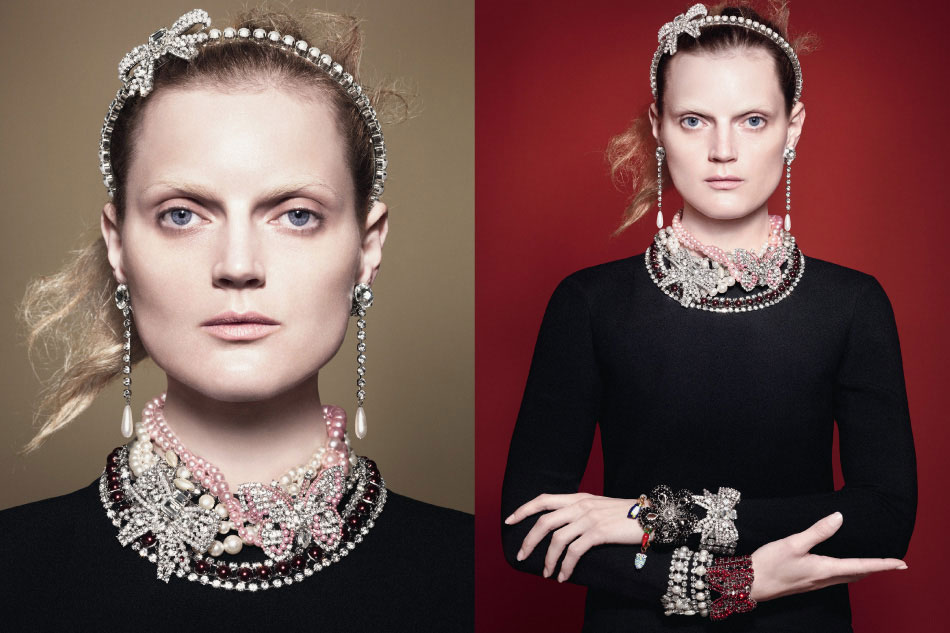
Guinevere Van Seenus in Miu Miu Resort 2012

Miu Miu’s 2012 Resort campaign features 34-year-old model Guinevere Van Seenus.  At twenty years the previous models senior, do you think either model more accurately represents the demographic of the brand?

No.  I think Miu Miu is trying to expand their brand. Miu Miu, as a brand, is much more youthful and I think that Prada is trying to increase their consumer demographic.  With the increase in life expectancy, 40 is the new 20.  Therefore, brands are responding to this by marketing and promoting products that are typically targeted to a younger market and associating them with more mature consumers.

What part does brand development play in creating a lasting and sustainable career for a model?

It’s a huge part of the brand identity and developing the DNA of someone’s persona.  Talent Brand Management is a term that we created and coined in the year 2000 that defines this.  It represents the management of the brand of a talent in understanding that not only celebrities and models can be representatives of brands, but also experts.  These experts have an influential voice that consumers can associate with and value because it is based on education, knowledge and authenticity versus just good looks.  By developing one’s brand, one is guaranteeing a lasting career.

Do you think we’ll see the return of the household name supermodel again?

With the increased interest in fashion on a mass level and with the kind of television programming that we’re creating, hopefully, the household supermodel will return.  Beautiful men and women, who will be developed in brands as experts, will once again become the celebrities and hopefully grace the covers of magazines and new media platforms.

Follow him at @MichaelFlutie

Beri Smither – Blonde Ambition

International cover girl and American model famous for her million-dollar smile, Beri now looks to develop young hopefuls who were once just like her. Originally from Salem, Oregon, Beri was discovered by former French VOGUE editor Carine Roitfeld.  Beri has appeared on the covers of countless magazines, including American, British, Italian and French VOGUEElleMarie ClaireGlamour and Cosmopolitan.  Beri spoke with me about her involvement in Scouted and what it takes to remain at the top after all these years.

How have you been able to stay the course and continue when most girls disappear after a few years?

The fact that I have been able to sustain a long and fruitful modeling career is more than I could ever ask for.  First and foremost, I give credit to my amazing management team.  Longevity has always been our focus.  We have flowed with, and adapted, to the demands of popular culture and the economy in order to best utilize my skill set.  Being innovative and willing to continually reinvent yourself contributes to longevity as well.

Aesthetically speaking, I fall into the “classic beauty” category versus “unique beauty.”  I inherited a great pearly white smile that can take you a long way too. These assets all play a part in the longevity of my career.  Classic beauty equates to approachability and a smile conveys happiness and joy.  Also, I’ve always looked at everything I encounter in the business as an opportunity and I try to use those opportunities to the best of my ability.

What qualities must a model have today in order to succeed in the modeling business?

First, they need to meet the physical requirements.  What sets models apart are their personalities, passion, intelligence and business sensibility.  In order to become a successful model, one needs to have all of these attributes.  They also need to be able to move well in front of the camera and know how to speak for on camera work such as TV commercials, digital content, hosting jobs, etc.

What support for models would you love to see created that doesn’t already exist?

I would love to see a union that provides health insurance similar to the one offered by The Screen Actors Guild.  I’d also like to see a governing body that regulates working conditions so that models are protected and safe.  It would be really great for young boys and girls to have access to access mentorship and be provided financial and investment planning along with tax planning.

Why this TV show?  What drew you to becoming involved in Scouted?

I was drawn to this show because it is an amazing opportunity to utilize my experience. Scouted is an authentic reality show documenting the process of finding a “diamond in the rough,” preparing her, then getting her signed to an agency.  Michael Flutie is the producer and creator of the show so I trusted the aesthetic of what we were documenting.

Can you talk about your relationship with Michael Flutie?  It’s rare that a girl stays with her agent throughout her entire career?

OMG!  Michael Flutie means so much to me.  I absolutely adore him.  He is my agent first then friend and mentor second.  Because of our long history together I consider him family.  He has always been on my side and shown me his true self through his actions.  He is the real deal.  I have been on and off the beam in life and work, but Michael has always been consistent with me giving me honest support and love no matter what.

I respect Michael and I think he is brilliant.  One of his most impressive qualities is his positive outlook on life and he always fights and stands up for what he believes in.  His opinions are usually in the minority most of the time, which in my experience, is often the wisest and most innovative.  Michael tends to paddle upstream before others catch on.  Michael is not afraid to make mistakes, and more importantly, not afraid to take business risks.  His energy is infectious and always inspires me.  Michael challenges you, makes you want to be a better person and to give more of yourself.  He truly is one of a kind.

How did you cope with the initial thrust into fame with modeling?  What effects did it have on you and how were you able to integrate it?

I found the initial thrust into fame was very helpful.  I believe it created an easier path for me. When you are in demand, everyone wants to keep the logistics running smoothly for you.  Having these things hammered out for you allows you to have less of a struggle and consequently less stress.  That was my experience.  I feel incredibly blessed by my journey on in modeling.

Can you talk about the change we’ve seen in model’s bodies the past five years?  Is the standard different today than it was when you first started?

What works, body wise, has ebbed and flowed and I believe it always will.  Fashion goes in a circle and lands on one or two trends for about five years then moves on to the next thing.  However, the last five years have been monumental.  For example:

  • Plus size modeling has found its place and is being rightfully celebrated.
  • Beauty and fashion campaigns started using beautiful people, not just beautiful models.
  • The Council of Fashion Designers of America created a health initiative campaign to raise awareness and create an atmosphere that supports the well-being of these young women.

You’ve worked with every major photographer in the business, what piece of advice would you give a model going on her first test shoot?

Get involved, ask questions, show your personality, be confident and connect with your team on set.  Get involved in what image they are trying to create.  Understand that this is your stage. Don’t be afraid to be what you think will make a good photo and ask for feed back.  Try all sorts of things with your body and facial expressions.  It takes work and a lot of energy.  Whether the shoot demands high energy, stillness or a mix, just be focused.  Most of all – have fun!

How much control does a model have in her career?

That’s between her and her agent.  It’s a relationship.  Ask questions and stay in tune.  Learn as much as you can about the business.

A new girl watching Scouted wants to be discovered.  What advice do you have for her? How does she get started?

First, she must be 5 feet 9 inches or above and have the face and body of a model.  If she is shorter and still thinks she can work then she should submit pictures of herself to modeling scouts.  There may be a rare exception like Kate Moss.  Hello!  Major!

Next, she should ask herself if she has what it takes.  Is she passionate about the idea of modeling?  Does she like to travel?  What is her true motivation?

Scouted premieres Monday, November 28th at 10pm ET/PT on E!

Erin Olson – The Scout

With a resume that includes work as a model, scout, agency owner, fashion writer and stylist all over the world, Erin is a working mom in one of the largest Mormon communities in the country, Salt Lake City, Utah.  Erin took time out from her busy schedule to talk to me about what she looks for when scouting new talent and why bangs do not the girl make.

Scouting new models is crucial to the modeling industry. It keeps the talent pool full of fresh faces. Where do you go to discover new faces?

A good model scout never stops looking.  I always have my eyes peeled for fresh faces because you never know where or when you’ll discover someone.  I randomly scout for girls, but I also like to go to events or places where I know girls who might fit into the model mold might be.  Discovering someone can happen anywhere from a high school track meet to a basketball game to a volleyball game because girls who participate in these sports tend to be taller than others.  Dances, concerts and even malls are also places I like to look and one of my new favorite places to scout is on Facebook; you can tell a lot from a photo.

Do you target certain regions or ethnicities as trends change?

Once in a while I like to scout in smaller towns because I know they are untouched by other scouts or local agencies.  I don’t target specific ethnicities unless agencies tell me they are looking for a specific look.  Once, I was in contact with a top agency in New York City and they said they wanted me to find Native American girls.  After that, I found myself scouting pow wows and Native American gatherings.

What age do you think is appropriate for a model to start work in a larger market such as New York or Paris and why?

Every girl matures differently. Some girls I scouted at the age of 18 were more immature than some of the 14-year-olds.  I know New York City and Paris are very demanding markets to work in.  If a girl is ready and mature enough to start modeling at 16 I see no problem with sending her to work, as long as it doesn’t interfere with school.

Beyond the beauty of the modeling industry, how do you prepare the girls you work with to handle the business of modeling?

I teach them how to walk like a model and how to move in front of the camera so they can start learning what will make them successful.  So many girls think they can model and the second they step in front of the camera, they freeze.  I also try to help them understand the importance of etiquette and interviewing skills because, after all, castings are the same as interviews and no one wants to hire someone who doesn’t represent their company well.

What character traits do you look for when scouting a girl?

I think it’s important for girls to have their own voice and to be able to communicate without the aid of their parents.  I also look for a great smile and a friendly nature.  A model can’t go to New York City, London, Paris or Milan on looks only.  It’s crucial to find girls who have a tough skin to handle rejection and, most importantly, I look for girls with good business sense because they are, in essence, their own business owners.

After a girl is placed with an agency, are you still able to have any say or control on the development of her career?

I certainly hope so.  I establish a relationship with them from the beginning that is built on trust and I feel that I’m always a part of their development.  The more we meet, the more opportunity I have to help develop their skills, even if it’s only to update digitals photos.  Trudi Tapscott manages the girls and is primarily responsible for developing them and making the most important decisions for their careers; there isn’t anyone better.

Is it possible for a 22-year-old model to begin her career in the fashion industry today, or is that considered too old to start her career?

Twenty-two is not too old at all.  In fact, it could work to her advantage if she has kept herself looking good and her measurements are right.  Her maturity level could be a huge advantage for her.  There seems to be a need in the industry for more mature models.  Overall older models handle the business better than a 16-year-old and usually understand the importance of perseverance.  Many young models leave the industry because they don’t see the bigger picture.

Most models look quite plain or even odd looking without makeup, hair and the other accoutrements.  Have you always had a keen eye for photogenic faces or did it develop with experience and time?

When I was about eight or nine I remember looking at VOGUE magazine with my mom and her best friend Nancy.  They said something to me that I’ll never forget.  “Erin, do you notice how none of the models have big bangs?”  They said that because they wanted me to know that just because everyone else had big bangs, which was a huge trend in the 80’s, didn’t mean it was beautiful.  From then on I saw beauty differently.  I developed the ability to see beyond the obvious and see the potential in the less obvious.

When did you become aware of model scouting and how did you end up becoming involved in the process?

I don’t remember a specific time when I became aware of model scouting.  I spent over 15 years in many aspects of the industry: buying, showroom sales, styling, modeling and model management.  That gave me a unique understanding of the fashion and modeling industry.  This combination of experience, I believe, developed my ability to scout.  I fell into scouting because I have little kids and it is the most flexible way for me to stay involved in the industry and still be a mom.

Trudi Tapscott is one of the greatest model scouts in the industry.  How has working with her changed your perspective?

When I opened Echo Models in 2008 I struck up a relationship with Trudi Tapscott when she was at DNA.  I felt so lucky to know her and have a great scouting partnership with one of my favorite agencies of all time.  Trudi instantly became a mentor to me as I was managing models and I relied on her expertise when things got tough.  As I scouted and managed more girls, it became increasingly difficult trying to be mom, scout and model manager.  Freshly Scouted and Trudi Tapscott Model Management was born and I started working directly with Trudi.  I have 100 percent confidence that she has no interest other than the models best interest.  It’s such a rare quality to find.  She’s changed my perspective immensely and my knowledge of the modeling industry has forever been changed.

Follow her at @ErinScouted

Learn more at Freshly Scouted

Scott Lipps – The Powerhouse

Scott Lipps by Terry Richardson

Founded in 2002 by Scott Lipps, One Management is a hybrid branding company whose primary focus is bringing together the elements of fashion, film, music and celebrity.  One’s current roster of talent includes a number of well known and extremely successful models including Claudia Schiffer, Helena Christensen, Iman and Eva Herzigova.  Scott talked to me about what it takes to run one of the top modeling agencies in the world and his involvement in the new show Scouted which premieres on E! later this month.

A models career is typically short-lived; How does One Model Management ensure career longevity for its models?

I think the key to this business is branding and working with clients for a long time to create opportunities.  We work with a lot of iconic models and they are their own business in some cases too.  The right combination of editorial, advertising and branding is essential to maintaining their career.

Do you work with scouts outside of your agency or do you keep the scouting internal?

The best advice I can give is to have good pictures taken and submit them to the top five agencies in New York City.  Normally, if there is tremendous potential, somebody out there will notice.

When you discover someone you think has modeling potential, but isn’t ready to move to New York City, what do you suggest they and their parents do to prepare them to enter the world of modeling?

It’s essential to do your homework.  To prepare yourself, you must educate yourself.  Study various photographer’s work and research as much as you can.  It’s always better when you are familiar with the style of their work.

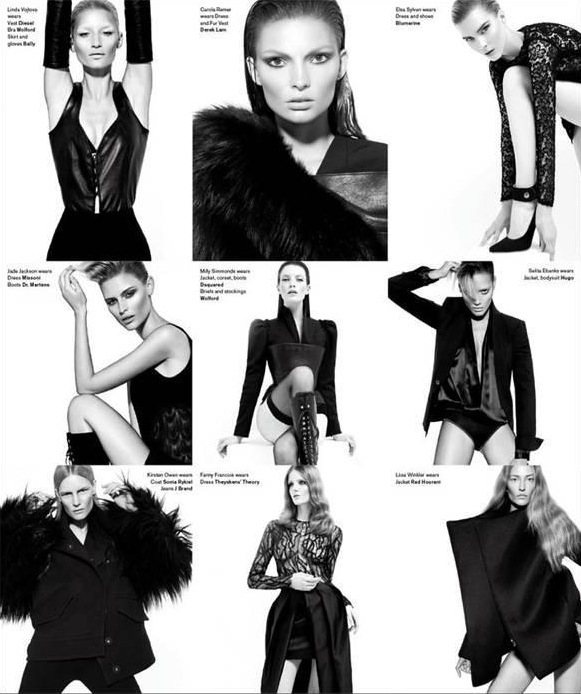
V Magazine’s Model Issue featuring One Models

A model’s physique is specific.  How do you navigate the sensitive issue of weight management without giving the models a complex?   

We always look for the right physical characteristics coupled with a great attitude and personality.  It’s not enough just to be a pretty face these days.  If you want to have a long career you also must have a great personality to boot. It’s all about eating healthy and taking care of yourself.  We usually educate the girls on these issues.

When representing a model who may not be modeling the next season, how do you prioritize, balance and maintain relationships with long-term relationships such as: photographers, editors and casting directors?  

I think the idea of a model mentor is always interesting.  Experienced models can pass down advice to younger models breaking into the business.  One of our models, Kim Iglinksky, does this and it seems to be very helpful.  I think the girls all deal with fame and the fast paced lifestyle differently.  It’s important to be grounded, as things can change quickly in this business.  People appreciate girls that are gracious and personable.

You represented Colette Pechekhonova when she made her comeback into the industry.  How did you mitigate those waters and make her a viable product again?

Colette is a timeless beauty.  She divides her time between New York City, Russia and Paris, so we work around her busy travel schedule.  We work with tastemakers in the business on finding key jobs that are the right fit for her.

Colette Pechekhonova

You built One Model Management from the ground up in 2002.  What drove you to get out of bed and make it happen the first few years?

I guess hard work never scared me!  I just didn’t over think it; I worked hard and knew that with a great team and hard work we could do well with great talent.

Why Scouted?

I loved the idea of doing something credible in the fashion industry with girls that I believe could go on to have a good career in this business.  I’ve known Michael Flutie and some of the other experts for years and it seemed like a great fit.  Although it is sometimes rare in this business, honesty can go a long way.  It seemed to me that Michael Flutie had a great rapport with some of the girls he represented.  We have known each other for years and we have always had a mutual respect for each other.

As a drummer, do you feel like you’re still drumming today, backing up the band with the innate beat that lives inside?

I was fortunate enough to perform with Hole and Courtney Love recently.   This weekend we are playing a huge festival with Kanye West, The Black Eyed Peas and Duran Duran in Brazil and I don’t miss a day of work…how cool is that?

Follow him at @Scottlipps