Project Runway: The Show That Changed Fashion

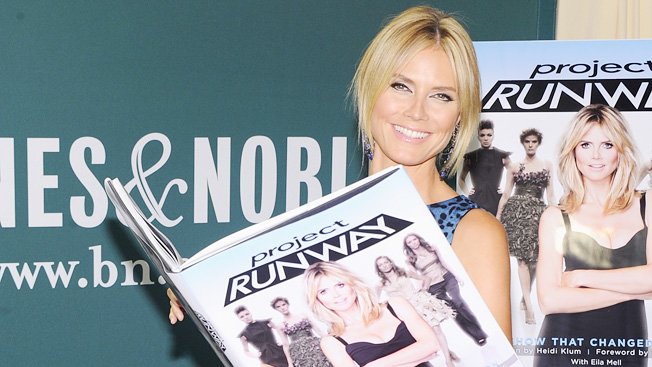
Journalist Eila Mell has spent many years writing about fashion, theater, and film and interviewing some of the biggest names in the fashion and entertainment industries. As Eila launched her new book Project Runway: The Show That Changed Fashion she shared some surprising insights about the show, now in its tenth season, with me.

Do you think Project Runway is a viable platform to launch new designers?

I think Project Runway is a very viable platform for new designers. They are introduced to many key players in the industry. The status of being on the show can propel their career forward and advance their name recognition. They not only have the invaluable opportunity to work with Michael Kors, Nina Garcia, Heidi Klum and Tim Gunn, but all of the show’s guest judges are top notch.

How do you think Project Runway has informed the average American’s view of the fashion world?

Project Runway has brought the fashion industry to the average person.  The show has given people a glimpse into the world of fashion they otherwise wouldn’t have had.  For example, how many people knew about Fashion Week prior to Project Runway?  It has also helped people have a greater understanding of how designers work.  Obviously established designers are not designing their collections in such a short period of time, but it definitely suggests what the process is. In addition, Project Runway has allowed many designers to showcase their talents and expand their audience base.  Before Project Runway, where did you find people like Francisco Costa, Zac Posen and Georgina Chapman on television?

What challenges did you find when researching your book Project Runway: The Show That Changed Fashion?

Writing Project Runway: The Show That Changed Fashion was a pleasure.  I would say the biggest challenge I faced was having to decide which designers I could interview and include in the book.  Every single one is in there, but I couldn’t interview everyone (much as I would have liked to)!

On Late Night with Jimmy Fallon Heidi Klum stated, ‘We had a lot of cowards on the show’ in reference to two designers walking off. Why do you think many of the contestants struggle to cope?

What people might not realize about Project Runway is that, although the show airs weekly, the production schedule is daily for 4-6 weeks without a single day off.  In addition, the designers have no TV, radio, internet or communication with friends and family.  Keeping that in mind, it’s not hard to see why it might be a struggle for some.

Why did you want to commemorate Project Runway with your coffee table book?

This season marks the show’s 10th anniversary.  I felt this was the perfect time to commemorate a show that has really changed the way so many view the fashion industry.

What do you think people would be surprised to know about the show and those involved in it?

People might be surprised to know that the contestants have to work without air conditioning (the show is shot in summer).  The air conditioning is too loud for the cameras.

Now in its tenth season, how do you think Project Runway has maintained its longevity?

I think the show has been around for ten seasons because it has integrity.  Situations aren’t manipulated to titillate viewers.  Project Runway is a show about talented people doing what they love to do, and I think the audience enjoys watching the creative process.  I also think the cast (Heidi, Michael, Nina and Tim) is part of that equation.  Tim brings so much to the show.  The judges have a great chemistry, and approach the judging from different angles in a way that blends perfectly.  One should not underestimate Heidi Klum;  She helped create the show, is one of the producers and is the ideal host.  She is smart, funny and honest, and I think the audience appreciates that.

What projects do you have in development that you’re excited about and would like to share?

I am excited to continue writing books about the fashion industry.  In addition, I have a blog called Not Without My Gucci, and I have just signed on as a stylist for a new project.

Project Runway: The Show That Changed Fashion by Eila Mell is available at Barnes & Noble and Amazon
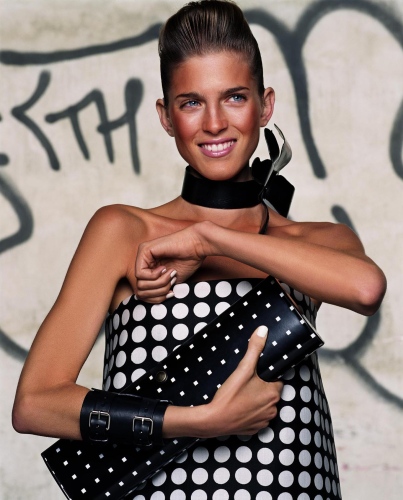
Sierra Sullivan – Strength in Beauty

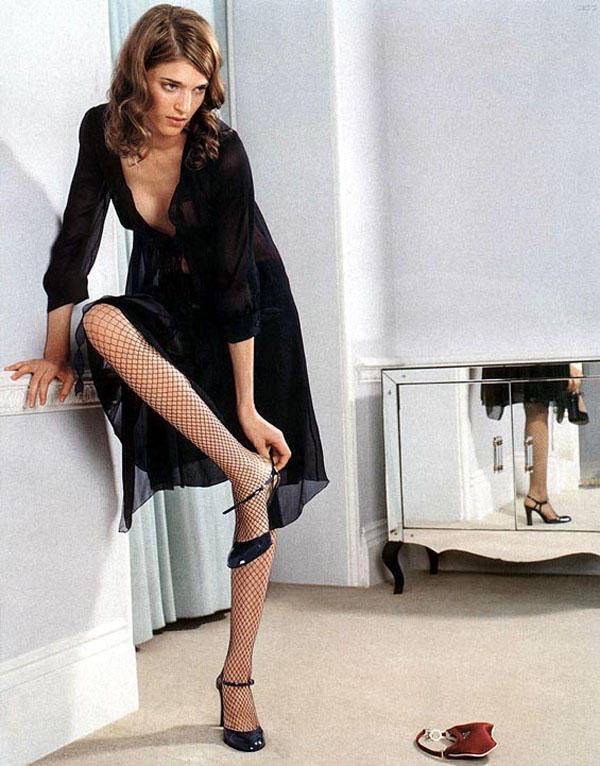
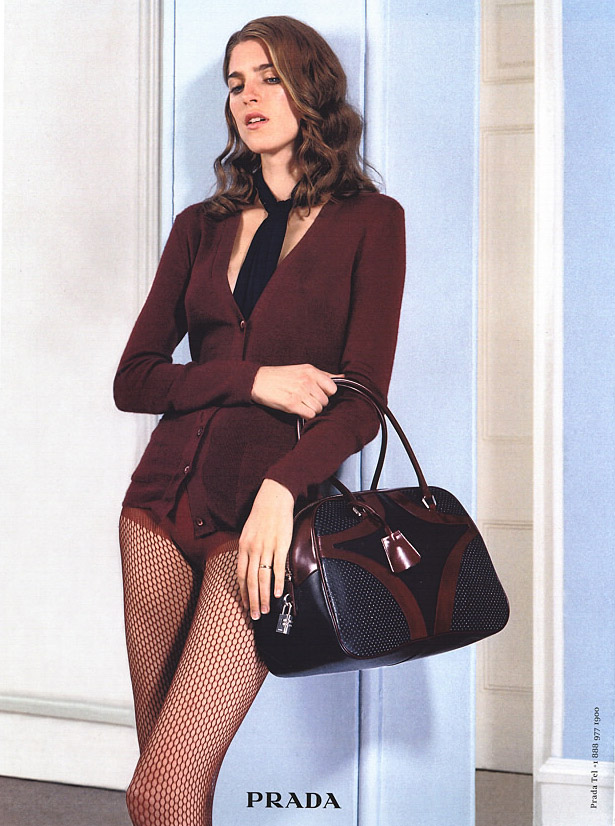
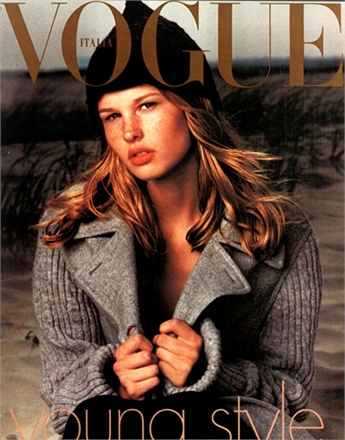
Sierra Sullivan was discovered at a modelling convention and shortly after graduating high school was treading the runways of Milan, Paris, New York and London.  She secured a solo girl spot in the Spring 2000 Prada advertising campaign in addition to the covers of numerous fashion magazines.  Sierra took the time to speak with me and Emily Sandberg about her time modelling with unusual candor and maturity.

The Model Alliance is working toward improving the working conditions of models.  What’s your experience been like?

I’ve experienced pretty much every working condition – good and bad. The worst condition was working past midnight and for over 14 hours with minimal food. The best was in a controlled studio environment with plenty of food all day and finishing by five o’clock. In France it was amazing because they would take a leisurely lunch with (diluted) wine! While I don’t think the general working conditions are too terrible, I agree that they should be improved and maybe even regulated to prevent overworking the models, and other crew members, because of a lack of organization on the client’s part. 

The payment system used by agencies has been nebulous.  What type of reform would you like to see happen to the way models are paid?

This is a very good question as there is no way to keep agencies accountable without contacting the clients themselves. Personally, I would have no problem receiving the payment directly from the client and then pay the agency their cut plus any expenses incurred on my behalf. After all, the agency works for me.  Since that will most likely never happen, I would like to see it become mandatory that clients receive a model’s personal phone number and/or email address at the time of booking so that when the client cuts a check to the agency, the model is also notified.  That way the model knows that a check is arriving in a matter of days to the agency. That prevents an agency from “holding” the funds (whether the model is aware of it or not) for any unnecessary reason. I have heard horror stories of an agency using payments to pay for a booker’s personal home while telling the models the clients never paid. Awful.

I would also love to see a system where there is, at the very least, a deposit on the models at the time of booking. Nowadays it can take from six months up to a year, or more, to get paid for a single job. This has to stop. The system as it is is so abused. It’s simply not fair. Either pay a 50 percent deposit before the shoot date, or better yet, pay the rate in full. Otherwise, how do you enforce a 30 or 60 day payment rule? It’s a tough one.

What do you think about the celebrity culture that dominates the fashion industry?

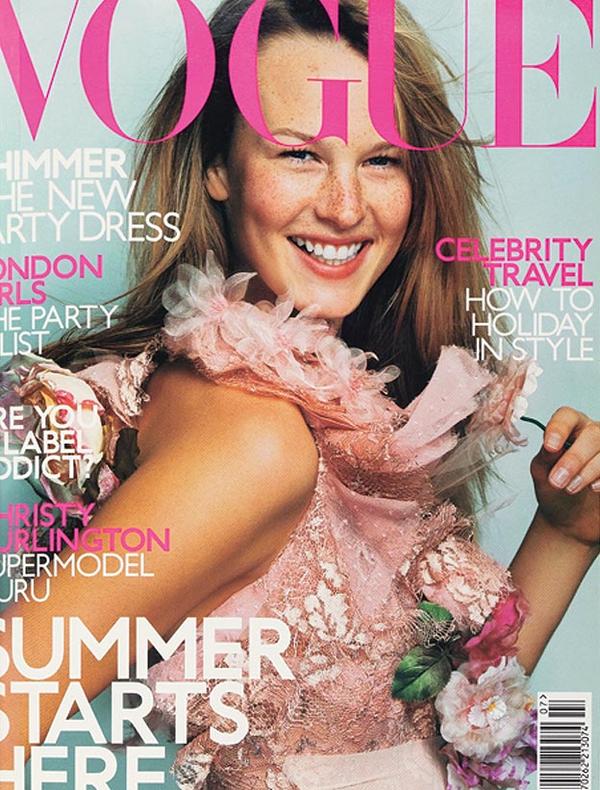
I totally get that celebrity images sell. There’s no doubt about that. It’s really unfortunate though because for me, it’s getting old. I admire certain celebrities, I do, but it has become one huge marketing tactic with a celebrity appearing on a cover mostly to promote an upcoming film or project. There’s no longer much of a celebration of beauty and something new, like when Karolina Kurkova made the cover of American VOGUE. That was exciting! I love perusing the French and Italian VOGUE’s and other independent fashion magazines for the love of aesthetics and art. That is something we don’t really seem to appreciate in American fashion. The fact that women like Snooki and the Kardashians are highly profiled is deeply disturbing to me. I don’t necessarily want to ban all celebrities but there needs to be more of a mix of models, art, beauty and worthy celebrities…like Adele.

How do you feel about the media’s portrayal of beauty?

There is definitely far too much Photoshop being used. I don’t mind a pimple or glaring mark being erased, but when a model or celebrity’s actual physical attributes start getting changed, such as boobs, waist and hip sizes, and faces get completely cleaned up to the point of absolutely no wrinkles or marks on the skin, then it’s no wonder teens, and adults for that matter, are being driven mad trying to keep up with the ideals of media-enhanced beauty. It’s just impossible! Only a few of us are so blessed with near perfect skin or body shapes. I remember a photo shoot I did years ago for Numero magazine with photographer Thomas Schenk. The call time was 8 a.m. and I was in front of the camera by 8:15 a.m.. How did I get my hair and makeup done so fast? There wasn’t any! All they did was curl my eyelashes and tease my hair a bit. I pretty much woke up from bed and got in front of a camera. Very refreshing and the portrait turned out great. Also, when I did the Guerlain beauty campaign, they even left in my scar that’s on the side of my eye; No Photoshopping. I’m not sure they would do that now. So yeah, let’s get back to real beauty.

How do you think the Council of Fashion Designers of America’s health initiative will impact the types of images presented to the public?

Didn’t they try to do this in Europe? I didn’t see any changes in the size of the models and I would be very surprised if there was much of a change here. The bottom line is that as long as designers use small sample sizes and demand tiny models, the models will have to be thin to work with them. The designers will have to change. I’m sure some will, but not all of them will. While I’m glad there’s a plus-sized modeling industry out there, what about the normal girls that are size 4-8? That is what a large number of healthy women are. It’s not healthy to be underweight but it’s not healthy to be overweight either in reference to plus-sized. It may be average, but it’s not necessarily healthy. So, I don’t have a lot of confidence that the health initiative will have much of an impact.

You are a diabetic, how did you manage your health with the stressful physical demands at the height of your career?

It was very difficult and a less than ideal situation. Being a diabetic and having to be that thin did not mix. I simply did not manage it well. It is actually because of it that I had to leave New York City and move to California. I couldn’t handle the pressure to be that thin as a diabetic anymore. It wasn’t sustainable. I got healthy again after my move. While I lost the momentum of my career, I gained my life back and am now happily married with an amazing little two-year-old.

Does your hearing impairment affect your modeling?

Only when it comes to having to understand what the photographer is saying when his/her face is behind the camera. The fact that I’m hearing impaired may have scared off some clients from booking me. Other than those two things, it hasn’t affected my career at all. I’ve never let it keep me from achieving my goals.

How did fronting the Prada campaign change the course of your career? 

It brought on a slew of new bookings and campaigns. It was great!

Who were some of your favorite people in fashion to work with?

Some of my favorites were Bruce Weber, Debra Watson (stylist), David Sims, Ralph Lauren crew and Thomas Schenk.

Any fun summer plans?

We live in Laguna Beach, a destination millions go to every year, so we’ll be spending most of our summer here. We are also planning on going to Lake Tahoe for a week to visit family.

Follow Sierra’s blog and view her portfolio here.

Eila Mell – Reflections on Fashion Week

Journalist Eila Mell has spent many years writing about fashion, theater, and film and interviewing some of the biggest names in the fashion and entertainment industries. I caught up with Eila and she shared her views with me about this years Fashion Week.

The Council of Fashion Designers of America’s efforts to ensure all models who work New York Fashion Week are over 16 years old wasn’t observed by all agencies. Last season, at least two agencies, Ford and Women flouted those guidelines, and models aged 14 and 15 walked for a number of top designers, including Marc Jacobs, Tory Burch, BCBG, and DKNY.  What do you think about the disregard for these guidelines?

While I agree that the guidelines are important, they are not policy.  I think the more important thing is to establish some sort of regulations to protect models of all ages.

Marc Jacobs was quoted in Time saying, “You have child actors and children who model for catalogs.  What’s the difference between doing a commercial for peanut butter and being on a runway?”  How do you feel about Marc’s stance on the use of models under 16 years old?

I agree with Marc Jacobs in principle that there isn’t much difference.  In fact, I think that an underage model probably has to work fewer hours than an underage actor.  My concern however, is that of supervision.  Child actors have parents with them on a set.  Are underage models accompanied by a parent?  If so, I think it is much less of an issue.

Puerto Rican model Joan Smalls was New York Fashion Week’s top non-white model walking in 20 shows.  Do you think this year was more or less diverse than previous years and why?

I think this season saw a lot of diversity.  Not only did we see Joan Smalls, but Nyasha Matonhodze, Anais Mali, Jasmine Tookes, Sui He, Tao Okamoto and Liu Wen were some of the other fabulous models who were all over the runways.  That said, if 20 was the most a non-white model walked in, it is nowhere near the 72 shows Julia Nobis walked for Spring 2012.

Crystal Renn recently lost a significant amount of weight prompting outcries of betrayal.  On what side of the debate do you stand and why?

Weight is such a personal issue.  I understand that for many Crystal Renn represented beauty at any size.  However, if she wanted to lose weight I don’t think anyone should criticize her.  Only she knows what’s right for her.

What do you think about the work The Model Alliance is doing?

I think the work Sara Ziff and the Model Alliance does is fantastic.  Why shouldn’t models have their rights protected?  The things they are working toward, such as affordable health care and protection against sexual harassment are things that are commonplace in other work environments.

Fashion editor Suzy Menkes took the industry to task over the public soap opera of designer replacements at various fashion houses. How do you think this has effected public opinion of the fashion industry?

I don’t think it had any effect on those who don’t follow the fashion industry.  For those who do it’s an interesting topic of conversation and speculation.  Who will replace them?  What will the transition be like?  Overall, I don’t think it will change anyone’s opinion of the industry.

There has been much discussion of late about the use of ‘tribal prints’ in designer collections.  Do you think western cultures need to be more sensitive when referencing Aboriginal or Navajo design, for example, or do you feel the appropriation of such design is exploitative?

I do think that there needs to be sensitivity when referencing a culture that is not your own.  That said, I don’t think that designers are trying to appropriate another culture simply because they are inspired by it.

Do you agree with the assertion that New York City is the epicentre of fashion and why?

I don’t think any one city is the epicentre of fashion.  I do think New York has certain advantages, such as being the first to show during Fashion Week.  In addition, New York has the wonderful Garment Center, an invaluable resource for the industry.

Follow her at @eilamell

Amy Lemons – Defying Convention

Amy grew up in Richmond, Virginia and before long she was working with amazing photographers like Bruce Weber and Steven Meisel. Her second job was the ultimate dream job for a girl from Richmond, working with Kate Moss for the Calvin Klein campaign. From that point on, she worked for everyone from Abercrombie to Louis Vuitton, from Versace to Valentino, Hilfiger and Ralph Lauren. She loved it, until she noticed people were making comments about her size, some mild, some blatantly rude.  She would hear things like “you are a pretty girl, but slightly “too healthy” for my taste”.   Amy signed with Ford+ in January 2009 where she started working immediately.  Amy took the time to speak with me about her experiences and work with the Model Alliance.

You have worked both as a straight sized and plus sized model.  What have you learned from this experience?

I’ve learned that I’m really not a straight or a plus sized model. My size does not define me and my management recognizes that and represents me as the individual I am.  That hasn’t happened to me before and it has been the best experience of my career so far.  The modeling world can categorize me and I am fine with that but I represent a size in between the two worlds and there is a huge gap in that market.  Why do we have to be a size two or a size 12?  There are a lot of sizes in between that need representation. I think it’s important for models to know that there is a choice out there.

Some people accuse the modeling industry of body fascism, others see thinness as part of the territory.  On what side of the conversation do you stand and why?

I think all body types are part of the territory.  A whole other world has been opened up to me in the fashion industry.  My curves were embraced and no one has tried to pin me as stick thin which I will never be.

Eating disorders are endemic in the modeling industry while the majority of Americans struggle with obesity.  How do you define wellness and health?

I define wellness and health by my own standard.  Every body type is different and there isn’t one approach to fitness.  It takes work but I have found a balance where my body should be naturally and I believe that is where a woman looks her best.  It’s different for everyone.  Some girls look great as a size four, like Sara Ziff, because that is where they are naturally.  Some girls are a size 14 and look amazing like model Ashley Graham.  I don’t feel I have to compromise myself any longer and I am being embraced by the fashion industry.  That is a great feeling.

What did you learn about yourself during your time away from the industry?

When I left for Los Angeles and went back to UCLA I found a whole new happiness and stability that I never felt before.  I realized I wasn’t defined by my looks and the modeling business.

What do you think about the unobtainable images perpetuated by the media?

I think women want less illusion in their fashion images.  There’s an emerging ‘let’s get real’ mentality that makes women less competitive and more supportive of each other.

How is your experience now as a model different than the beginning of your career?

I wish the Model Alliance was around when I started in the business.  I wasn’t able to properly talk about my struggles and therefore they got worse.  It can be very alienating.  The Model Alliance brings girls together and gives them a voice.  It advocates for models so they are not compromised and we asks for standard rights in the work place just like everyone else has.  It is even more important when you are dealing with minors.  We are also working to provide health insurance and I believe that is a great place to start.

Follow her at @AmyLemons

Trish Summerville – The Stylist

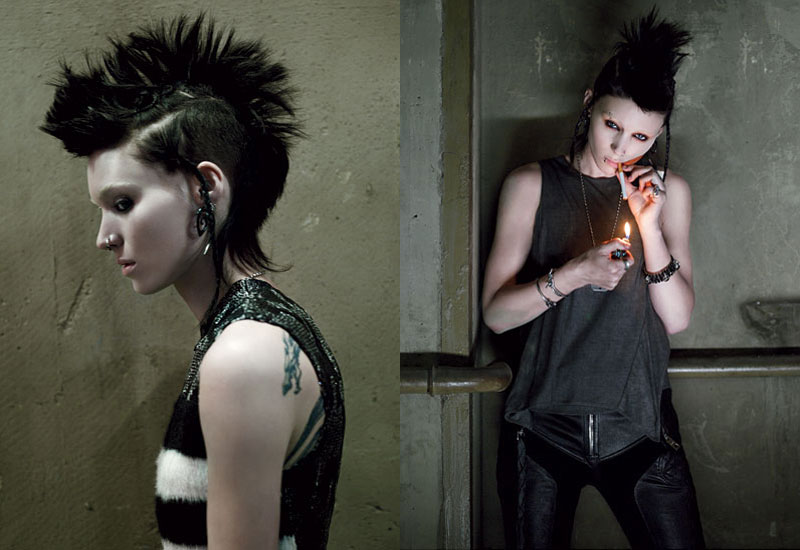
Trish Summerville is at the top of her game with a list of credits to her name that reads like a veritable who’s who of Hollywood.  Her latest work on the blockbuster movie The Girl with the Dragon Tattoo and following collaboration with retail behemoth H&M have inspired a generation wanting to emulate the tough-as-nails aesthetic of lead character Lisbeth Salander.  Trish took time from her busy schedule to speak to me about her life and work.

Can you talk about the process of sourcing inspiration and the references you used when styling for The Girl with the Dragon Tattoo?

When I began making vibe and inspiration boards for The Girl with the Dragon Tattoo, I sourced everything related to European and American culture with a specific focus on Swedish culture.  I referenced Söder kids for clothing, style, hair and makeup.  I also sourced inspiration from squat house youth, 80’s under ground punk females, street kids, oil spills, cracked asphalt and insects for color and texture.

Stylists are increasingly becoming household names.  How critical do you feel a stylists’ work is in making someone a star in Hollywood today?

On a feature film, dealing with costumes for characters, you are a Costume Designer. The term stylist pertains more to the red carpet, commercials and videos.  I feel fortunate when I have the opportunity to work with talented actors. I feel that it’s the actor’s talent and persona that make them a Hollywood star and we are here to assist them with cultivating their style and helping them successfully create different characters for each role they choose to portray.

How did your collaboration with H&M happen and are there plans to collaborate with them in the future?

Sony and H&M approached David Fincher and Ceán Chaffin about doing a collaboration.  We all felt it was an ideal fit.  H&M is a Swedish household name and the story line is set in Sweden.  Also, Lisbeth Salander goes on a shopping trip to H&M in the second book of the trilogy The Girl who Played with Fire.   Working with H&M was a wonderful experience; I would love to have the opportunity to work on another project with them.

You have worked with David Fincher on various projects in the past.  Can you describe your working relationship and why you think it works well?

David is one of the most talented, intelligent and creatively collaborative people I have ever met.  He is very communicative and focused making it very easy to deliver.

How does styling for music videos differ from working on feature films?

When working on a feature film you have much more character development and authenticity.  Generally, with music videos, the talent and the label want to be very fashion conscious and cutting edge.

How do you want to evolve the Trish Summerville brand?

I am definitely interested in working on various projects.  I’d like to do more work on feature films along with a fashion and jewelry line.

Of all the various platforms you work across do you have a favorite and why?

I truly enjoy all the different aspects of fashion and costuming I work in.  I like to keep my work varied as it keeps it more creative and intriguing for me.  Each different platform inspires and compliments the next.

What traits do you think it takes to be a good stylist and make it in such a competitive industry?

Always be authentic in your vision and never let your ego get in your way.

Have you noticed a shift in the ratio of female to male clients you style for and if so what is noticeable about it?

I truly enjoy dressing men as much as I do women.  They both present their own challenges and rewards.

Did you know you wanted to be a stylist when you started your career or was it an evolution?

After I won the Costume Designer Guild Award for The Girl with the Dragon Tattoo, my parents recounted a story to me from my childhood.  They told me that when I was very young I would walk around the house dressed up in a random collage of clothing stating in my version of a French accent, “ This is Givenchy.”

My mom says, “That’s when I knew you would work in fashion!”

Learn more about Trish