Behind Girl Model: Filmmaker Ashley Sabin on Fashion, Truth and Documentary Storytelling

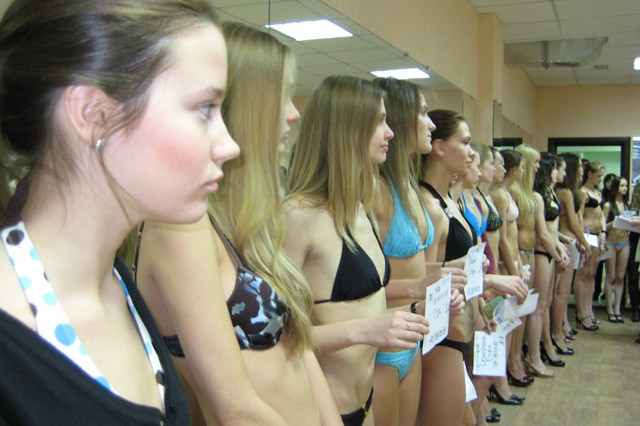
I recently spoke with filmmaker Ashley Sabin about her latest documentary Girl Model, a film that documents the fashion industries supply-chain between Siberia, Japan and the United States as told through the experiences of scouts, agencies and 13-year-old model Nadya Vall.  The film contrasts the innocence of Russian model Nadya against jaded model cum scout Ashley Abraugh in a film that is equally disturbing as it is engaging.

What motivated you to make the film Girl Model?

In 2007 Ashley Arbaugh the scout in the documentary approached us with the idea of making a film.  Her idea was to make a film about modeling and prostitution and the foggy line between the two.  After a year of discussion and trying to figure out what story we wanted to tell, we decided to make the film largely in part because of her.

What challenges did you face when making Girl Model?

I think the biggest challenge we faced was dealing with Nadya and the other young model.  The film is framed in such a way that we were behind the camera and it was difficult to know when to step in and when not to. We stepped in a lot and that isn’t shown in the film. It was important to us not to make their situations any more difficult than they needed to be, but at the same time we were documenting and we wanted the situation to be as authentic as possible.  It was tricky to have them not rely on us too much but at the same time knowing when to help them.

What biases, if any, did you discover you had about the industry during the process of making the film?

I didn’t come from the fashion world and neither did David (Redmon). I knew very little about the industry. What I knew is what most people probably know like walking down the street and seeing a billboard or looking at magazines in line at the grocery store.  I hadn’t engaged with it in such a personal and intimate way and I had no real understanding of it.  These images look back at us and the question for both myself and my partner David became to ask what is going on behind the image.  The labor and age of the models are things we now question when we look at fashion advertisements.

Do you think models that are scouted in developing countries are at a greater risk of being exploited and why?

I wish it was that way. Unfortunately, when we screened the film in association with The Model Alliance and invited models, casting agents and designers to view it, the universal response we got from people was that this happens everywhere.  It is pretty unremarkable that it’s an industry that is unregulated.

What action can the audience take to empower themselves after watching the film?

Recently, with our partner The Model Alliance , we created a petition to give child models the same protections as all child performers.  Models aren’t protected  under the Department of Labor unlike actors. We are targeting the state of New York to protect models under the Department of Labor to ensure the fashion industry abides by these laws.  I can’t encourage people enough to sign the petition.

The film explores subjects such as isolation and vulnerability. Was this intentional or a reflection of reality?

The isolation was something we saw early on when Nadya got to Japan and we wanted to contrast that with her experience in Russia where she had a support system, family and school. There were specific choices we made to bring out the feeling of isolation because that was something that really stood out to us.  That’s why we chose the color palette that we chose with Russia and Japan.

What regulations would you like to see implemented to protect working models?

I think any regulation is a step in the right direction when you don’t have any.  There have been movements in the fashion industry but the hard thing is there needs to be an external body or set of laws as opposed to the industry regulating itself.

Veteran model and scout Ashley Arbaugh expressed disdain for an industry she continues to work in and profit from.  How do you feel about her decision to continue working in the industry?

I think Ashley is a very complicated person. The fact she approached us in 2007 and was involved in the industry but at the same time wanted to be a whistleblower is something that initially attracted us to the story.  I think her motivation changed during filming. I think at the beginning she thought she was going to get out of the industry and as the film progressed she got deeper into the industry.

What message would you like the audience to take away from the film?

I’d like people to look beyond the images staring out at us and wonder who these girls are and where they come from. These images are part of our consciousness and daily lives. We all are active participants with what is happening in the fashion industry through our consumption of these images. Humanizing the models and asking ourselves the tricky questions like why we are looking at young girls to represent women’s bodies and why we use such young girls is critical.

Learn more about Girl Model here
Roger Frampton – Witness The Fitness

Model and personal trainer Roger Frampton is taking a fresh approach to fitness without the use of gyms and weights.  His Re-Model-Me personal training has been employed by everyone from designer Patrick Cox to Ryan Barrett as he fronted Versace’s underwear campaign.  Roger’s approach is accessible and tailored to each individuals needs and goals without employing fad diets and gimmicks.  I spoke with Roger about his philosophy on fitness and his goals for the future in this insightful look into the world of  personal fitness.

What advice would you give to someone wanting to embark on a fitness regime that may be daunted by the idea?

The best advice I could give to someone wanting to start any fitness regime would be to not run before they can walk.  There is a lot of hype in the media e.g. “Get ripped in 12 weeks”.  It is not really like that.  It is a journey that never ends.  It’s important the individual learns to work with their body.

What is your philosophy on wellness and fitness?

Personally, I am very open-minded, as is our company. People want a simple answer, but there is none, and I believe the day we realize that there is no answer we can actually start to enjoy life more.

How does Re-Model-Me differ from other personal training regimes?

If you think of a boot camp, we are the complete opposite.  We are teachers, showing people movements and new techniques using three plane motion bodyweight only rather than the “get down and give me 20” philosophy.

How important is it to balance the right nutrition with training to achieve results?

It is everything; I believe each diet should be suited to the individual.  We all have different goals, backgrounds, tastes and sources of stress.  We cannot all have the same results from the same diet, but that being said the big principles are the same.

What are some of the common misconceptions you encounter when working with new clients?

* Calorie counting

* Wondering why there aren’t any weights

* Women worried they will get arms like Madonna (which they don’t)

* Not understanding the importance of rest

* That when it hurts you stop

What are the key elements to achieving success in personal training?

For me it has been listening, paying full attention to each individual, constantly learning and understanding that everybody is completely different and again not trying to find the answer to the ultimate workout.

As a successful working model why did you want to develop your own personal fitness brand?

As models you are paid to make clothes look good.  If I bulk up in the gym using weights it’s possible the clothes might not look as good.  A lot of trainers don’t understand this concept so I have taken on the responsibility of showing the world our approach that you can achieve a great physique without the need for a gym or weights.

Why do you think people give up easily on their fitness goals and how can they change that?

I think the main problem is in the media, which promotes people’s demand for a ‘quick fix’ when there is no quick fix, no time frame or special program. You just start where you can and go from there slowly, patiently and consistently but giving 100 percent and maintaining faith that things will change. You must have self-belief to keep this up.

How has working in the fashion industry influenced your approach to fitness?

Everything I have done in my life has brought me where I am today.  Working in the fashion industry has been amazing and having recognition in the fashion industry is helping me spread the word about Re-Model-Me’s gym-free and weight-free training.

What are your personal and professional goals for the future?

To spread the gospel, to keep learning, to keep teaching, to test theories, to question studies, to stay open minded and to smile.

Learn more about Re-Model-Me

Follow him at @RogerFrampton

Introducing James Gatenby

James Gatenby may be a newbie on the modelling scene but he is already making a big impression. He opened exclusively for Louis Vuitton and is being courted by agencies in Europe and New York. Rarely does a model get the opportunity to tell their story at the genesis of their career and when stardom arrives it is even rarer.  James spoke to me about his hopes and aspirations for his career and the highlights thus far.

How were you discovered?

I tried a new hair stylist, and it just so happened he worked for GQ. At first I thought they were just being nice when they said “You should be a model.” Surely they said that to every customer, right? Then it turned out they were serious and had booked me an interview at Priscilla’s (my mother agency).

You studied Biochemistry at university. How do you think this changes people’s perception of you as a model?

People usually do a double-take when I say I studied Science, it does seem a bit contrary to a pursuit like modelling.  Hopefully they then realize that models can have passions besides modelling, we aren’t just one-dimensional. Some people don’t realize that a lot of models study even while modelling. They could be future doctors, lawyers or business owners.

How did you feel when you were booked to open exclusively for Louis Vuitton?

I was ecstatic, up until the show I don’t think I could stop smiling! I kept thinking, “This must be a dream, surely I’ll wake up soon?”, but I didn’t and I couldn’t be more thankful for that. My bookers were happy as well, one had tears in their eyes and had told their parents the good news. They really care about you and to me that was the most important part of being told about the job.

What are your aspirations and goals for the future?

In the short-term I want to travel, meet interesting people and do the best that I can in this industry. In the long-term I am passionate about medical research and when I find the time to go back to university I’ll be completing an Honors and a Ph.D.

What do you hope to get out of your modelling career?

I love that I am part of a creative industry producing works of art. Hopefully, that makes up for my deficiency in other artist abilities like drawing things that aren’t stick figures.  I want to experience life in different countries, different cultures; travelling while you are young is an experience that everyone should be able to have.

How do you handle the pressure and rejection that comes with modelling?

I have never let my appearance define me, so when I am not right for a job it’s never a personal issue for me. That’s the sort of attitude you need to have in this industry – thick skin is a must. Sure, there is pressure to look your best, but I can’t change my bone structure or my metabolism so I don’t even begin to worry about those things.

What do you think people would be surprised to learn about you?

That I am Australian. Everyone says I don’t look or sound Australian. I have an interesting mix of European ancestry that has influenced my appearance and living in England at a young impressionable age has changed my accent ever so slightly too. Sorry for being confusing casting directors.

What has been the highlight of your career so far?

Apart from Louis Vuitton, I would say the moment when I was told an agency in Milan (2morrow) wanted to sign me. It was at that point that I felt like I could succeed as a model and make something out of it. They have been so supportive and I can’t thank them enough for all the work they have done.

What do you do to decompress from the pace of modelling and refocus?

When I need to clear my head, I often go for a run. It allows me to focus on the simple motion of my body and forget everything else. To relax, hot tea is always the best option.

How do you cope when you are away from family and friends in Australia?

Australia is pretty far away, but the internet is a fantastic tool for staying in touch with those close to me.  I can call my family on Skype, see what my friends are doing on Facebook and anyone can follow what I am doing day-to-day on Twitter. It doesn’t replace face to face interaction and I can’t wait to see them all when I get back, but it helps me stay connected.

Follow him at @JimmyGModel

Versailles ’73: An American Runway Revolution

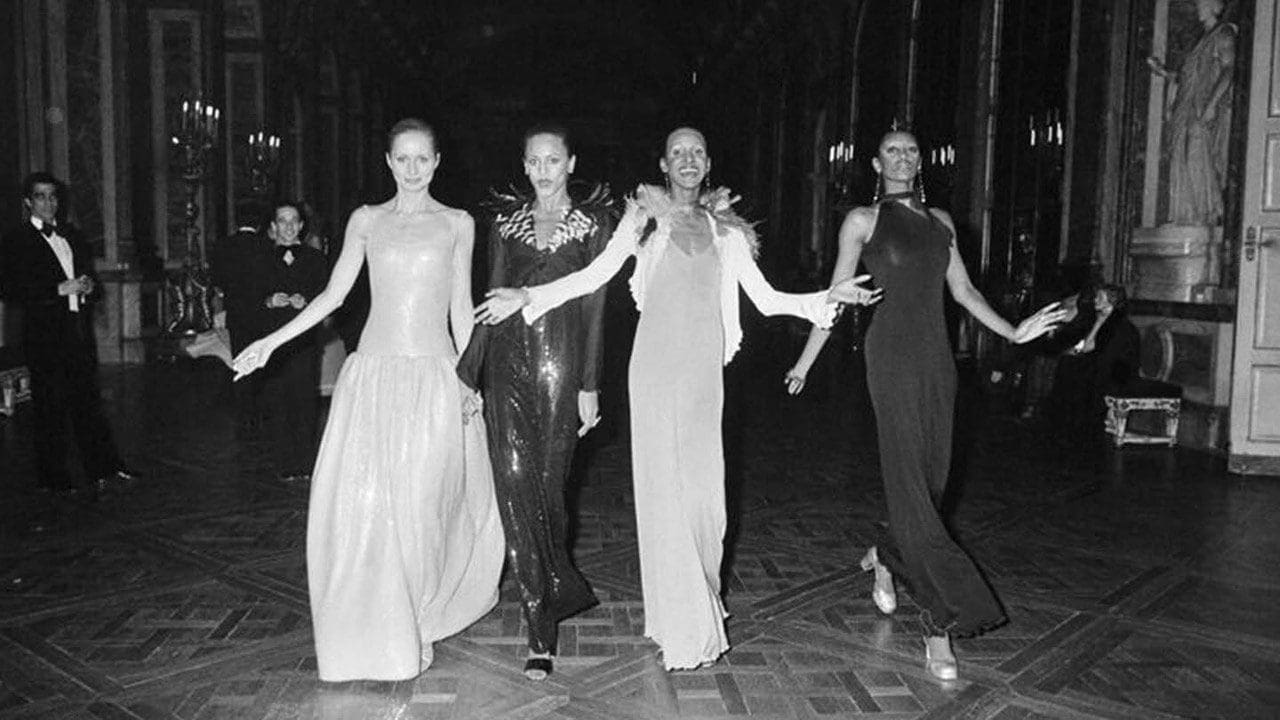
On a chilly evening in Paris in November 1973 fashion history was made.  Initially conceived as a fundraiser orchestrated by American fashion publicist Eleanor Lambert and Palace of Versailles curator Gerald Van der Kemp, to raise money to restore the Palace of Versailles, American designers and African-American models emerged triumphant in a battle royale against their French counterparts.  Deborah Riley Draper directed the documentary Versailles ’73: An American Runway Revolution exploring this pivotal moment in fashion history and spoke to me about the process, politics and legacy of this historical event.

What challenges did you face when making Versailles ’73: An American Runway Revolution and where did you gather support to help you walk through the challenges?

The biggest challenge was finding attendees from an event that took place 40 years ago.

What about this event in fashion’s history resonated with you and inspired you to document it?

I was so inspired by Eleanor Lambert’s big idea and her courage and tenacity to make it happen. I was obsessed and in love with the black models who brought not only beauty but style and passion to a runway in a château filled with 650 of the most influential people of the period.  And, I wanted this story told, known and used to inspire young women of all races to reach for the stars.

Fashion and politics are two worlds that rarely cross paths. What did you learn about the politics of fashion during the process of making this film?  

I think fashion and politics cross a lot.  Fashion is always fueled by patrons and benefactors who are connected to power and …politics.  In this case, the highest levels of French government were involved in approving this event and the U.S. Ambassador was an honorary host committee person.  Also, I think American politics have always impacted fashion. WWII impacted the hemline due to fabric shortages.  Women went to work and wore more pants.  The U.S. Commerce department hired Eleanor Lambert to promote fashion around the world to increase exports.  The youth revolution expressed itself through fashion–hairstyles (Afros, dreads), clothing ( no bras, power suits) are all tied to politics or at the very least political inclinations.

How do you think the financial landscape in fashion has changed for women of color in fashion since this period in history?

I think the number of women of color behind the scenes has increased tremendously.  I think the concept of beauty presented by the media or in front of the camera is more difficult to assess but I think the 70’s were certainly a time of free thinkers and collaborators.  There are several women of color who are the face of cosmetics with big contracts.  Everyone is awarded more money now if they can get a contract.

The opportunities for non-white models has broadened increasingly since the seventies. There are voices still that cry there isn’t enough diversity on the runway, in editorials and fronting campaigns. What do you think about the media’s representation of non-white women? Is it adequate? 

There is always room for more inclusion. People of color over-index in media consumption but the representation in media does not reflect that.

You wrote, produced and directed this film which is unheard of for first time filmmakers.  What did you have to sacrifice to maintain creative control?

My time and money.  My husband was my only investor.

Was there anything that surprised you to learn during the research and development of this film?

Two things.  The number of icons who were involved in this event–Josephine Baker, Andy Warhol, Rudolph Nureyev, Liza Minelli.  And, that so many African Americans were involved in the event and brought such diverse experiences and backgrounds to the show, including some very prestigious alma maters.

You were an advertising executive before you began this documentary.  Was there a part of you that felt you were leaving the real world to join the circus?

I am so fortunate to  have an advertising career as many of the same skills you use on a commercial production can be easily transferred to film production.

What message would you like the audience to take away from your film?

Versailles ’73 is a powerful moment in American history, where people of different races and backgrounds came together to represent America and dazzle the world with great clothes, bold, beautiful black and white models and position the U.S. as a global style and trend leader.

What projects do you have in development that you’d like to share?

A couple more documentaries in fashion, a WWII documentary and two feature films.  This will be a busy year.

Versailles ’73 is available on DVD and iTunes

Learn more here

Sebastian Sauvé on Modeling, Fashion, and the Reality of Life as a Male Model

With personality in spades, Sebastian Sauve is a rising star in the world of modeling.  Sebastian has starred in campaigns for Zara, Benetton, Just Cavalli and Stone Island in addition to gracing the covers of numerous fashion bibles including L’Officiel Hommes.  I caught up with Sebastian during one of the busiest times on the fashion calendar to talk to him about modeling, harnessing the power of social media and his latest venture as a creative director for ODDA magazine.

As a creative director for ODDA, what do you think is unique about the point of view of your magazine?

By chance I was involved in an interview much like this one and got talking to the interviewer afterward.  He shared an idea with me that got us talking.   We then developed a business plan and put our team together and BOOM!; ODDA’s your uncle.  It’s a fresh idea trying to look at the other side of fashion.  We are unique in that we touch on all things fashion and show the inner workings of the industry.

What do you think is the biggest misconception about modeling?

I think the biggest misconception is that it pays a lot.  I’d say male models earn about 10 percent compared to their female counterparts. Although it really depends on the person and the job.

In addition to modeling you helped create a magazine and run a blog that had 60K hits in two months.  How has branding been integral to your career development and what are your future plans?

Hey, it’s all in the marketing; Professional bullshit.  Modeling is a game. It’s a profession for sure, but you still have to bullshit your way to the top, much like Monopoly. In terms of my career it’s quite separate, but they do aid each other somewhat.  I have future plans to expand and take over the whole world of course.

Do you feel male models are subject to the same scrutiny as female models and how do you deal with pressures of the business?

Definitely not.  Male models have it easy in comparison because there’s not nearly as much pressure.  I get almost none since I’m lucky enough to not get any pressure.  I’m 25 and more experienced in life so people tend not to fuck with me the way they do they younglings.

What has been the highlight of your career thus far?

Actually having a career.  Oh, and having a bag named after me is awesome.

Follow him at @SebastianSauve