The Return of Sibyl Buck

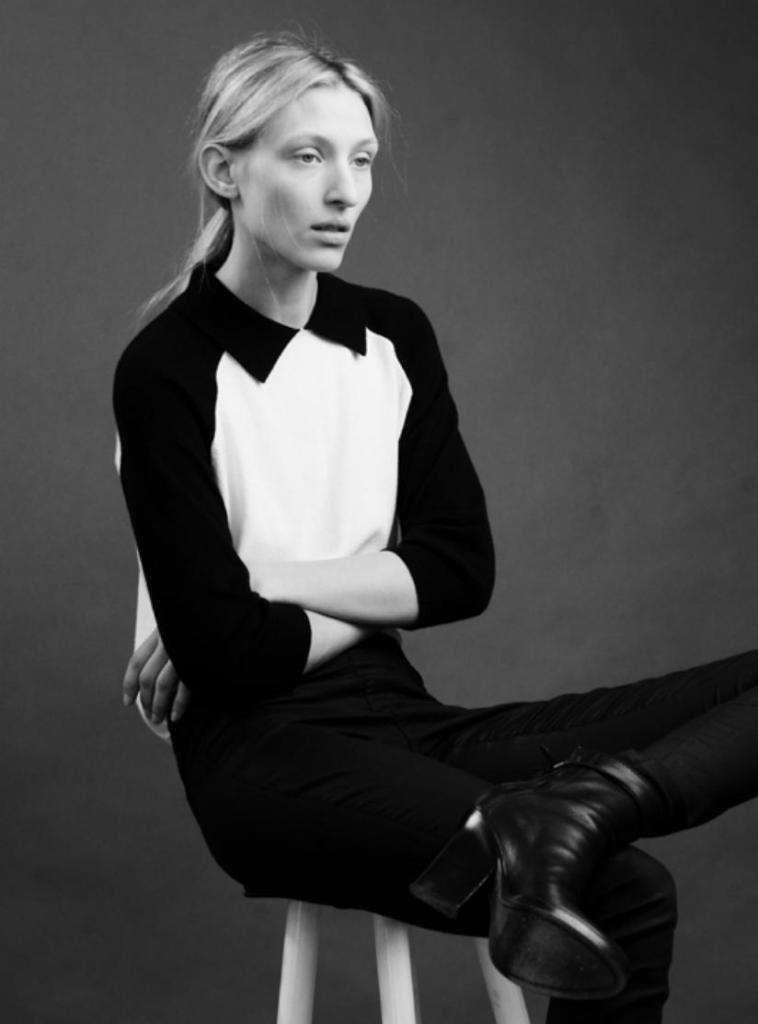
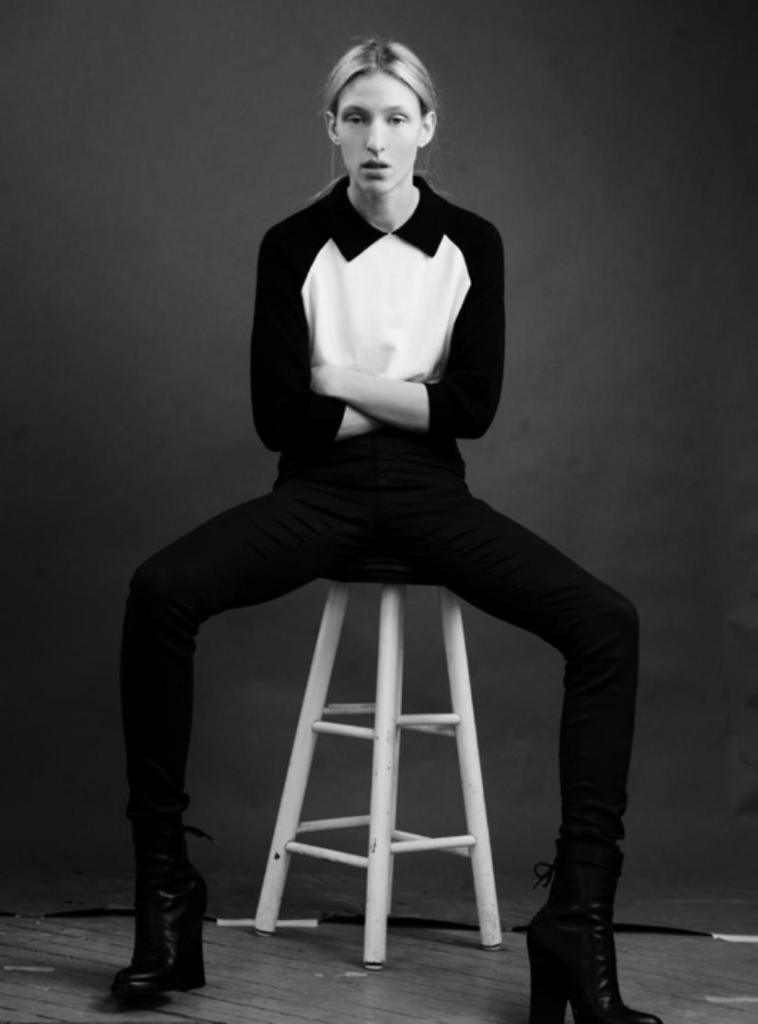
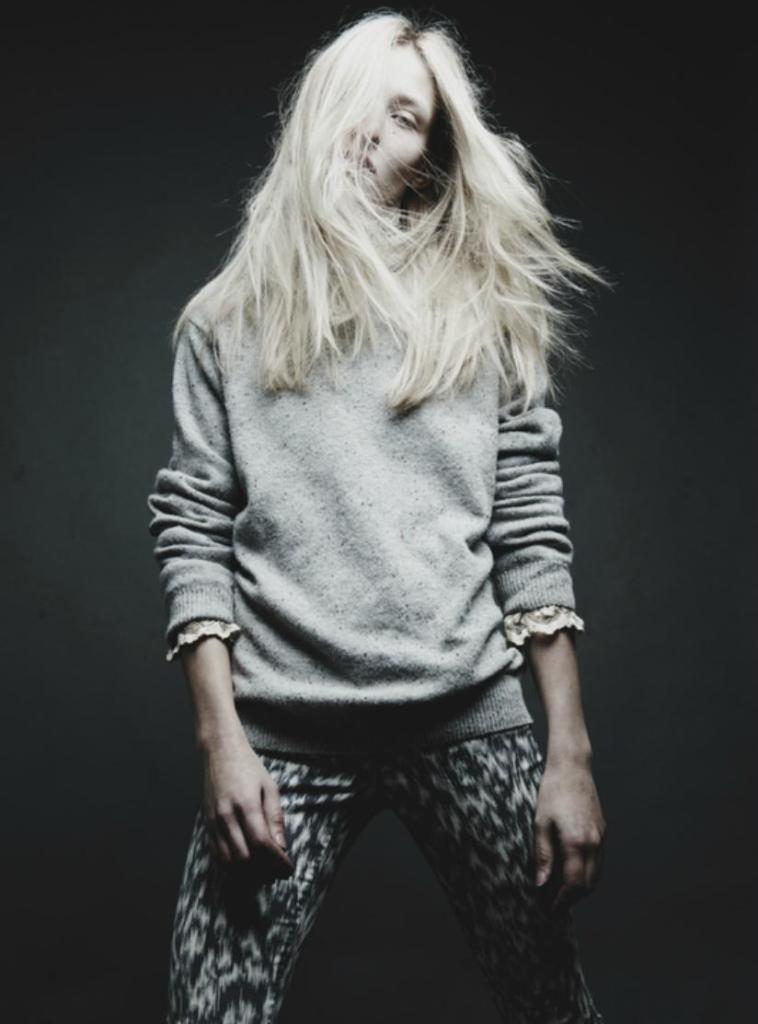
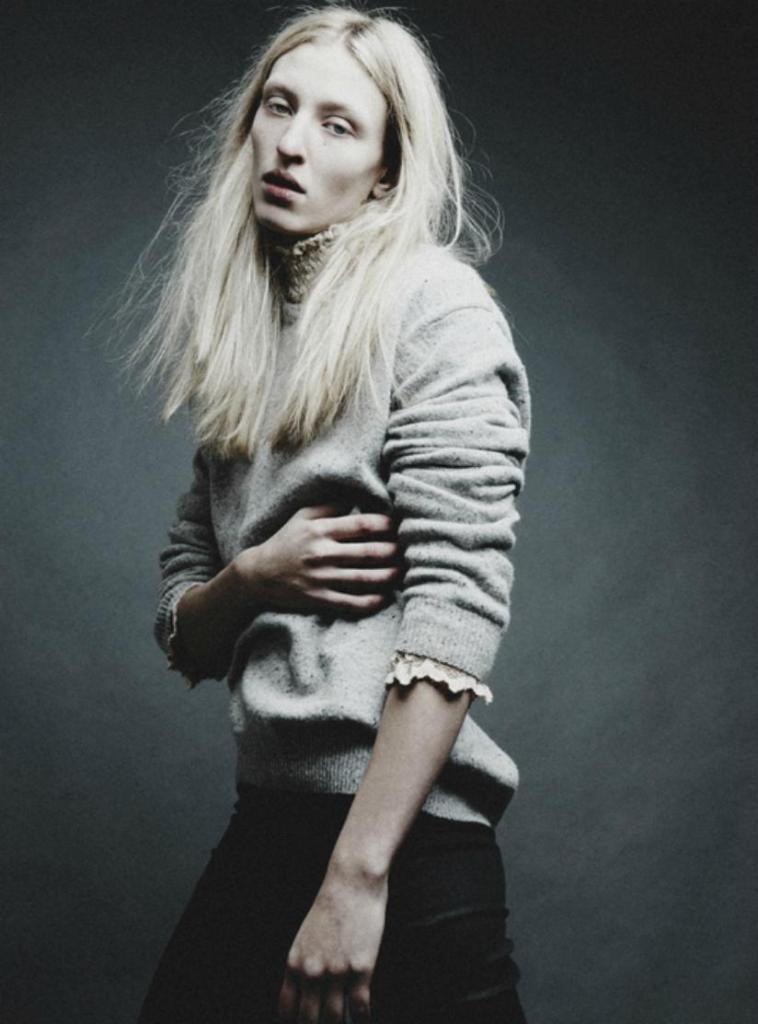
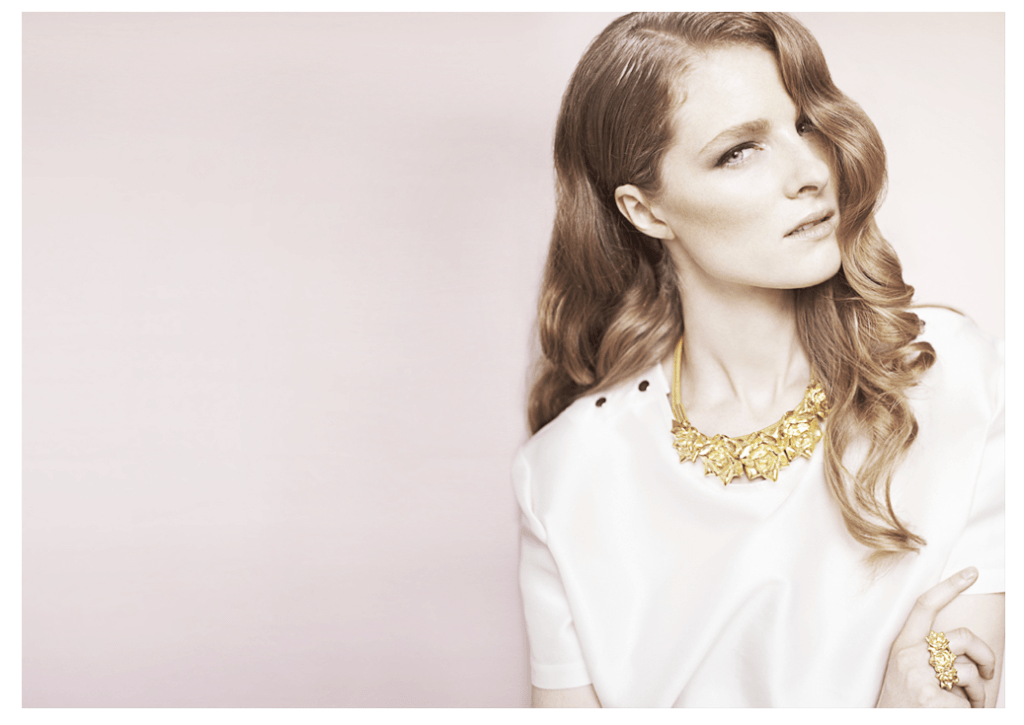
Multihypenate Sibyl Buck has had many incarnations throughout her life and career; model, musician, MTV host, actor, yogi and now mother. Growing up in the nineties in England I watched Sibyl host MTV’s Stylissimo and her foray into acting in The Fifth Element.   I recently had the pleasure of speaking with Sibyl about her life and career in this inspiring and revealing interview.

In an industry built on conformity you broke boundaries and defied convention.  What do boundaries mean to you?

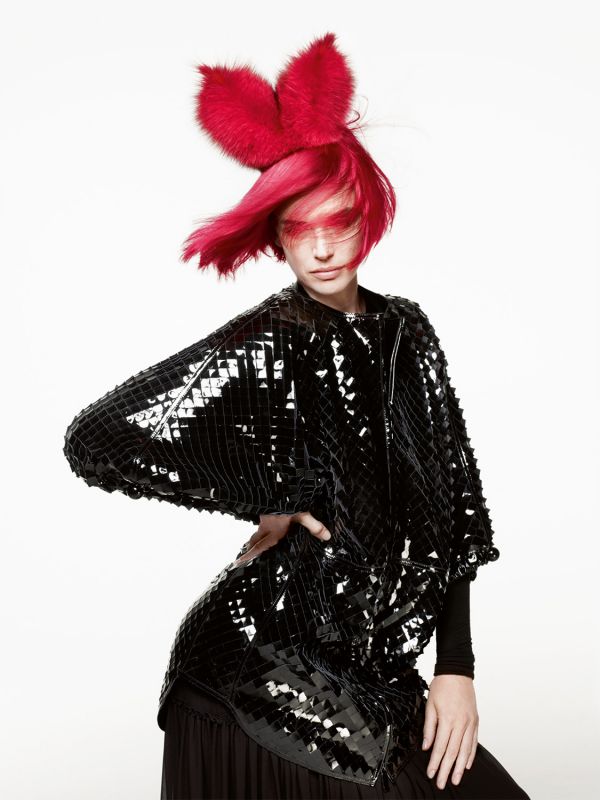
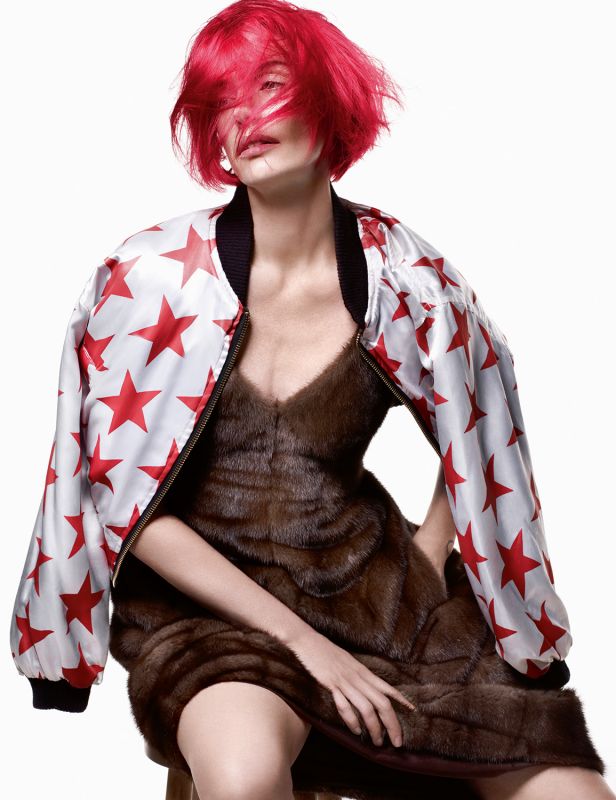
Oh, cool; it’s awesome to be remembered that way!  Originally, I had red hair in high school because I loved Phoenix, from the X-men.  When I started modeling, I didn’t think I could have a career with red hair, so I dyed it back to brown.  When I first got to Paris things were going well, but all of a sudden I was having an awful time and couldn’t remember what I was doing it for.  Money seemed like a bad reason to be doing something I hated so I decided to dye my hair back to red, how I liked it, and figured it would derail my modeling career and I’d be free of it.  But, to my surprise, my career really took off.  I didn’t have the easy out I thought I had so if I was going to keep modeling, I decided I would do it with a mission.  My decision to go red had come from a rebelliousness that was natural to who I was and my age, but I turned it into an ethos.  My intention got very specific and when people were taking my picture I was trying to say, ” There are fewer rules than you think.”  I wanted to express that things which you think are not possible can become possible if you just do them.   I’m older now and I value and depend on boundaries often in my own life, but I still don’t respect arbitrary ones that are only there because nobody has bothered to ask why.

At the height of your career in the nineties, models such as yourself, Stella Tennant, Eve Salvail and Kristen McMenamy built successful careers on having an unconventional image.  How do you feel about fashion’s wholly homogenized look today?

I have to say that I don’t see much of a difference in print.  Stella is still at the top of her game, Kirsten Owen has never stopped working, Kristen McMenamy brought waist-length grey hair to high fashion (what a badass) and her daughter, Lily, whose looks are quite unconventional,  is rocking the scene.  There are still great publications popping up to tow the avant-garde line (think LOVE and PURPLE, et al) and if my recent shoot for LOVE with the stylist Panos Yiapanis is any indication, the stylists of today are every bit as artful and envelope-pushing as those greats of the past.

What IS different is that the design houses are all but a few owned by major corporations and don’t have their namesakes as the figure-head.  I noticed right away, when I was still working, that when YSL sold to a corporation the very next shoot I did for them had a far lower standard of creative vision.  I see this corporate standard of homogeny manifesting largely in the runway scene, where runway shows used to be kind of like rock shows, with the clothing and the models’ personality sharing the stage and in my opinion, it was more exciting, more of an event.  I think there are probably some people out there who really care about the clothes above all, who enjoy the way fashion shows are now, because they can really see every detail and aren’t distracted by human flesh, much less personality.  But to me, it seems only one step away from those things at the dry cleaner that rotate the clothes

How do you feel the industry has changed from the nineties?

I have had the pleasure of being on set a few times in the past year and am grateful to have been flown across the globe to participate in some exciting shoots.  Mostly, I would say it seems very similar in terms of the on-set experience, with the one MAJOR change being the introduction of the internet and hand-held devices, as well as the digital camera being the mainstay of the photo shoot.  This means that instead of everyone on set interacting with each other (which wasn’t always fun, there was a lot of hating that went on), once folks are done with their work for the moment, everyone pulls out a device and basically leaves the room.  Similarly, instead of the whole team gathering around the model looking at what she’s doing and being part of a live show, everyone is looking at the monitor and speaking amongst themselves.  The feeling is very similar to how playing rock music has changed over the same period of time, where now I play to a crowd of people holding up their phones and gazing into the image on their screen instead of actually being there for the show.  The upside of it on a photo set is that it actually affords a very pleasant intimacy with the photographer, and the rest of the team is one level removed so that the chemistry between the model and photographer can unfold.

You have built an impressive and varied career from being a model to hosting MTV’s Stylissimo, to playing bass for Bush, to becoming a yoga instructor.  Which of these, if any, has been the most fulfilling for you and why?

Thank you for saying so! I’m a Gemini, so I need variety to be fulfilled.  I had a lot of dreams and I’m incredibly lucky to have been able to see them come to life, whether it was being on magazine covers, or playing to a stadium full of people, or acting in a major motion picture. Each of those experiences has sated a craving I had.  Now that I’ve done those more public things (though they do still seem to be cropping up here and there), I’m directing more of my energy toward helping bring fulfillment to other people’s lives.  A huge part of my energy and attention goes to my daughter, who is an amazing human being, I’m in love with her and so grateful to be her mom.  And then I spend a part of my day five days a week teaching my students.  I have very few public classes, but I love my students, and I really consider how to help them discover what’s within them that can help them live the life they crave.  I think my own experience with bringing my dreams to fruition gives me a unique perspective as a yoga teacher.  There’s one chapter of my life that’s one of my favorites, and is less known.  During my downtime between tours with the money I made while modeling, I built a 5,000 square foot loft community in Brooklyn, where my daughter and her dad and I lived for 10 years with a small community of adults.   The creative and inspiring men and women who lived there with us helped us raise her, and were our daughter’s extended family.  We managed to do cool stuff like have an indoor vermicomposting farm, build a huge sound proof recording studio, have a skateboarding area, have a communal wood workshop, a sewing room with industrial sewing machines (out of which my best friend Lindsay Jones and I created a little startup clothing company called Urban Mary) and we had a huge trampoline indoors, as well as a rope swing hanging from the 20 foot ceilings!  We had some epic parties there, with bands and contortionists and trapeze artists and amazing DJs and a star-studded guest list.  I actually think Owen Wilson’s loft in Zoolander was modeled after it.  Check out the band Rival Schools’ new release on Some records, Found, which was recorded there and the cover of it is a picture of me in the loft.   That loft is called The Doghouse and exists still.  That’s where we stay when we are in Brooklyn.

At the height of your career you took a risk and abandoned modeling for a less secure future.  What prompted you to do this?

Foolishness?  Well, that’s what most people would say.  I didn’t want to get trapped identifying with being a model, which I knew wasn’t going to provide me with the experiences I was craving.  I wanted to be a mother, I wanted to bring my creative expression to fruition, I wanted a fulfilling long-term relationship and the way my modeling career was, I didn’t have any time for much else.  I basically waited until I had enough money to build The Doghouse and support myself for a while, put some away for retirement and set off to live a real life.  I thought of the money from modeling as money that could provide me with a second childhood, one that I could direct for myself.  Also, when I started, I told myself I would get out when I was 25 because I met some women who had seemed to lose the sense that they were capable of anything other than being pretty.
Beyond the physicality of yoga, how has your practice informed your life in other ways?

Whoa, that’s a big one.  Yoga is really more profound than it looks from the outside.  Through the inner work of both yoga and meditation practice, I have learned to connect with something authentic within myself.  It’s a distinct feeling that gives me the stability and clarity to walk through all manner of situations with poise and with my values intact. That includes situations like walking onstage in front of 50,000 people to perform with a band I have only played with twice and playing songs I’ve only performed once.  Before yoga, I would probably have had a bit of a butterflies-in-the-stomach overload, but with my practice so familiar to me, I can turn inward even with a substantial amount of outside pressure and reconnect with an inner source that feeds me whatever I need.  Also, yoga is all about balance, strength, flexibility, and allowing grace to flow through your movements and decisions and those are exactly the qualities needed for mothering.  I have had a revolution in anger management from my practice and my peace of mind is my constant companion.  I guess it really has improved my quality of life and my ability to perform in all areas.

How has being a mother informed your life and view of the world?

Everyone always says, after they have their first child, that it changes your perspective.  I never understood what that meant until I had my daughter.  I have deep respect for those who have chosen not to procreate (and deep sympathy for those who cannot), but I think the shift from being the center of your own universe, to having someone else be the center of your universe, that comes from having a child is a deeply nourishing and empowering shift.  At least for me, it was exactly what I needed.  Coming out of 5 years of being treated like a diva, always the center of attention of the photo shoot, carted around in 5 star luxury, my every need catered to, I was in a bit of a bubble of self-centeredness.  Giving birth, the physical experience, was one of the most humbling processes I can think of and from there, the process of letting go of who I thought I was, to become what I needed to be for this tiny, helpless little love bug lead me to a much wiser and broader perspective on everything in my life.  I don’t know if I would ever have been able to have had a successful long term relationship without that kind of deep shift.  Thankfully, 13 years down the line, Puma’s father and I are still in love, and living harmoniously together.  I credit our daughter largely for our success.

What are you most grateful for?

I’m so grateful for so much.  I was in yoga class yesterday behind someone with a prosthetic leg, so beginning with having a fully functioning body and mind, I am so grateful to have a life that has allowed me to live my dreams.  I’ve been so fortunate to get to do the fantastic things I dreamed of as a kid, but at the end of the day, if I didn’t have my husband, my daughter and my own feeling of contentedness, none of that would matter all that much.  I’m most grateful for the fact that the trajectory of my life has lead me to be content and feel fulfilled, including my parents, who, despite their divorce when I was two, continued to guide me and support me in all that I wanted to do.

What are you most passionate about and what motivates you?

That’s a hard question.  I’m inspired and motivated by a wide range of things.  I’ll start with what I’m motivated to get into on my personal trajectory. I’m very passionate about living environments and community like The Doghouse.  My husband and I dream of finding some land in a beautiful location, building our own awesome home (by awesome, I mean artful, more than fancy), with ecofriendly features and with space enough to house a small community.  We are also working on a record together right now and that is so inspiring to me; making music together as a couple and weaving our lives into a partnership that includes our professional, personal and spiritual lives is so exciting to me, and what I’ve always hoped for.  In an abstract way, I’m passionate about the human drive to evolve toward our dreams, even when going in that direction threatens what makes us feel safe and comfortable.  I love it when I hear about people who are making the hard choices to leave what they know, to go toward their heart’s desire. I wrote a song about how hard and disorienting it can be to leave your status within a world you know, to endeavor in a new millieu that goes:

“confusion is a symptom of letting go the turning wheels you can’t control

and though it feels you’re losing hold, nothing ever turns to gold, unless it can unfold

I’m grateful to other people who make those choices, because they inspire and motivate me, and I hope in any way to be that inspiring, motivating factor for someone else.  In a more day-to-day practical sense, I’m passionate about helping my students in yoga to find more health and wellbeing.  I have a student who has a severe form of scoliosis, and who credits me with a large part of her healing to the point where now she’s able to walk and breathe at the same time.  That kind of thing touches me deeply and motivates me so much to continue learning about how yoga can heal.  This fall, I am starting the Loyola Marymount Yoga Therapy degree program, which is the only degree program out there, and I’m so excited to have that depth of knowledge.

What do you think people would be surprised to learn about you?

That I was a high school cheerleader?  That I used to skateboard vert ramps?  That I have a great social anxiety which still surfaces sometimes? I’m not really sure how most people would think of me (if they think of me at all), so I’m not sure what’s surprising.  Maybe it would be surprising for people to know that I can and do build structures and furniture, including much of the second floor of the loft that we built. I  love using saws and all manner of power tools and I think building is kind of like making clothes, in that you take things that are flat and make them 3-D shapes that you can get into.  I look forward to building my own house.

Sibyl is represented by DNA Models
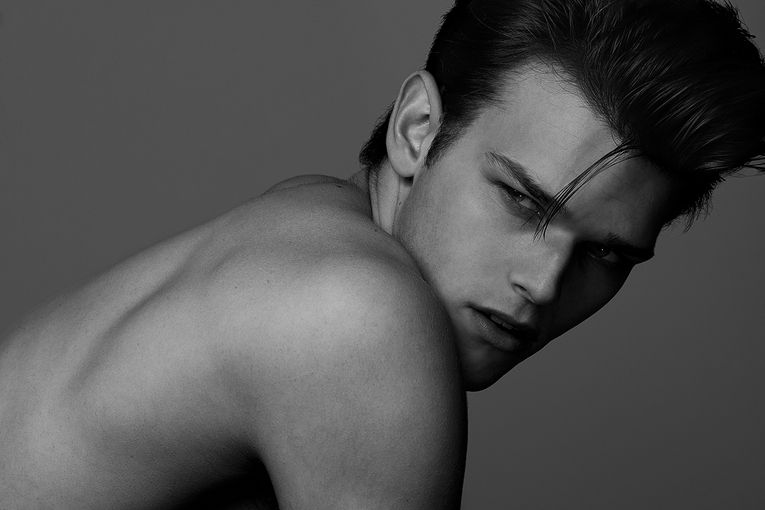
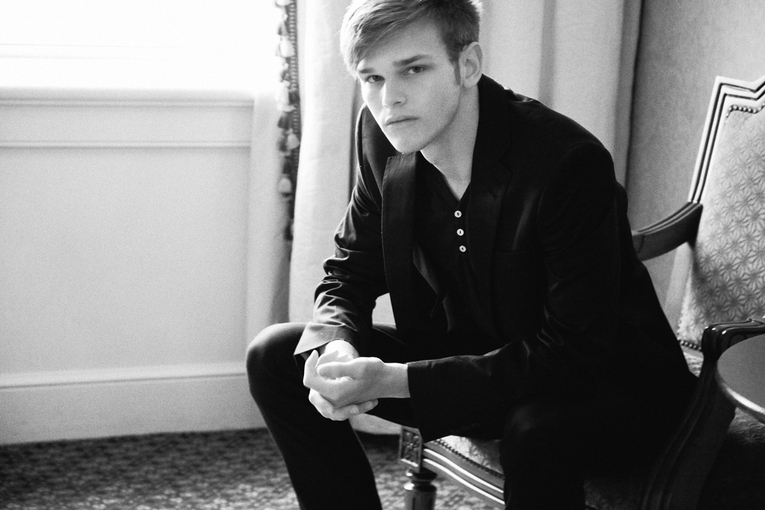
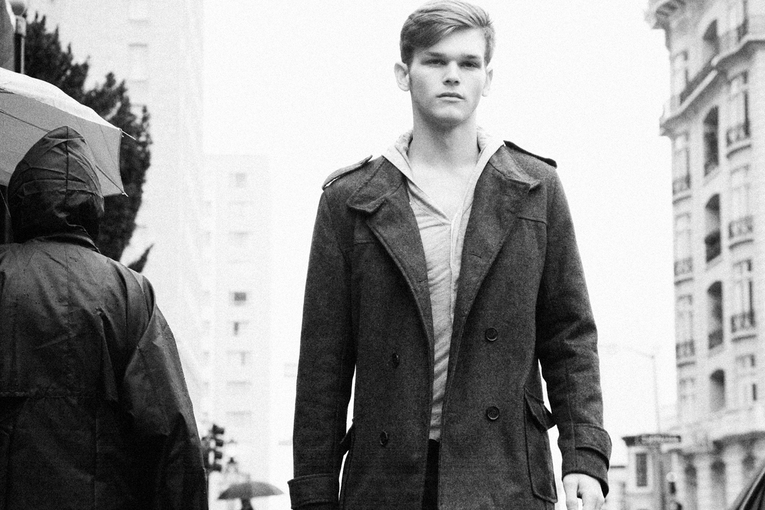
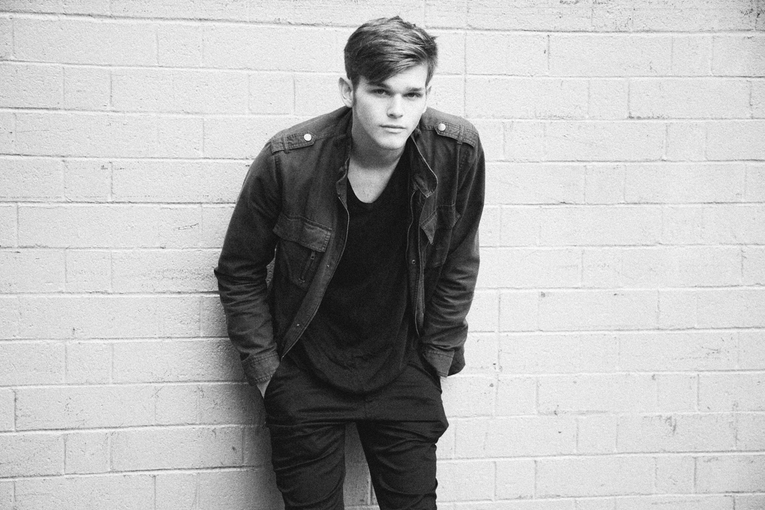
Alex Michels – The Rookie

Alex Michels foray into the world of modelling came after he was inspired to attend an open audition after viewing fashion editorials on Tumblr.  I spoke with Alex about how he copes with the isolation of  modelling, his secret ability and what he plans to do when he finishes college.

You were discovered at an open audition.  What interested you about modeling?

I used to be really into Tumblr. Lots of random fashion editorials would filter through and I would see the photos and think to myself, “I could probably fit those clothes too, right?”  I decided to go to the audition and the agents at Stars Model Management signed me on the spot.

What are your aspirations and goals for the future?

When I’m finished with college I’m hoping to try my hand at animation or video game design.  Hopefully I get to stay here in California as well.

What do you hope to get out of your modeling career?

I hope to earn enough money to buy my mom a new fancy kitchen; She hates all of our appliances.  I’d also like to spend more time travelling around Europe.

How do you handle the pressure and rejection that comes with modeling?

The pressure to look ‘casting-ready’ is a challenge for me.  I’m naturally less put together and usually have disheveled bed-head.   The rejection can really be a bummer as well but I have to just remind myself that it’s not personal.

What do you think people would be surprised to learn about you?

I have the secret ability to wiggle my ears on demand.

What has been the highlight of your career so far?

The highlight of my career has definitely been walking for Louis Vuitton last summer in Paris.  They also used me for looks for a few days.  You would not believe the food they ordered for catering, it was like a French Thanksgiving every day.

How do you cope when you are away from family and friends?

I like to stay connected through social media such as Facebook, Instagram and Skype. During Fashion Week I am kept really busy with castings so that makes it easier.

What do you like to do in your spare time to decompress?

When I’m away and I want to relax I do any number of things from video chatting with my girlfriend, Gameboy,  reading, eating everything in sight, napping, drawing to squatting at Barnes and Noble.

Alex is represented by Stars Model Management and IMG


Introducing Maggie Maurer

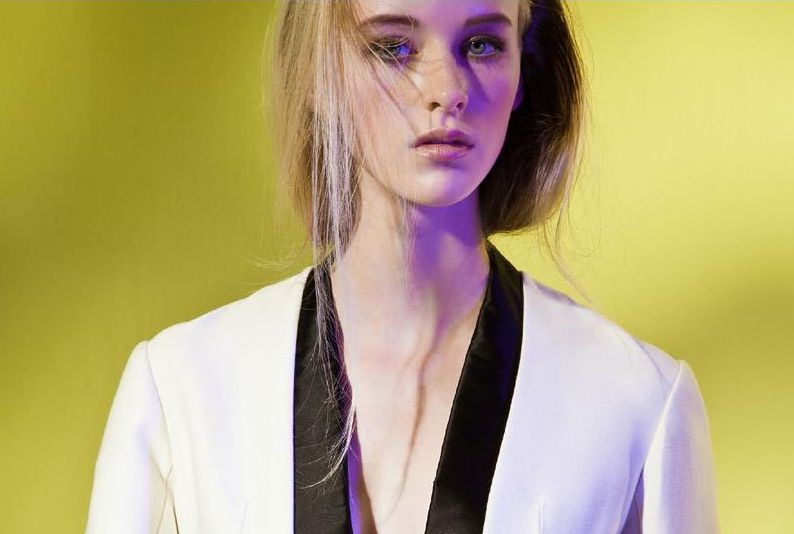
Maggie Maurer made her modeling debut at the grand old age of 23, a feat virtually unheard of in the fashion industry.  At an age when most models would be considering opportunities post modeling, Maggie is quietly making  her mark.  As an exclusive for Calvin Klein, Maggie is one of a number of models entering the fashion industry later in life and creating a shift in perception about what is too old to begin your career.  I caught up with Maggie to talk to her about her goals for the future and the highlights of her burgeoning career.

What advantages and disadvantages do you feel that starting your career at 23 gives you?

I don’t really feel like starting at 23 is a disadvantage. I think this business is all about timing and in my life, this is my time.  If I had gone through this same experience at 16 or 17  I’d be home right now.

What are your aspirations and goals for the future?

I am going try my hardest to make this happen.  Go big or go home, right?  I’m not interested in just floating by in this industry.  I want them to know me, love me, respect me and want to work with me for many years to come.

What do you hope to get out of your modeling career?

Honestly, I don’t really know what my future holds.  I just hope that I can inspire the people I meet to spread kindness and love in the world.  That sounds kind of hippyish but I just want to help people realize life is what you make it and if you’re not happy or where you want to be in your life, only you can change that.  Life is what you make it, you just need to be wise enough to take the opportunities presented to you.   Also, I would like to see the view from the top.  I’m not sure if I will like it  but it’s a risk I’m willing to take.  No risk no reward.

How do you handle the pressure and rejection that comes with modeling?

I think that is one of the advantages I have being older.   I mean, it’s kind of like; if you don’t like me, you don’t like me.  You’re not going to hurt my feelings.  I  haven’t experienced anything super harsh yet.  I guess maybe when I do have my feelings hurt that might change.

What do you think people would be surprised to learn about you?

I was home-schooled.  That always seems to surprise people.

What has been the highlight of your career so far?

Obviously, Calvin Klein.  I mean really, to have that be my first show and booking for that matter is just insane!  I was so humbled and in shock.

What do you do to decompress from the pace of modeling and refocus?

When I’m in New York, I sometimes go home to Potsdam for the weekend, especially around this time of year.  It’s so beautiful, calming and relaxing.  When I travel I really just like getting to know people and making memories because if you can’t do that then what is it worth?  To spend so much time away from home you have to establish relationships wherever you are and if I can’t do that I don’t want this.  My life is better because of the people that are in it.  As long as I can surround myself with the right people I’m happy doing just about anything.

How were you discovered?

My photographer friend Tom Newton sent pictures of me to an agency in Toronto, Elmer Olsen Model Management with no information on how to contact me.  Through the wonderful world of Facebook and Google they were able to find out where I worked.  Elmer called the store just as I had walked in. I picked up the phone to call someone else so it didn’t even ring and there he was screaming my name on the other end.  He said, “May I speak to Maggie?   You have no idea who I am but I know who you are.  My name is Elmer Olsen from Toronto and we received your pictures about a week ago.”   I said OK .  He then asked if I sent pictures and I told him I didn’t but I had a feeling I knew who did.   Enter Tom Newton and the rest is history.

How do you cope when you are away from family and friends?

I’m very independent so although it’s hard sometimes as long as I can make friends and see familiar faces I’m just fine.  It’s much harder in a different country with different languages but I haven’t experienced too much of it yet so I’ll have to get back to you.

What is your approach to health and wellness?

I try to really be aware of what I put in my body.  So many people don’t realize how important it is and how everything you put into your body has an effect on how you feel mentally, physically and emotionally.  Once you understand your body, it’s very hard to go back to old habits.  I try to stay away from processed and genetically modified food that are full of chemicals and who knows what else.  It definitely takes dedication and is a lot harder when you’re traveling so much but I do the best I can and generally feel amazing.

Maggie is represented by IMG and Elmer Olsen Model Management

Edythe Hughes on Modeling, Philanthropy, and Project Model Tee

Model and philanthropist Edythe Hughes has channeled her success in the fashion industry into a platform enabling models to showcase their artistry for charitable causes.  Her non-profit organization, Project Model Tee, is raising funds for RAINN the Rape, Abuse and Incest National Network for their launch.  I caught up with Edythe to talk to her about Project Model Tee and her goals for the future.

Where did the idea for Project Model Tee come from?

After modeling for five years I was ready to start making my time in fashion more meaningful and help my peers do the same. Working as a model is a true blessing for most of us, but in an industry where there is so much focus on the outside you yearn for people to know your inner self as well. Project Model Tee gives models a place to show their talents for great causes.

Why is it important to you to be of service to your community?

I come from a one stoplight village in Ohio and coming to New York City at seventeen-years-old was a challenge. After a while I realized the transition from small town girl to big city woman was difficult as community is not obvious or a given in New York City (or other big cities). You must seek, build and nurture your community. I think community is especially difficult to find as a model who travels and works with different groups of people nearly every day. Servicing the community is a great way to build one.

Why did you choose RAINN as your first charity?

To launch Project Model Tee we wanted to touch as many hearts as possible. Tragically, sexual violence is an issue that affects everyone, whether you are a victim or know one. RAINN gives survivors a voice, raises awareness and seeks justice, and it has been such a pleasure to help them spread their message.

What has been the reaction from people in the fashion industry?

Friends in fashion have supported our efforts and models have been encouraged by it. In general people want to know the girl who is selling the shoes and people are interested in our lives. Project Model Tee is a nice way to show others what we are really about.

How do you see the evolution of Project Model Tee?

As our network and resources expand, we would love to help models in the development of their artist selves. It would be wonderful to provide art and business classes for the models. We are also interested in developing a T-shirt line with artwork by talented models and donating the proceeds to great causes. This year we would like to produce a story/poetry slam to showcase the talented writers in our industry. Stay tuned!

How can people get involved?

Firstly, please connect with us via social media and sign up for our newsletter. Attend one of our events and tell your friends about our message. If you would like to get more seriously involved you can email us at info@projectmodeltee.org and let us know in what ways you would like to contribute, whether that be donating your art and talents or working with us on the administrative side. We would love to hear from you!

Learn more here

Rachel Blais – The Advocate

Model turned advocate Rachel Blais is ruffling feathers in the fashion industry with her candor and often controversial insights into her time as a model.  Rachel appeared in the documentary Girl Model as a whistleblower.  In an industry shrouded in mystery and often misunderstood by the public, Rachel raised questions about the working conditions of underage models.  Since appearing in the documentary her focus has shifted to advocacy.  What follows is an interesting perspective that will surely pose more questions than answers.

Ashley Arbaugh approached the filmmakers of Girl Model proposing they make a film that addresses the fine line between modeling and prostitution.  Is it your personal experience that there is a fine line between modeling and prostitution and could you elaborate?

I’ve had owners and directors of top international model agencies tell me that there is a fine line between prostitution and modeling, while saying it’s OK for girls under 18-years-old to be fashion models. The Model Alliance in New York City conducted a survey in which 86.6 percent of models said they had been put on the spot at castings or jobs.  There were many moments throughout my career that I stood up for myself, on jobs and to agencies, to ensure that the photo shoots I was taking part in would remain about fashion and not become pornographic in any way.

The length of a modeling career seems to depend on the caliber of clients a model works with and determines her ranking in the business. Is it your experience that when working with top clients and agents they are the ones suggesting and financing plastic surgery?

At 18 I had a top agency in New York City pressuring me to get liposuction for months. They even asked my mother agency back home to pressure my mom to pressure me.  I was lucky I knew about the risks involved with plastic surgery and decided not to put my health in danger for the gamble of making money.  Most agencies advance money for such procedures, but it puts the models who decide to do plastic surgery more in debt to their agency and it  puts them in even more precarious situations.

Do you think the statistics and information that come from smaller markets may not be representative and wholly accurate of someone who has experience in the top levels of the industry?

It’s very hard to judge.  In every fashion market, like any business,  there are good and bad people. Models working at the top aren’t necessarily treated better from a labor standpoint, but they usually make more money.  For models starting or simply struggling,  I think often it’s not only a labor issue but also a human rights issue. One thing that is worrying about the industry, in small as in big markets, is that models work to represent adults from the moment they are 5 feet 8 inches tall no matter what their age is.

What are your thoughts on the Japanese market where models that are scouted so young are sent to work?

I think there are definitely many issues with having children being sent to Japan to work as models. To have so many Caucasian child models as a representation of the ‘ideal woman’ can only have a negative impact on Japanese women and men.  I don’t understand the rush to take children out of school so that they can take a chance at making money modeling, especially knowing how contracts with Japan are often not legally valid.

From your experience as a model do you still hold the same feelings as you did in the film about who is culpable?

I still use the same words I did in the film, “no one is to blame, but the whole thing is still going on and wrong”.  It was cut from the film but I add, “when there’s no one to blame, shouldn’t everyone take their part of responsibility”?  Everyone can take responsibility or change their actions including agents, consumers, parents, scouts and clients.

What role do you think parents play when their children are under the age of 18?

Parents are responsible for their children, but they also have advertising, social media, popular culture and a multi-billion dollar industry to compete with.  Agents and scouts can be very convincing (lie) to parents on how safe modeling is. I can’t put the blame all on the parents.  Agents and clients have a responsibility to let children enjoy their childhood.

Is it your experience that top agencies adhere to practices that are unethical or questionable?  Can you elaborate on those experiences?

The lack of financial transparency is something all agencies are responsible for.  There aren’t any agencies I have known that haven’t lied or had unexplained expenses.  Agencies also send models, even underage girls, to photographers that are known to have a history of abuse. Along with many other insidious practices by agencies, there is also pressure to lose weight being imposed on children and young women. I’m sure it is possible to find girls in all agencies saying that they never encounter any problems.  Agencies know how to protect their image by treating some models better than others and models know if you complain or speak up their agents will stop getting work for them.

How has the release of Girl Model affected your life and do you have any regrets about your involvement in the film in hindsight?

After the premiere of Girl Model I stopped having castings and would only work with my regular clients.  A few months later, as the film was released internationally, I had my work visas withdrawn and agencies started cancelling my representation contracts.  I even had agents in New York City telling me that I could still work but I had to stop saying modeling should only start from the age of 18.  If I started saying models could start at 16-years-old I could work again, but from their reaction and the research I did, it is obvious more money is made from using children as the major work force as opposed to adult models.  It’s really too bad that no agencies want to represent me because of my involvement with Girl Model  but I have no regrets since there is so much support coming in to protect children and for fashion to stop producing images that would be considered juvenile pornography under the law.

What would you say to your critics that may suggest you are now criticizing the very industry you profited from?

I had a lot of luck as a model but a platform was given to me to explain issues in the industry.  I decided to take the risk of losing my job to bring out the truth; I’ve seen too many unethical and even criminal practices to stay silent.  I’d also say that I’m not alone and many others in fashion want to see change.  There is a long list of models, clients and artists supporting a ban on using under 18-year-old models.  It is mainly only rejected by agents and scouts.

What do you hope to achieve through your work as an advocate for model’s rights?

The focus of my work is to get a law passed, internationally, banning under 18-years-olds from working in fashion and having to travel for work. This would protect children from the potential risks of human trafficking and also make adults the major work force of modeling.  Unionizing will become easier and ensure the working conditions for models are better.

Learn more here