David Smith Reflects On Modeling, Acting & The Virtue of Patience

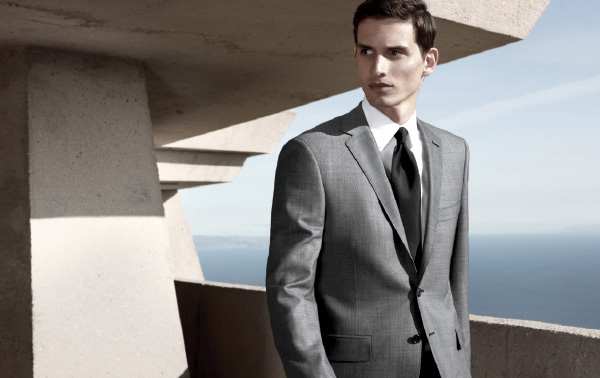
Chicago, Illinois native David Smith began his modeling career working for power-house brands Dolce & Gabbana, Missoni, Oscar de la Renta and as the face of Gucci Pour Homme before making the transition into acting.

After taking a step back to re-evaluate, David enrolled at Columbia University. I caught up with him as he reflected on what he’s learned about himself and the sage advice that Patti Smith offered that resonated with him.

Tell us about how you were discovered.

I was discovered by a man named Sebastian McWilliams. I was about 15 at the time and I was on the Chicago Blue Line train on my way to school. Like any teen, I was half asleep at 7:15 a.m. when Sebastian approached me on the train. Sebastian and I became good friends and he was, for many years, a pseudo-parental figure in my life. Sadly, Sebastian passed away in 2007 from AIDS. He is dearly missed by those who knew him.

You were an aspiring actor before modeling. What were your thoughts about side tracking into fashion?

I didn’t know that I wanted to be an actor per se. I had a fascination, or maybe terror is a better word, at the thought of being seen or acknowledged by others. I remember a high school English class where the teacher would make us act out scenes from novels we were reading and recite passages directly from the text. I was simultaneously thrilled and terrified by these kinds of classes. When fashion came along I experienced the same emotions only it was in a professional setting and I had people around me, like Sebastian, encouraging me.

What did you discover about yourself through modeling?

I really learned about the world through the lens (please excuse the pun) of modeling. I traveled extensively for the first time in my life and I met people who I wanted to emulate, people who made me uncomfortable, and people with whom I would make life long friendships. I also learned things on the job. I think the “job” of modeling unlocked a more subtle side of myself. To be a good model one has to be present for the camera and ideally somewhat vulnerable. Through modeling I found a more sensitive and perceptive side of myself that I hadn’t yet discovered. I was honestly an awful model and spent a few years in New York and London with little success. Then one day it just clicked. I figured out that if I was perceptive of the clothes I was wearing, the music that was played, the space I was in, then I could find these moods, these other realities that would ultimately make for a better picture. Once I became adept at finding those different moods my interests in acting began to surface again.

What challenges did you face as you transitioned into acting?

My challenges in acting stemmed mostly from my expectations. I had very lofty goals as a beginner and I was quickly brought back down to earth. As a model entering the world of professional acting I found that there was a very specific role, a very specific kind of character that casting directors wanted me to play. Once I understood what they wanted from me I became less and less interested in the process. This is a problem that a lot of actors face, regardless of physical type, but in my case the roles I was consistently asked to audition for didn’t align with my own artistic goals.

What would people be surprised to learn about you?

That I’ve been arrested three times, but never did any time!

What are you most passionate about and what motivates you?

I’m going into my senior year at Columbia University so I’m very passionate about the culmination of that experience. After spending close to a decade as a model and an actor I had thought that my chance to go to college had passed. It was something that I really wanted to do, it was important to me and I put the time into making it happen. School has been a huge part of my life the last few years and it’s been a great detour into academia and something that I will never regret. I’m motivated to make the most of the time I have left at Columbia. It’s a rare place where big ideas are always on the table and the students believe they can change the world. That energy is infectious and I’m grateful that I got to experience it.

What advice would you give to your younger self?

Just to be patient. When I was in my early twenties I always felt like I had to have the pedal all the way down, that if I wasn’t charging toward something I would never get it. I read a quote by Patti Smith recently that I liked too. She said that you should always protect your name and not worry about money or any of the other stuff, but that if you just protected your name and did good work, everything else would fall into place. I like that.

What are your plans for the future?

School of course, but I’m also putting more energy into modeling again. I’ve been reunited with my old agent at IMG and I’m excited to see what happens. Although I stopped auditioning for acting roles when I started at Columbia, I still hold the belief that the years I spent auditioning and working as an actor were not for naught and that something will emerge to put those skills to use. That being said I’m still trying to live by the advice I would give my younger self: Be patient and protect your name.
 

Roman Larichev On Scouting Models Through Social Media, Industry Advice & Irina Liss

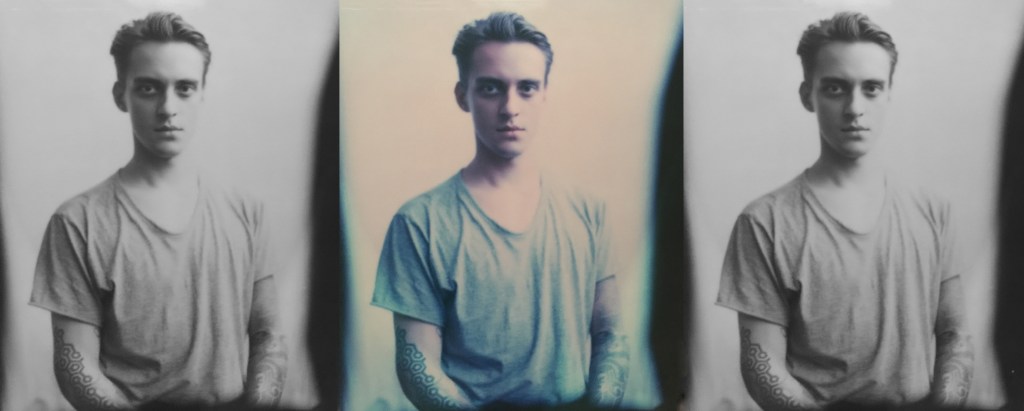
At 20 Roman Larichev started as a freelance photographer. At 22 he became a junior agent at Noah Models in Saint Petersburg, Russia. By the time he was 24, Roman was an agent at Andy Fiord Models working with all the top agencies in Europe and Asia and top Russian clients including Vogue, Interview and Glamour. When he turned 26 Roman became an international male model with a Valentino exclusive and featured in editorials for magazines including Interview.

How did you start in the fashion business?

I started in Russia as a freelance photographer back in 2008. I was always into visual arts and at some point that interest transformed into fashion photography and fashion in general. I was also working as a model internationally.

What made you shift your career from modeling to scouting?

It happened naturally. Shortly after working as an agent, I realized scouting suited me better as it was more creative for me – I loved traveling and meeting different people.

How has being a working model contributed to your work in scouting?

I’m glad I’ve had experiences on both sides.  With that knowledge, I’m more confident and have an understanding of the creative process and what it takes to accomplish. The most important part is the relationships I’ve made and continue to develop in fashion – from magazines, photographers, stylists, creative directors, etc. Having these relationships with key people in the fashion industry, certainly helps when scouting as there is a lot of credibility and connections for future opportunities.

Russia has produced some of the most beautiful models in the world. How is scouting in Russia different to other markets?

In Russia, usually young girls have no idea how the modeling industry works – a lot of the potential models I met haven’t been exposed to the international fashion market.  It is important to be a good teacher and communicator to help prepare them for top markets like New York, Paris, London and Milan.  Being transparent and honest with the models and their parents about the opportunities and obstacles they may face is key.

What challenges do eastern European models face in foreign markets?

Some of the biggest challenges are language and culture. It really depends on the individual model. Those willing and open to learn, develop and adapt quickly do very well. For others, it will take longer.

What is the most important thing that you look for in a model?

Nowadays, a good personality is a must. With a good personality, I find there is passion and an openness to try new things.  The ability to collaborate, communicate and inspire others on a project is an important aspect of being a model.

What are the challenges of scouting in Russia and other Eastern European counties

I don’t view it as a challenge, as I speak fluent Russian and was born into the culture. For an American or a European who doesn’t speak the language or does not have an understanding of the cultural norms, I imagine it would be more difficult to connect with the clientele.

What are the new trends in scouting?

The biggest trend in scouting is social networking.  You can find undiscovered talent, see their interests and get an authentic sense of their personality.  It is a great tool for scouting.

How do you define beauty?

For me, beauty originates in health and wellness. A person who takes care of themselves physically, mentally and spiritually, radiates from within.

What advice would you give to a model just starting out?

There is a lot of competition in the modeling industry. To be successful these days, it is important be more than just a pretty face.

Who are your fashion icons?

Karen Elson and Agyness Deyn.

What inspires you?

People, modern art and music.

Which new faces do you think we should be looking out for?

Irina Liss had back to back phenomenal show seasons. She is definitely a face to watch and she is Russian!

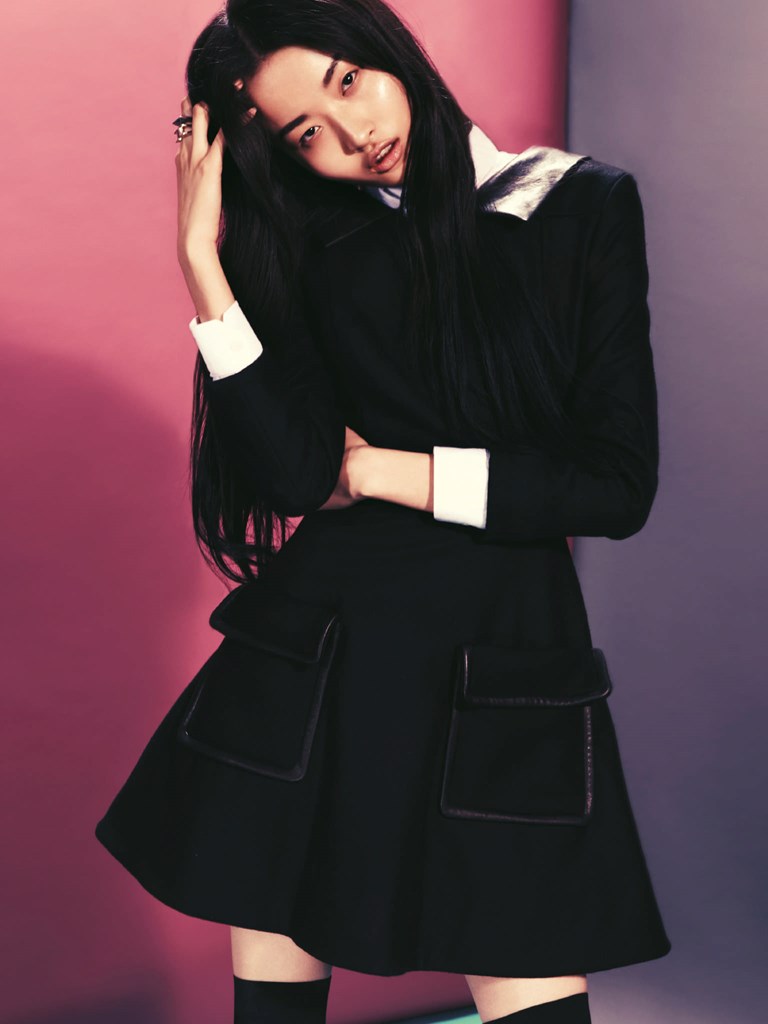
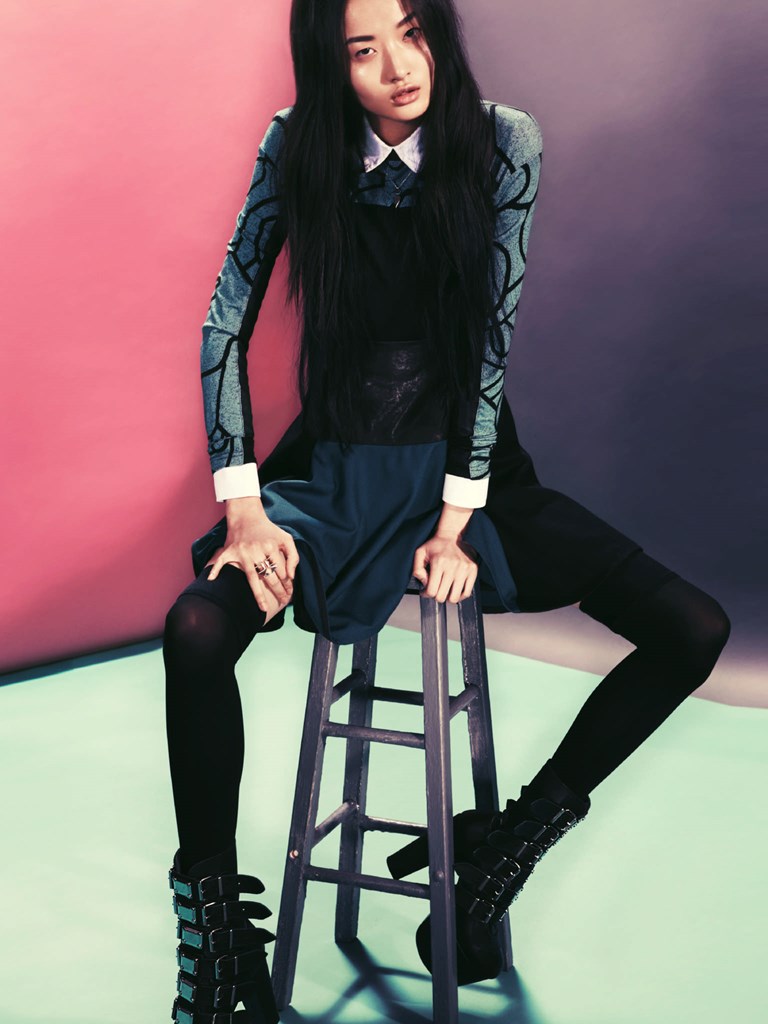
Introducing Xu Liu

Model Xu Liu had a fascination with the fashion industry but it wasn’t until her mother suggested she enroll in a local modeling school that things took off. With a slew of editorials under her belt and a campaign for Philipp Plein, Xu’s ascent has only just begun.

Tell us how you were discovered.

I have to thank my mum. She believed I would make a great model. When I was 15, she asked me if I would be interested in modeling and learning more about it. I told her yes. I saw models wearing beautiful clothes on television and I wanted to wear beautiful clothes as well even though I didn’t know anything else about the industry at that time.

She sent me to a model school on the weekends. During that time, my modeling teacher encouraged me to attend different contests where I learned a lot by competing. About six months later I won the Elite Model Look in China.

What were the biggest adjustments you made when moving to NY?

Everything has changed! I mean everything. I traveled a lot during the last four years. My life at university was all about packing and unpacking until I graduated last year. It’s my first time moving to a new city and starting a full-time career. Everything is new and unknown to me but I’m excited to see it.

What challenges have you faced thus far in your modeling career?

Balancing modeling and university while learning how to be a great model. Modeling is a job that requires lots of traveling. You never stay in one place. Anyway, I finally did it and I can focus on modeling now.

If you weren’t modeling what would you be doing?

I’d probably go back to university to study another major. Something related to art or fashion.

What are your goals for the future?

I have many goals for different periods of my life. My current goal is to live in New York and model full-time. I am enjoying it and striving to reach my goal.

What would people be surprised to learn about you?

I am not sure; it could be anything. I’m still learning. Life changes a lot but I would like to be myself. Hopefully, one day, I’ll do something great that makes people surprised and impressed.

Follow her on Instagram

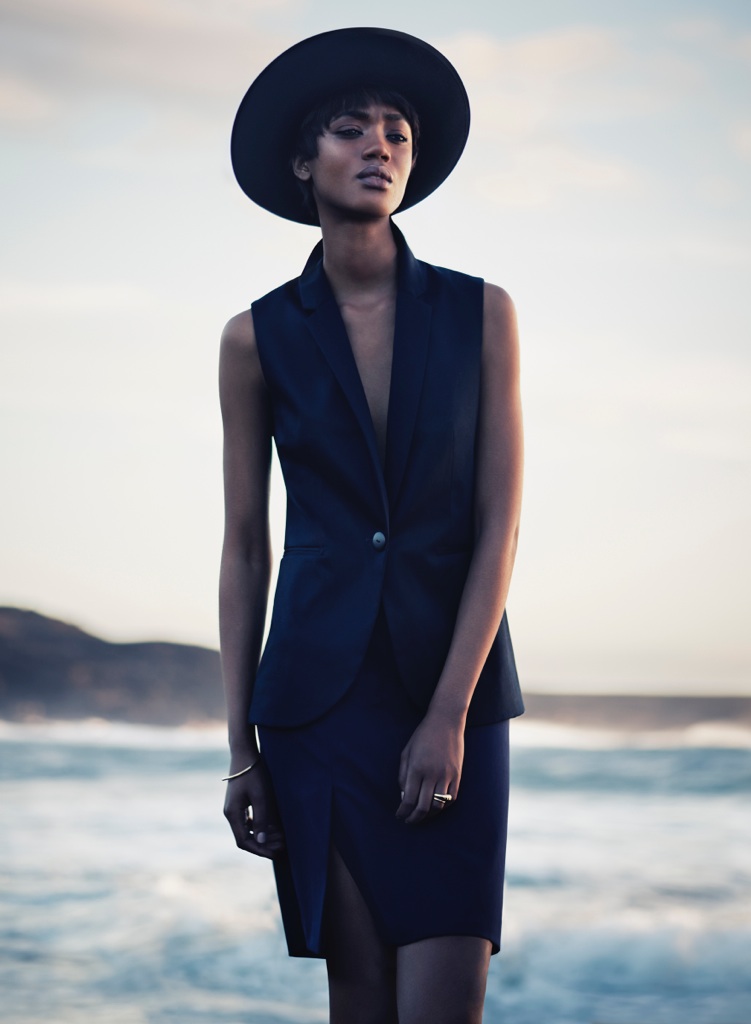
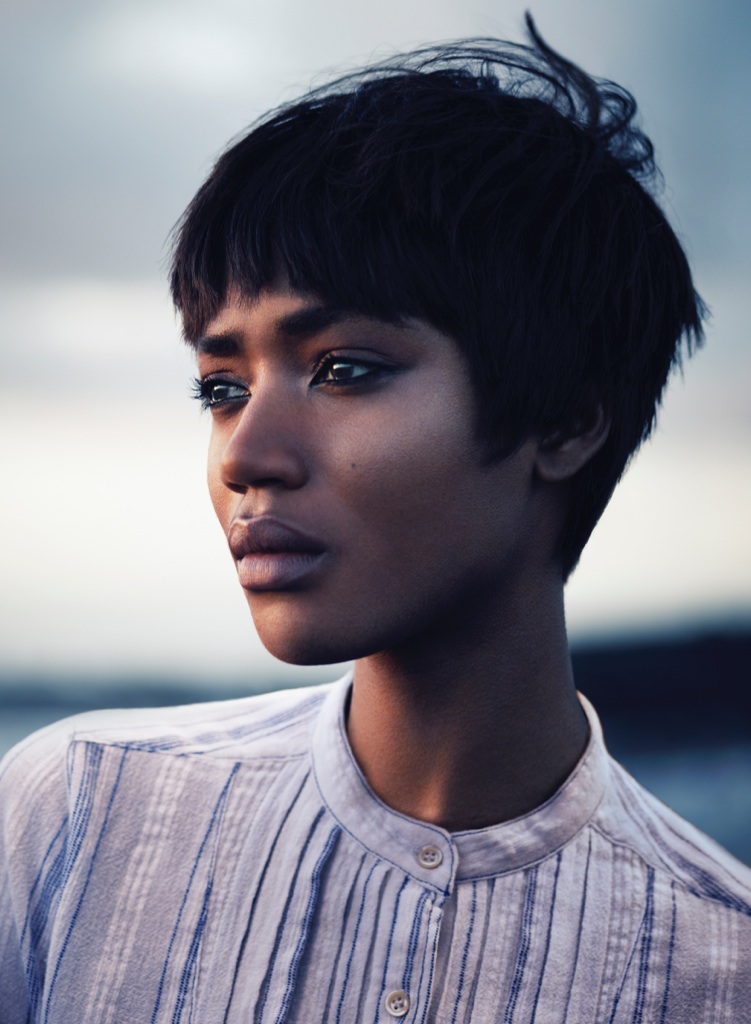
Introducing Nadja Giramata

Rwandan-born model Nadja Giramata fled to France with her family at age five. She later moved to Manchester, England to study English Literature where she was scouted in a local park. This statuesque beauty has starred in campaigns for Topshop and Philipp Plein and graced the cover of ELLE.

You’ve had an interesting life. Tell us about your path into modeling.

I started modelling pretty late compared to others girls. I was already at university and had just moved to Manchester for my language studies and to live with my sister. One day on my way home from university a lady stopped me in Piccadilly Gardens and told me that I should join her agency. By that stage I had dropped the idea of being a model from my mind as I thought it was too late.

Do you think being a model of color has hindered you in any way?

I hope not! In my head when I go to a casting I see myself as a model, not as a model of color. I feel that I have the same chances as the other girls. Even if a client is searching for a brunette or a blonde girl, I can still make him change his mind. I feel like it’s up to me. Of course there are still some diversity issues. The only way to change that, in my humble opinion, is to show them that I am more than capable of doing the work.

If you weren’t modeling what would you be doing?

I would still be studying, as I had already started my language studies and English Literature when I was discovered. I’d also have a part-time job on the side.

What’s the best piece of advice you’ve been given while modeling?

Don’t worry, it will happen at the right time for you. Most of the time I want everything straight away, but everything happens on its own timing. Worrying won’t add any more days to my life.

What are your goals for the future?

I’d like to use my languages for international business.

What would people be surprised to learn about you?

I am crazy about classical music. I am a big fan of Vivaldi and Chopin. As worldly as I am, I am unable to eat with chopsticks.

Introducing Alexandra Tomlinson

Born and raised in Atlanta, Alexandra Tomlinson’s career began after a fortuitous visit to the dentist. She has graced the covers of Marie Claire, Flair and Elle and has appeared in campaigns for D&G, Zac Posen, Etro and Armani. This All-American beauty took time out from her busy schedule to answer a few questions for us.

Tell us how you got started in modeling.

I was 13 and at the dentist, which I’m not a fan of, but the receptionist recommended I call a local Atlanta agency her husband modeled for. I did and it all started from there.

What have you discovered about yourself through modeling?

I’ve discovered that I’m resilient and strong. Not everybody is going to like you, your look or what you bring to the table but that’s up to them. I like myself and I’m able to let most criticism roll off my back. As long as I know I’m doing the best I can I’m cool with people’s perceptions.

How do you handle the isolation that comes with modeling?

I’ve always hated sleeping away from home. Being away so much, especially in the beginning of my career, was really hard. Luckily I have a great family who travels with me when they can. I make friends and I read a lot of books. Honestly, I’ve always been pretty independent and enjoy spending time alone. Plus, after traveling and working long hours on set, a little isolation can be nice.

​If you weren’t modeling what would you be doing?

I’d be writing. Well, I am writing but nothing cohesive or on a public stage as of yet.

​What are your goals for the future?

It may sound simple, but I just want to be happy and healthy. What more can we ask for?

What would people be surprised to learn about you?​

I think people would be surprised, or maybe they wouldn’t be surprised, that I talk to the birds. I mean I whistle at them. I like to confuse the ones that perch on my fire escape. I’m not trying to confuse them, but they get confused.

Follow her on Instagram