Trudi Tapscott – The Tastemaker

Trudi Tapscott: Bookings Editor, VOGUE Magazine

A visionary manager at DNA Model Management for five years, Trudi Tapscott brings over 25 years of industry experience to the talent she currently manages.  Praised by insiders as “a legend in the industry” Tapscott is renowned for her intuitive savvy and masterful, personable approach in developing potential and launching the careers of countless models, even prior to her six years as a Model Editor at American VOGUE.  While at VOGUE, Tapscott worked alongside the Editor-in Chief, Anna Wintour and Creative Director Grace Coddington, coordinating amongst fashion editors, photographers and models to orchestrate editorial photo shoots. Tapscott’s gifted eye and talent were instrumental in  launching many successful modeling careers, including Gisele Bundchen, Carmen Kass, Liya Kebede, Karolina Kurkova, Oluchi Onwegba and Natalia Vodianova.   Trudi now runs her own model management agency from Texas and talked to Emily Sandberg and me about her career, what it takes to make it in the world of modeling and why her girls are dear to her heart.

During your tenure as a model booker at DNA Model Management, what qualities did you observe girls possessed that helped them with longevity in their careers?

There are so many qualities that come into play for success as a model. I observed so much. First, let me say that I never referred to myself, or any of my colleagues, as “bookers”. It is a term that lends itself to booking airline tickets or cars or theatre tickets.  I prefer the term managers because it encompasses the totality of the job from A to Z.  My observations are the subtleties that so many take for granted. Models can’t be imposters in the game. Photographers, editors and designers have a sixth sense about determining the truth when a model is really what they are looking for. You can’t fake it; they see the cues. How you photograph is obvious, but the other elements are who you are and how people relate to you. You must have an understanding of fashion and the business, a natural curiosity for the work and history of what has come before you. It is naïve to think that you can survive in an industry you have no knowledge about.  Thick skin, having a sense of humor, people skills and actually caring about the people you work with but not a forced character help. Good energy that makes others comfortable helps, because everyone won’t like you for a job right now, but an impression is good.  Minds change in this business. It is funny because all models reach the intended level of their potential in the end.  Knowing HOW to model, understanding fashion, and what makes a great picture help too. All photographers and teams are different and models work with different teams every day for the most part. This requires a curiosity, imagination and listening, for flexible adjustments. Models are a part of creating the mood, but it is a subtle inspiration.

Do model bookers set the standard and trends when discovering new models or are they merely a conduit for designers?

Scouts and agencies bring the best of talent to the table. Sometimes the timing is not what designers are dreaming about at the time. There is no way to set the trend with only the model in mind. They have to inspire or fit into the collection inspiration. The fashion mood and trend is the dictator. This is the beginning. There are so many factors to consider when developing a model. So many times it takes several seasons for a model to “catch on”, and that is because designers, editors and photographers all “fall in love” on their own time line. The model has to fit into the concept of their brand. Once a model gets started and is in the casting “mix” and clients are able to see the possibilities she offers, her image is seen as more flexible and not just one frame. That helps for a designer and casting director to push for a model. That is not to say that when someone exceptional walks in the door, she could not be the must have inspiration for someone; It happens.

As obesity increases, the BMI of the population increases. What is considered normally thin today will be considered abnormally thin tomorrow.  What role do you feel the fashion industry plays in setting the standard of the ideal body type?

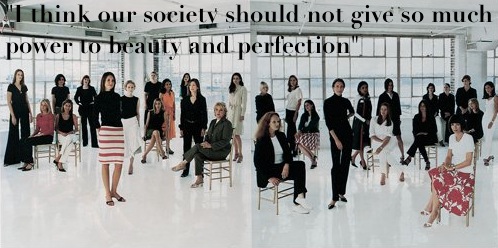
This is such a tricky and complex subject. I believe that the fashion industry has extended themselves as a group to address the subject. The Council of Fashion Designers of America and VOGUE magazine have made guidelines to assist and put the subject at the forefront of a conversation. Agencies are always aware and on guard to help models who are in danger with their body image. That being said, I don’t think that the modeling industry is responsible for the body image of individuals. We could also look to Hollywood in this equation as well. The point really is that if the industry of image making does not photo shop images to ridiculous standards, which is deceiving and unacceptable, they are in a business of selling clothes, products and image.  The truth is that models need to fit into a concept for a job. This is not going to change; Any evolution takes time. Parents and young women are responsible for their body image. There are many examples of successful individuals larger than a size zero. Idolize and emulate whoever you like, but you can’t expect a designer or a magazine to take full responsibility for your feelings about your body.  It is my understanding, and I have been a part of many projects with experts, that an eating disorder is primarily a psychological issue of a complex nature; Obesity is the same. Everyone knows what is needed do in order to decrease his or her BMI. This should be a concern for our overall health, heart and mind. Because I work with young teenage women, I talk about this subject quite openly, but with caution. No need to create a problem that is not already predisposed. I also think that our society should not give so much power to beauty and perfection, and value the individual character. All trends have an end, and hopefully we will become less fascinated with the exterior of others. For the sake of our young generation, we need to change.

Liya Kebede in American VOGUE

American VOGUE is marketed toward a specific socio-economic, predominately white audience.  As a former Model Bookings Editor at VOGUE, how much of this did you take into consideration when booking models to appear in the pages of the magazine?

I am not sure I agree completely. I think the demographics of the readership reflect a mix and a socio economic issue comes up in the price point more than anything. There is always a leader or top-tier in fashion. That is no surprise, and merchandising has always followed the “elite” of the design world by emulating them.  During my time at VOGUE and working for Anna Wintour, she was actively aware of who her readers were and was a leader to make change in ethnic diversity. We launched Liya Kebede and Oluchi during my time there.  It was a serious element that Anna always wanted to focus on. I will say, that if a model isn’t a VOGUE model, she isn’t regardless of ethnicity. Trends and vision take time to hit the market, and models are no different. As the evolution occurred, and the opportunities opened up, the magazine had more model choices. It has taken a long time and a spectacular moment for Asian models to be so prevalent in fashion. VOGUE magazine went to those markets developing their brand increasing overall exposure and gaining outlets.  Models and their looks or “types” are a part of larger trend than just “the model”.

I am looking at the current V magazine Model Issue and it is an explosion of current, modern beauties that reflect the business now. All of these efforts give scouts, casting directors, agents, models, photographers and designers new inspiring options. Diversity is extremely important for our culture, humanity and our creative influence and I think it has now become a huge part of the exceptional.

The fashion industry is often criticized for perpetuating a limited ideal of beauty.  Do you feel this is a fair assessment and why do you feel that way?

I think we have decades or years of a “type” of model who is considered an exceptional beauty. When we look back at the history of modeling, the trend is fairly obvious, and then someone like Lauren Hutton comes along and breaks the mold. This has happened many times, and now I feel like photographers and editors have a wide range of the ideal beauty. But it is not just because you are “pretty” in an average way, you have to be exceptional to win their eyes, hearts and minds. It is not as obvious anymore but I think we know it when we see it. Creative people are inspired by visual elements and a model is part of the vision.

Child Actor Hailee Steinfeld in Miu Miu Campaign

Models are often discovered at a young age and expected to conduct themselves as adults before their peers.  What do you consider too young to model?

I will comment on this subject in a general way because we are talking about young human beings who are individual and should be managed in that manner. My experience has always been that to model in New York City or Paris on a full-time basis, you should be able to really handle all aspects of your life on your own, personal and professional. I would never expect a 14-year-old to do that and I am not comfortable with models starting in a large market that young. The pressure is too much and the rate of failure is too great. I prefer they start outside of their hometown a little bit at 16, if they are truly ready, inside and out or a show season after a bit of experience. They should not quit high school, or start home school or online classes immediately to be available to model. Once a model has been introduced to the right people in the business, the business dictates the decisions about the timing. The models family background, maturity, as well as confidence, also determine when the time is right.  I don’t mean because you are in the business of modeling you should dictate the next step, I mean the demand of jobs and the level of people who are asking to work with the model qualify and determine the work and the career choices. That is the best determination. This is like a layered cake, and if you try to work on the top before you have secured the foundation the cake will collapse.  I am not always the most popular when holding my clients back until they are ready, as teenagers they think they are ready. My experience has made me very aware of this incredibly competitive business of beauty and I want them to be as successful as possible.  Age matters and timing is everything.

Models are commodities easily replaced.  How do maintain your sense of humanity with the models when operating in such a money-focused environment?

I never see my clients as easily replaced. I truly see them as a brand from the beginning. We may fall short, but if I downgrade my efforts to less, I am not working hard enough for them. In the industry, yes, others exist who can do the job and we are all hyper aware of that element. How you do the job determines your demand. At some point, agents, casting and scouting are a silent support, and it comes down to the model. Period.  It is easy for me to be a part of their development, as I love the challenge of starting a new model.  When I talk to them about staying grounded and not letting it all go to their heads, I lead by example. Being vulnerable and not expecting perfection is part of life and when grooming new talent it helps to show it. The world is money focused, that is unavoidable, but it isn’t the almighty power unless you allow it to be. Slowly we see leaders who lead from a deeper place. It may not be obvious, but the true stars in any field are very relaxed at what they do and make it look effortless. The truly talented are authentic, honest, and gracious. They make it all seem easy, but they have found their center and have fun with what they do at the same time.  The money is great in this business. There is a lot to make and a lot at stake for that reason, but your work really should be your passion or you may be blocked from doing your best, and certainly not happy. I try to be a mentor and advise along the way.

Why did you want to get involved with the new show Scouted on E!?

I can’t comment on the show until it airs.   So we shall see…

You recently established your own modeling agency Trudi Tapscott Model Management.  What do you feel you can offer that is different to other modeling agencies?

My experience. I wanted to create a scouting and development company in the United States that focused on teenagers who had true potential and not charge them money up front. There is a business model in the US that was created years ago and has been very lucrative but created false hopes and did not teach what the business was really about. Charging young girls a lot of money for modeling classes, or makeup classes or walking classes to prepare them for modeling which they do not fit the requirements for is irresponsible and taking advantage of them and their parents. If you want to help your daughter with her confidence by putting her in a modeling class, that is a different subject. However, to promise a model who is 5’6” that she should take a class and pursue modeling is unrealistic.  I scout and I work with Erin Olson, who scouts in Utah, and once we find someone with potential we work with them one on one to prepare them for the real world of modeling. I manage their careers and placement with models worldwide.   I wanted to accumulate all of my experience and pass it on in a meaningful, and hopefully, profitable way.

Edita Vilkeviciute on Turkish VOGUE

Why do you think models such as Stella Tennant, Raquel Zimmermann and Edita Vilkeviciute, to name but a few, value and appreciate your judgment so highly?

That is kind of you to say. Actually, it is mutual respect and time that creates trust as well as appreciation. I was very fortunate while at VOGUE magazine to be surrounded by the top people in all areas, and that includes models. I cherish that experience, and it is when I first met Stella and Raquel.  At DNA I had the opportunity to be a part of the team that managed them.  My relationship with Edita developed beyond business and it is extra special to me. It is a unique experience to speak about someone all day, and in order to do that with passion, you really need to know what is important to them so the goals are met. It is an immense responsibility to manage their relationships with their clients and make good choices. Being a model manager is an all-encompassing job and includes business and their personal well-being. I take that very seriously.

Follow her at @tapscout

Molly R. Stern – Beyond Beauty

Molly R. Stern

Molly R. Stern’s love affair with makeup began at the age of 16 when she worked after school for prestige brand Shu Uemura. She later held corporate positions with Clinique, M.A.C. and Trish McEvoy, gaining experience in sales, merchandising and makeup application training.  In 1993 she embarked on her freelance career capturing the attention of Hollywood’s A-listers with her work in high-profile advertising and editorials. By 1998, with her freelance career fully established, Molly moved to New York City to expand her career and pursue other creative opportunities. Molly founded the boutique clothing label m.r.s., based on her philosophy that every woman has a unique natural beauty and that makeup and clothing should enhance this beauty. Her success with m.r.s. was reflected when one of her couture gowns was shown at the “Goddess” themed Costume Institute Gala at the Metropolitan Museum of Art.  The piece resides in the museum’s permanent collection.  As one of the foremost voices in the field of makeup, her advice, wisdom and beauty tips have been published in international beauty magazines including: Allure, Instyle, Elle and many of the weeklies such as People and Us Magazine.  Here, Molly talks makeup, influences, motherhood and more with Emily Sandberg and me.

Can you tell us about the impact music has played in your work?   

For me, music is the most reliable, relatable and moving art form that exists. On a great day, every song one hears is speaking to them, on a bad day every song understands them.  I love to listen to music and I love to play music.  It impacts my life, not just my work, in that it speaks to my soul.  Listening to music I love makes me feel confident and connected.  My iPod is the first thing I set up when I get to work.  It creates an environment and vibe that my clients can settle into.

What was working with bassist Melissa Auf Der Maur like and how has she affected your design approach?

I was lucky to have Melissa wear a lot of my designs throughout the time that I was making clothes. Melissa was my first ever muse.  Her intense love of rock music combined with her strange meld of Renaissance and futuristic style made her super inspiring to dress.  At the time my style was very feminine yet deconstructed.  She was my classically beautiful robot.

You have a flair and honed instinct for the theatrics and costume design.  How did you tune that into your work as a makeup artist?

My makeup artistry came first.  My love of the face and its countenance started when I was 16 years old.  I love women and bringing out the strength in their features in feminine ways.

Amy Adams editorial for InStyle magazine

Everything creative you do involves your hands.  Can you tell me about the lineage of creativity in your family?  Do all the artists use their hands the same way you do?  

My father’s side of the family gave me my love of music as my grandmother was a classically trained pianist.  My grandfather worked as a tailor for most of his life.  I wasn’t close to either of them, but my father and I are extremely close and he plays the violin and guitar and has a deep passion for the arts. His support of any and every one of my artistic endeavors shows no bounds. On my mother’s side, my grandmother whom I was very close to was a total fashionista.  She dressed, always, to impress.  I think my love of VOGUE beauty and fashion was highly influenced by her.  My darling grandfather liked to draw and I have a fantastic piece of dancing girls drawn with a very youthful touch hanging in my baby daughter’s room.  My mother is a chef.  She is a master in the kitchen.  So yes, I suppose my blood line used their hands in the same way that I do.

What kit do you currently use to travel with? Do you check your make up or bring it as carry on?  

I can’t bear to pare down my kit.  I know I should, because that dang bag is so heavy. I find that anytime I have taken things out to make a ‘travel’ kit, I always wish I had what I took out, or someone inevitably asks me for the exact product I thought I wouldn’t need.  So, I bring the whole kit and caboodle.  No choice, I must check it…and I pray, hard, every time I get on and off that plane that I will see that kit and all of its caboodles on the luggage carousel.

As an artist what was it that drew you to makeup as your preferred medium?

I like that makeup is a tool used to empower women in their beauty.  I like that it can be sheer like watercolor or opaque like oil.  I like that my canvas is alive.  I enjoy the science of mixing product with flesh and blood.  Each face and feature gives me a different point of focus, chemistry and ultimate outcome.

There seems to be two schools of thought when it comes to the application of makeup; to enhance or to make a statement.  Can you tell us about your philosophy and approach to makeup?  

My goal when applying makeup is to bring out what is already there.  I feel like enhancing is making a statement.  They are one in the same.  Generally, I keep something about the application sheer.  If the skin is good, I go light on the foundation, if the skin needs work, I diffuse the shadow or gloss the lip.  There is dimension to a woman’s face which in turn requires that I flow with the needs of the individual.

Where do you draw inspiration from and how do you channel that inspiration into your work?  

My inspiration comes from all different sources.  I live with two beautiful daughters who have the most perfect naturally blushed skin, the most gorgeous colored lips and heavenly streaked blonde hair.  I am inspired by their innate confidence.  We are born loving ourselves.  I try to bring that buried truth back to women’s surface. Women intrinsically inspire me with their strength and will and their ability to manage with tenderness. As far as color goes, I love paintings, classic and modern, nature… I borrow from many surrounding sources to bring creativity and love to what I do.

Leighton Meester at the Mtv Movie Awards

How have you evolved as a makeup artist? 

I feel as though I am constantly evolving.  When I started it was how crazy and out there could I be?  Then I became very interested in natural beauty.  Now I encourage my clients to have fun, get ‘out there’ and know their strengths.  I have abandoned terms like cover-up, yet I understand the need to feel like ‘I have my face on’.  There has to be balance.  I strive to know and love my true self.  I hope my energy as a makeup artist does the same for the women I touch.

While promoting The September Issue, Anna Wintour quipped to David Letterman that those who couldn’t afford to purchase high fashion apparel could always “buy a new lipstick.”  Do you think the value of makeup is greater than high fashion solely based on its accessibility? 

I think the value of makeup is greater than high fashion because it doesn’t have anything to do with our bodies and how any given item of clothing fits.  Makeup is an easy and wonderful way to uplift our spirits.  When we give ourselves a spruce-up it makes us FEEL pretty.  We are emotion based creatures.  Naturally when we feel good, we do better, give more, achieve.

Jake Gyllenhaal

Cosmetics brands are releasing products especially tailored for men, and men are using such products increasingly more commonly.  There is some controversy over this, however, as many feel that men who wear make-up are neglecting traditional gender roles, and do not view men wearing cosmetics in a positive light. What are your views on this issue?  

I don’t subscribe to traditional gender roles.  They simply do not exist in my personal universe.  I believe humans are capable of amazing things.  Man, woman, doesn’t matter. The same concept applies to men as well as women, when we feel good we excel.  If using cosmetics inspires men to be more confident and empowered, by all means.

Estee Lauder recently acknowledged and embraced women of ethnic diversity in its global advertising campaigns.  Why do you think the market for women of color in cosmetic advertising has gone untapped for so long?

The same question can be applied to the fashion industry as to why women with curves in advertising have gone untapped…forever.  It’s time that cosmetic advertisers wise up to not only ranging ethnicities, but also the reality of ranging ages.  The cosmetic industry needs to stand for all women, period.

Often we view the world through ethnocentric eyes.  How do you adapt your craft when working outside a traditional Western market? 

I wish I had more opportunity to work outside of the Western market.  I need to branch out more! The inspiration that exists outside of our backyard is endless. Not too long ago I posted on my Tumblr page about beads and their place in fashion around the world.   I shot a photo of my daughter wearing a pair of my grandmother’s beads, the same pair I wore as a young girl.  There is so much to learn from other cultures about beauty.  I long to travel with my daughters to study women around the world.

Reese Witherspoon on the cover of Elle

You work across many platforms: editorial, red carpet and the silver screen.  How do you maintain a cohesive look while still maintaining a person’s individuality?  

I try to encourage my clients to keep it fresh.  That tends to be my cohesive thread.  That desire naturally enhances distinctiveness because I am not interested in altering what’s there.  I like to focus on elevating the beauty that each individual is willing to embrace.

Have you ever been in a situation when you felt you were compromising your artistic integrity and how did you cope?   

More than artistic integrity, I have been in situations where I have had to compromise my emotional integrity. Many times I have cried feeling lost that I was giving my life to making pretty people look prettier.  When I come out of those downs I have to remember my goal is to bring out the confidence that is within.  That is what ultimately makes these women look the way they do.  What I do on the surface is only 10% of my job.  How I encourage women to view themselves is what gets me to work in the morning.   When the client is only focused on what is skin deep, I know I am not the right lady for them.

How are you able to expand your brand while still maintaining your core values and principles?

My brand represents me and I strive to represent self love, confidence and acceptance. I plan to expand on those beliefs for as long as I exist.

What message do you want people to understand about you and your craft?  

I want people to know that self love is pretty much required in order to live a full happy life.  I want women to understand that only Angelina Jolie looks like Angelina Jolie and we should aspire to be our most beautiful and sacred selves.  Aspiring to look like anyone else is simply a waste of precious time.

Trends come and go; what do you think constitutes timeless beauty? 

Timeless beauty is fresh skin, a little dirt on the eye and a bitten lip.  It just never goes out of style.

Follow her at @mollyrstern

Ted Gibson – Hairstylist Extraordinaire

Ted Gibson

Ted Gibson is one of the most sought-after celebrity hairstylists in the beauty business today. His multi-faceted career as a fashion, runway, editorial and celebrity stylist continues to take him around the world where he finds great beauty in exploring different cultures. Previously exclusive to just A-list celebrity clientele such as Angelina Jolie, Renee Zellweger, Keira Knightly and Anne Hathaway; Ted took the time to chat with me and Emily Sandberg about his petition to get recognition for hairstylists at The Academy Awards, his craft and what he wants you to understand about the man behind the brand.

How has your definition of success defined you?

I have created a level of success that I’m comfortable with now and I am working towards more success in an effort to accomplish some of the goals I’ve laid out for myself in changing the industry.

The Academy Awards recognize achievements in makeup and costume, but not hair styling.  How do you feel about this oversight and what would you like to see done about this?

It’s surprising to me that there isn’t a ballot for hair. It feels like hairdressers aren’t valuable. Social media is a way to reach a lot of people, for instance, it helped Betty White get on Saturday Night Live, and I’m still figuring it out how to use social media to raise awareness about this oversight and hopefully bring about a change. I know hairdressers have raised this issue in the past and brought it to light but nothing has happened yet.  I’m putting a petition together to continue the effort to bring awareness to the Academy that it’s not OK that there isn’t a category for hair.  There have been so many iconic hair styles that came to light through the medium of film, I’d like to see that celebrated and recognized.

At what stage was branding incorporated into your development and how do you further plan to develop the Ted Gibson brand?

I’ve always considered my work as the means for building my brand.  Part of that is staying true to who I am and true to the industry I work in.

Now that you have your own salons,  product lines and television shows, what other personal goals would you like to achieve?

The brand of Ted Gibson is not a household name yet. I’m opening new salons, one of which is being opened soon in Ft. Lauderdale, FL.  I plan on opening beauty schools to provide a level of service that is not available for many people like it is for celebrities.  My brand is about attainable luxury.  Although my haircut is one of the most expensive in the world at $950, I’m on What Not to Wear helping everyday people look their best. It’s a touching moment to watch people who consider luxury out of their reach see that it is indeed attainable with the right information and tools.  I feel like I was put on this earth to inspire and create something special to inspire the next generation of hairdressers to think outside the box. I want to raise the level of the profession period.


What message do you want your clients, both current and prospective, to understand about you?

I think what is unique about the brand is that at my salons you have the affordable opportunity to get great hair and the service is five star. When you come to Ted Gibson you get obtainable luxury, something that is lacking with the divide of the wealthy and middle class widening. I created the space in the salons to be like the culture of New York city. You can be standing on the corner in New York listening to four different languages at the same time; standing next to a white person or a black person or a celebrity or dude and it’s very diverse. It’s not intimidating when you come into the space, it’s very inviting, and you know you’re going to get great service and a personalized hair cut; that’s what is different about the Ted Gibson brand. People think it’s uptown and if you come into the salon you’ll be in a snooty atmosphere but it’s not that at all.

How has social media informed the way you conduct business?

I call social media free marketing. What it can provide for a brand or even an individual is the ability to reach people that wouldn’t otherwise know anything about you and get closer to people that already are aware who you are and what you represent.  I do all my own tweets and Facebook updates.

You work in a collaborative art form.  How do you manage, prioritize and validate all the relationships you juggle in a day in the life? 

I feel like I was put on this earth to do this and I don’t treat anyone any different than I would treat someone like Angelina Jolie. It’s the same response regardless of if you are a celebrity or not, and I am who I am regardless of who you are.

You have achieved and maintained relationships with celebrities, fashion houses and regular clients while remaining accessible and not diluting your image. What principals have you applied that have created this rare combination of image and personality?

It’s worked for me because I’m in charge of my image and I’m so hands on. As well, I maintain an attitude of service. For one, I know that as a celebrity hairdresser it’s important to continue work on new actresses and models, helping them find their best image. I keep myself fresh that way and it’s been the key.

As a hairdresser my main role the past ten years has been working with celebrities and when I got the celebrity to a certain place then that relationship was over to make room for a new girl. But I still maintain the relationships I invested in in the beginning and that effort has sustained my growth.  My gift is to help women discover who they are and help them focus their image.  Every girl I’ve worked with has been an enduring relationship. 

Ted Gibson’s New York City Salon

Do you feel that celebrity has hijacked the creative industry?

I did not want to be a starving artist. There’s nothing worse than being a starving artist. Finding the balance between art and commerce is very important to me.  The whole idea about celebrity when I started in the business about 10 years ago was different.  Models were still on the covers of magazines.  When they were on the covers it was dynamic but grew to a point where it was no longer interesting because we didn’t know who they were. I think that’s partially why it went to celebrities. People related to their stories, where they came from, what movie they were doing and there was so much more to it than being simply a model. We thought it wouldn’t last and models would come back on covers and here we are 10 years later and celebrities are still on covers.  I miss my girls though.

The audience clearly loves you. Why did you want to do the show What Not To Wear and why do you feel the women responded to you so favorably?

I give the same treatment to everyone.  It’s the same banter and philosophy. Every woman, famous or not, has insecurities and doesn’t necessarily like their hair and if I can help a woman discover how beautiful she is and how great she can feel about herself, I’ve done my job. The medium I work in is hair and importantly, can transform the way a woman feels about herself in an instant.

My publicist asked me to go into an audition for the show and I was surprised and unsure but I went. I remembered Vidal Sasson television and how everything changed for him when he became a household name.  A lot of my growth has come from being on television. What Not to Wear is a great vehicle to showcase my work and myself and how effective a hairdresser can be.  You can’t deny the power of television.

What influence do you think growing up overseas had on your development?

My dad was in the military.  The constant travel helped me develop a wider palate for what beauty is and means.  Moving every two years also taught me skills to easily adapt to different situations. My tagline is Beauty is Individual.  You can be a size 24 or 2 and be beautiful.  It’s about what I can do to help bring out a persons best self.

Can you talk about the power of positive thinking and the effect it’s had on your work? 

I believe in the law of cause and effect.  What you put out is what you receive in return. I have to know everything is for my good even when I don’t understand it.  From that philosophy I’ve been able to roll with the punches.  I have a morning practice whereby I mediate, write or read for 15 minutes.  If I don’t have enough time I definitely meditate and read. I read from the Science of Mind by Ernest Holmes. I consider myself to be a spiritual person.

Change is stressful and scary for most people.  You seem to have developed productive and effective skills when dealing with change. Can you tell us about a few of them?

I belonged to a church for a long time that focused on creating your own abundance.  In your world you are responsible for what you create if that’s what you choose and desire. This question hits on exactly what the teaching was about a few days ago. I hadn’t been in several years and went the other day for the first time with friends. We sat through the class then had lunch.  Her talk was on change and adapting to change and embracing it. Change is inevitable, it’s how you respond to it.  I love that my career has taken me in many directions because I want to leave a teachable legacy so the next black kid that comes along will have it easier to create something for himself.

Did you envision the life you have today when you began this journey?

Yes and no.  I remember when I was in barber school and said I wanted to work on celebrities.  I always wanted to be famous but didn’t know what that meant.  It was the late 80’s and I went through my training then moved to Austin and around the country then ended up in New York.  I ran the Aveda salon for about eight months then left to enter the fashion business.  The first time I met Angelina Jolie, we did the covers of Cosmopolitan and Marie Claire in London and Patrick Demarchelier shot it. I didn’t know what working with her would do for my career but that’s when it shifted.  I quickly realized fame was not what I had imagined it to be.  But also, because of it, I was given an opportunity to do good.

What advice would you give to anyone thinking about taking a risk and doing something they love?

You have to go for it.  There’s nothing worse than living in regret, it’s something you just can’t do.  I don’t think there’s anything I’ve failed at.  There have been mistakes that I consider stepping stones as they took me to the next thing.

Follow him at @tedgibson  

New York Fashion Week – Eila Mell

Eila Mell is a journalist who has spent many years writing about fashion, theater, and film and interviewing some of the biggest names in the fashion and entertainment industries. She has been tapped for her expertise by nearly a hundred television and radio shows, including The Insider, Hollywood 411, Dailies  and The Mark & Brian Show.  Eila was gracious enough to grant Emily Sandberg and I access to her views on the fashion industry for the launch of her new book New York Fashion Week.

What inspired you to document almost two decades of NYC Fashion Week history?

I was invited to attend a few shows during Fashion Week while working on a project. When I casually mentioned it to friends (mostly people with no interest in fashion) everyone wanted to go with me! I quickly realized that people wanted to know what was going on in the tents.

What challenges did you experience during the process of writing the book?

Editing was the biggest challenge.  There was so much information and so many photos it was hard to get the book down to 368 pages.

Fern Mallis is largely credited with creating NYC Fashion Week as we know it.  What impact, if any, do you see on fashion week now Fern has stepped down?

Fern Mallis was the face and voice of Fashion Week.  There is no one person now that represents the entire event.  Since Fern’s departure the shows have moved from Bryant Park to Lincoln Center, marking the end of an era.

The cost of staging a runway show can easily run into the hundreds of thousands of dollars.  In a Web 2.0 world, do you think the traditional staging of runway shows is still necessary and economically advantageous?

That’s a hard one.  On one hand, an enormous amount of money could be saved if designers recorded shows and sent them to the people who need to see them. However, that will never compare to seeing a live runway show. There is a huge advantage to actually seeing the clothes move in person that a recording cannot replicate.

How do you see the internet and social media changing the way fashion is presented and delivered to the public.

Because of the internet and social media fashion is now open to everyone.  In 1993 it didn’t seem possible that a 12 year old girl from Illinois could post her insights online and become part of the industry.  Anyone can be a critic. Another major change is the speed at which fashion is presented to the public.  It used to be that the few invited guests were getting a preview of what the world would see months later.  Now the second a look comes down the runway it’s being tweeted.  Things are very different.

What role, if any, do you think sponsorship has over what designers present?

Hopefully not much.  I think it’s important that designers have creative freedom.

The vision of the four major fashion conglomorates; LVMH, Gucci Group, Richemont and Prada decide and set the tone of fashion for the majority of the world.  Discuss.

It’s an interesting issue.  The designers who work for these companies are some of the most talented in the industry, so perhaps it’s fitting.  But there should always be room for the smaller labels and new designers who have their own vision.

Bloggers such as Tavi Gevinson have an increasing presence at runway shows.  What role do you see bloggers having in the future?

Bloggers have huge followings, and that can’t be ignored.  I don’t think they’re going away anytime soon.  I think that blogging has the potential to rival magazines, as the number of people getting their fashion scoops online continues to grow.

How do you feel about the democratization of fashion?

For me, some of the most interesting looks have always been found in street fashion. People should embrace their individuality and not worry about rules!

How has writing affected your ability to communicate in the world? 

Writing can be such a solitary endeavor.  It’s an amazing thing when you finally share your work with the world.  When someone really gets what you’ve written about, it’s priceless.

You have a distinct writing voice.  Can you tell us how it was developed and what the process of finding that voice was like for you?

I just try to have a conversation with my readers.  I tend to write the way I speak, which can be very direct.  I write about what I love, and know that there are so many others with the same passion.  How many people would love to go to New York Fashion Week?  My goal is to give those people the lowdown on what it’s like to be there almost as if we were discussing it over coffee.  It can be so much fun dishing with friends, and I try to bring that same quality to my work.

New York Fashion Week by Eila Mell is available at Barnes & Noble and Amazon

Emily Sandberg – A Conversation With Fashion Royalty

Born in Rochester, Minnesota, Emily Sandberg was an international fixture in the fashion industry featuring in advertising campaigns for Fendi, Versace, Sportmax, Armani, DKNY and more. In addition to modeling, she has appeared in The Devil Wears Prada and Employee of the Month. Now a mother, Emily chronicles her life on her blog.

What do you think about the current beauty model used by the fashion industry? Do you think it portrays an unattainable and/or unrealistic ideal?

I don’t think the images are unrealistic at all. All you need is a team of professionals 24/7, the perfectly clear skin of a 20-year-old and a Photoshop filter the world can view you through. What’s unrealistic about that?

Beauty suggests so many emotions, it’s difficult to capture all definitions of the word in one image. Currently, most of the beauty models look the same or they are celebrity actresses. When I see an ad for L’Oreal or Revlon or Maybelline, I can no longer differentiate the branding. To me, the images all look the same. As a whole they are indeed beautiful, if one considers beauty to be uniform.

Fashion is an industry that is very youth centric. The largest growing demographic with the most disposable income is people in their 50’s. Do you think older women are represented equitably by the industry?

I think designers are beginning to design with the older women in mind and thank goodness. These women deserve the love; They are fierce and they have earned it. As well, the financial bottom line demands it. How the clothing is marketed and advertised is a different story altogether. If I based my profiling on the advertisements for most designers, I would think that their core customer is a sexually mature girl in her early twenties, with an extremely high paying job and/or trust fund. I don’t know many 50-year-old women that either look or aspire to behave like the women I see in advertising. But I may be hanging with the wrong crowd of 50-year-olds.

Child stars such as Hailee Steinfeld, Chloe Moretz and Elle Fanning appear on the covers of LOVE’s autumn/winter issue in addition to appearing in campaigns for Miu Miu and Marc Jacobs. Thaylane Loubry, the ten-year-old French model who was styled in French Vogue’s January 2011 issue, is causing controversy over what is considered too young to model. How do you feel about the sexualisation of young girls in fashion and what is too young?

Certainly I think we can all agree that 10 is too young to be covering a child in makeup and placing her in suggestive positions. However, although most models are a few years older, they are still required to reflect and embody the sexuality of a mature, experienced woman. Most of these girls fake what they think sexuality is. We end up with a definition of sexuality as being something outside of ourselves that can be manufactured with fake breasts, liposuction, a red lip and higher heel. To me this is much less interesting than the inner life and energy the truly sexually awakened woman exudes. Having said that, when I see a Victoria’s Secret fashion show I do wonder if life would be a bit easier with a couple of grands worth of breast implants. I experience the impulsive desire to have it and that impulse is what sells clothes.

Celebrities have increasingly replaced models on the covers of magazine over the past ten years. Why do you think this is and what do you think about our society’s obsession with celebrity culture?

Trust me on this, people aren’t so obsessed with celebrities as much as they need to be in touch with themselves. People need stories to connect to themselves, to their communities and tribes. It was really a genius business move to capitalize on this years back. Now it has become a monstrous machine that is feeding upon itself and literally destroying the lives of those who get sucked into it. I would consider it abusive at this point to allow any new talent to get sucked into the Hollywood machine. Unless you have a very good understanding of what exactly this machine is and what your role in it is, step away. Be warned, there are not enough gifting suites and red carpets to give back the sanity of a soul at peace with itself.

A celebrity used to be a special personality or talent. Now it’s rare that you find a quality persona that is sustainable for any length of time. Mind you, fashion is experiencing that same predicament. It used to take years to develop a model to the point where she was ready for the world stage. Around the time I started modelling you knew within months whether or not you were going to make it in the business. Now models step off a plane and are signed to exclusive deals with Prada, Miu Miu and Jil Sander for a season and by the next season no one is interested.

Designers such as Prada and Burberry are streaming their ready to wear collections live. How do you see fashion and social media converging?

There are a few people in fashion that have completely embraced social media. Anna Dello Russo and Ted Gibson are two that have an innate understanding of what social media is and how to use it. A lot of what I see at the moment is fashion using social media as a way to self-promote. There are huge gaps in the conversation but I think we’ll see them filled. The convergence, for me, is very exciting seeing fashion reach the innards of our country. Growing up, I had never heard of Louis Vuitton or Versace or even Donna Karan.

Threadless is an online company built on one of the most powerful social media tools; crowdsourcing. A small T-shirt company started by a couple of college dropouts with $1000 is now a multimillion dollar company. The people and brands that will end up being paid attention to are the ones that have substance and a way to connect in real time with their communities and tribes. I don’t think we’ll be seeing vanity brands and projects that have been supported primarily by dollars lasting much longer.

How has the industry changed since you started your career in the late 90’s?

When I was modelling, people knew who the girls were and were excited to see them on the runway, in the magazines and on the street. They had worked with them for years showing them how to model, how to hold themselves. They were comfortable with the business and familiar with the players before the public ever caught onto them. Once the celebrity craze began and the turnover of new faces ramped up, model’s personalities became more ubiquitous. The models were everywhere but no one knew who they were anymore. The emotional connection to the specialness of a face and a personality in fashion was diluted. Then, the Eastern Europeans came and took over the entire scene for a few years. At that point, even the agents had a difficult time picking their own girls out of runway lineups. They all had the same hair length, skin tone and facial features. The model as muse ended and celebrity and designer pairings took hold.

I predict that we’ll be seeing stylists as the new emerging personalities of the fashion business. What they wear and their approach to fashion will become more and more visible and followed. Brilliant stylists like Brana Wolf, Katie Grand, Anna Dello Russo, Carine Roitfeld, Edward Enninful, Monica Dolfini and the like are going to be paid attention to like never before.

How do you feel about the creative process in the industry and do you think it is being diluted to make fashion more commercial?

Fashion had to become commercialized to keep up with the shifting celebrity dynamic and weakening world economy. Celebrity stories became the foothold to keep advertising money flowing. I do believe we’ve reached its final chapter and will see the celebrity obsession die down as the economy and people’s confidence in art and their own talents strengthen. I speak a lot about this phenomenon in my blog because the extent to which we allowed the celebrity crazy to take the fashion business hostage fascinates me. It will change though, that’s one thing that will always remain a constant in fashion; change.

Models such as Liu Wen and Jourdan Dunn represent such a small number of successful working models of ethnic diversity. Do you think it is a fair assessment to say the use of these girls is tokenism?

Oh no, not at all. These girls mentioned are great models and deserve every bit of success that they’ve achieved. I’d love to see more diversity on the runway but first and foremost, the model needs to a great model. You can’t throw away talent in the name of diversity. Perhaps a college university can or a large corporation, but not in fashion. Creative talent trumps equal employment opportunity. It’s still the wild west.

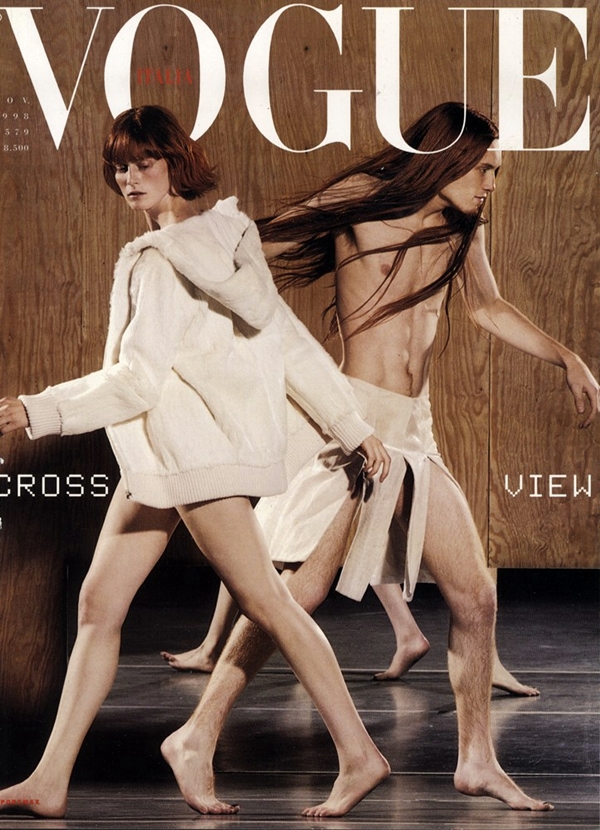
Vogue Italia recently put three ‘plus’ sized models on its cover. Do you think this was a publicity stunt or an authentic move to represent other body sizes in fashion?

I don’t think it was either. Steven Meisel and Italian Vogue have been the undeniable blue chip standard for forward thinking creativity in the fashion business for the past two decades. Neither have allowed themselves to be defined or swayed by advertisers or politics. The commitment to creative authenticity has kept Italian Vogue as the reigning magazine in the business and Steven the reigning photographer.

The Advertising Standards Authority in the UK recently banned ads for L’Oreal featuring Julia Roberts and Christy Turlington citing that both ads breached the advertising standards code for exaggeration and being misleading. How do you feel about the use of Photoshop in advertising?

Photoshop has gotten a bad rap the past few years. The problem with using Photoshop in beauty advertisements is that the overuse of it dilutes the reality of what the product is capable of. For instance, it would appear from most ads that the products are going to make me look like a Madame Tussauds’ statue. It would be great to give credit to the Photoshop artists. I think it would be a gentle reminder that these images are in fact images.

British Vogue’s June issue featured the headline ‘ The Arrival of the Asian Supermodel’ yet none of the editorials featured Asian models. If Vogue felt it was important enough to dedicate a cover line to this issue why do you think the contents of the magazine were seriously lacking in Asian models?

I didn’t see the issue so I can’t comment specifically on that issue, but to say that is hilarious and tells me somewhere in Vogue UK’s system of decision making there’s a big communication problem.

How has motherhood informed your life?

I now live a life of necessity. It is the rare occasion when I choose to do what I want to do. I only have the energy to do what is absolutely necessary. My child is my priority now. The laundry and the rest will just have to wait.

Follow her at @emmalish