Trish Summerville – The Stylist

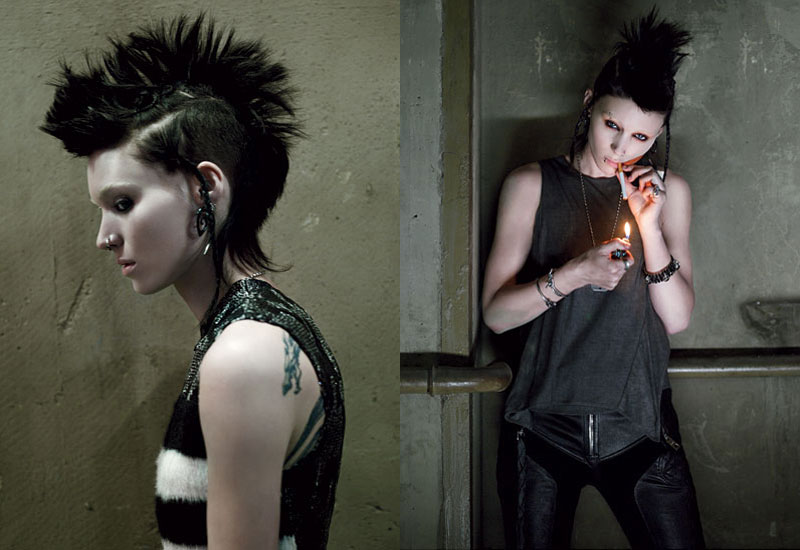
Trish Summerville is at the top of her game with a list of credits to her name that reads like a veritable who’s who of Hollywood.  Her latest work on the blockbuster movie The Girl with the Dragon Tattoo and following collaboration with retail behemoth H&M have inspired a generation wanting to emulate the tough-as-nails aesthetic of lead character Lisbeth Salander.  Trish took time from her busy schedule to speak to me about her life and work.

Can you talk about the process of sourcing inspiration and the references you used when styling for The Girl with the Dragon Tattoo?

When I began making vibe and inspiration boards for The Girl with the Dragon Tattoo, I sourced everything related to European and American culture with a specific focus on Swedish culture.  I referenced Söder kids for clothing, style, hair and makeup.  I also sourced inspiration from squat house youth, 80’s under ground punk females, street kids, oil spills, cracked asphalt and insects for color and texture.

Stylists are increasingly becoming household names.  How critical do you feel a stylists’ work is in making someone a star in Hollywood today?

On a feature film, dealing with costumes for characters, you are a Costume Designer. The term stylist pertains more to the red carpet, commercials and videos.  I feel fortunate when I have the opportunity to work with talented actors. I feel that it’s the actor’s talent and persona that make them a Hollywood star and we are here to assist them with cultivating their style and helping them successfully create different characters for each role they choose to portray.

How did your collaboration with H&M happen and are there plans to collaborate with them in the future?

Sony and H&M approached David Fincher and Ceán Chaffin about doing a collaboration.  We all felt it was an ideal fit.  H&M is a Swedish household name and the story line is set in Sweden.  Also, Lisbeth Salander goes on a shopping trip to H&M in the second book of the trilogy The Girl who Played with Fire.   Working with H&M was a wonderful experience; I would love to have the opportunity to work on another project with them.

You have worked with David Fincher on various projects in the past.  Can you describe your working relationship and why you think it works well?

David is one of the most talented, intelligent and creatively collaborative people I have ever met.  He is very communicative and focused making it very easy to deliver.

How does styling for music videos differ from working on feature films?

When working on a feature film you have much more character development and authenticity.  Generally, with music videos, the talent and the label want to be very fashion conscious and cutting edge.

How do you want to evolve the Trish Summerville brand?

I am definitely interested in working on various projects.  I’d like to do more work on feature films along with a fashion and jewelry line.

Of all the various platforms you work across do you have a favorite and why?

I truly enjoy all the different aspects of fashion and costuming I work in.  I like to keep my work varied as it keeps it more creative and intriguing for me.  Each different platform inspires and compliments the next.

What traits do you think it takes to be a good stylist and make it in such a competitive industry?

Always be authentic in your vision and never let your ego get in your way.

Have you noticed a shift in the ratio of female to male clients you style for and if so what is noticeable about it?

I truly enjoy dressing men as much as I do women.  They both present their own challenges and rewards.

Did you know you wanted to be a stylist when you started your career or was it an evolution?

After I won the Costume Designer Guild Award for The Girl with the Dragon Tattoo, my parents recounted a story to me from my childhood.  They told me that when I was very young I would walk around the house dressed up in a random collage of clothing stating in my version of a French accent, “ This is Givenchy.”

My mom says, “That’s when I knew you would work in fashion!”

Learn more about Trish

Sunniva Stordahl – The Dark Horse

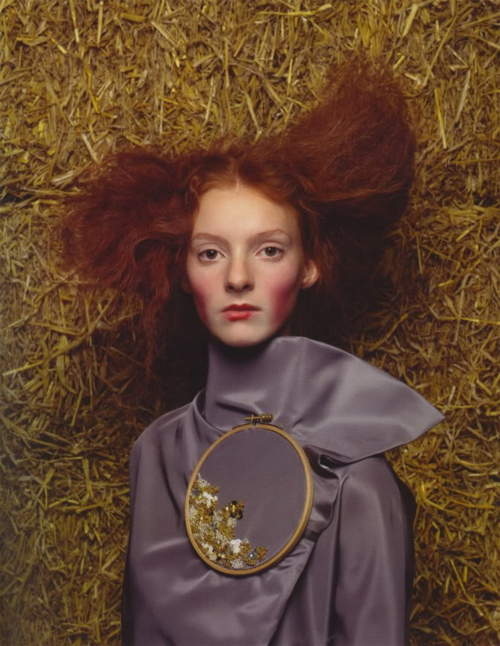
In an industry dominated by homogeneity, Sunniva defies convention.  With her shock of red hair and Nordic features, Sunniva rode the wave of unusual beauties in the late 90’s and redefined what it meant to be beautiful.  After fronting campaigns for Versace, Akris, Anna Sui and gracing the cover of numerous magazines, Sunniva left the modeling industry to pursue a master’s degree in molecular biology, laying to rest the notion that models are one-dimensional.  Sunniva spoke candidly to me about the moment that changed her career forever, motherhood and what she considers her greatest achievement so far.

How did working with Steven Meisel change your modeling career?

I was a classic case of being a Meisel girl.  I started modeling in Paris during my summer vacation before my last year in high school.  My first job was the Chanel couture show.  My agency convinced me to give modeling a chance but I was hard to convince as I was set on finishing school, but they did it somehow.  In the end I’m glad they did. I finished high school while studying back stage at the shows.  I packed my bags and left Oslo, Norway for Paris. I was there about two days when I kept receiving messages that there was a photographer in New York called Steven Meis-something-or-other who was interested in meeting me.  I was clueless about who he was and what a great influence he had on the industry, but I could tell from the people around me that it was a big deal.  I was really excited when I was booked to shoot the CK campaign with a group of girls in New York and then I did a 30 page single-girl story for Vogue Italia following that.  Just a few months after I left Norway I was on the cover of Vogue Italia; that opportunity made my career.  I worked with Steven on a regular basis which was important for me as a model. I have an editorial look and Steven’s support was amazing, not to mention how fun it was working with him.

You left modeling to pursue your master’s degree in molecular biology, why did you want to reenter the fashion industry?

I left modeling after four years.  I needed a break and I always thought I would go to university so the timing felt right.  Once I was home I didn’t look back, I really thought I had quit for good. I did my master’s degree in molecular biology, got married, and had a daughter in 2006.  A year later my husband had the opportunity to pursue his music career in New York and I was all for it. When we moved back I missed the city more than I missed fashion.  I took a break from my doctorate thesis but I wasn’t quite ready to be just a wife and mother.  I thought I would look around and see if there were opportunities or inroads back into fashion since I was going to be in New York anyway.  I met a great booker through someone who managed my career previously and we clicked immediately. I was back in the proverbial saddle.

How has motherhood informed your life and the choices you make?

It’s such a cliché, but it changed everything.  I reentered the fashion world when my daughter was nearly two and it was really tough spending time away from her. After a while I didn’t feel that the effort was worth it. It was fun, and it still is, but I really wanted to get back on track with my science degree.  I also had another daughter two years ago which made modeling less manageable. I am happy for my experiences as a model, but I want to be good role model to my two girls. I want to show them that they can do what they set their mind to.  I have started my doctorate in breast cancer genetics which is really exciting.  It is important to me as a person, and as a mother, to be in control of my own life and my own decisions. As a model you are very much a result of other people’s opinions.

In an industry dominated by a very narrow beauty ideal, how do you think your look has influenced tastes?

I definitely think I was in the right place at the right time. The late 90’s was a place for girls that were defined by a different kind of beauty.  I think it was great for the fashion industry and I think that mentality is still relevant today. Despite there being uniformity to the look of the season, the industry is open to something out of the ordinary, which I think is great!  There is still room for more diversity such as ethnicity, size and age. I think if industry leaders wanted they could make fashion reflect more of the real world.  Personally, I think that would make it more interesting.

Do you feel more or less pressure now to maintain a certain weight than you did at the beginning of your career?

Honestly, as much as I hate admitting it, I do.  As a 17-year-old girl with a background in gymnastics I was aware of the weight issue when I started modeling.  I let everyone in my agencies know that if they mentioned weight to me, I would go home on the spot.  That might have been a reason why my career started slowing down.  I left before it got really slow, I’m not a patient person and I had other things I wanted to do with my life.  When I was around 20 my hips were getting wider and I would hear on castings that they were too big.  Reentering the fashion world after an eight year break and having a baby I was pragmatic and realistic.  I knew I would have to lose weight and probably struggle to keep it low enough to be of any real interest to clients. I am pretty sure the sample sizes and models in general have become substantially smaller since I was last in the game.  Now I am trying to be a good mother, serve healthy foods to my girls and I need a little more food to be able to use my brain at work everyday. I am aware that I am not a working model size.  It bothers me some days, but most days not.

Marc Jacobs used two 14-year-old models in his Fall 2012 RTW show.  How do you feel about the increasing use of younger and thinner models in the industry?

I don’t think it’s a great trend.  The industry argues that girls stay in school and are accompanied by chaperones, which is really hard take it from me, and I was 17.   My experience and opinion is that it’s a tough industry and job. If you are not surrounded with people who have only your interest in mind, it is a tough place for a 14-year-old.  The job is based on your looks alone, not who you really are, and that can be especially tough when your self-esteem is still developing. That said, it might work out just fine for some girls, but what’s the rush?  Girls still look young when they are 17 or 18.

What have you learned about yourself from your time working as a model?

I learned so much at different stages of my career. When I moved to New York at 17 I learned to take care of myself, pay my rent, gas bill, travel e.t.c.. I felt so independent, which I am sure every 17-year-old that moves out feels.  It’s hard to summarize the lessons I have learned, as this took place during such an influential time of my life, but I have learned that the only one I can trust to make decisions for me is myself.  I learned to be around a lot of very different people and really enjoyed the part of modeling that took place in front of the camera; it was my domain.  I also learned some lessons the tough way.  One season I was an “it-girl” and the next the same people would not even acknowledge me.  It was pretty tough but it taught me that I want to be a good person and treat everyone I meet with respect.  However, I wouldn’t have it any other way.

What do you consider your greatest achievement?

Perhaps that I was able to be fully caught up in the fashion industry, and make it out safe and sound. I was able to enjoy the thrill of modeling but also be able to move on to other things that are truly the most valuable to me now: my children, husband, and my new job as a student.

What went through your mind when you were first scouted?

It was such a strange day. I was walking home from school in my hometown,Oslo, when a woman with 20 shopping bags approached me. I was sure she needed help carrying all her stuff. She came straight up to me and asked me if I had ever considered modeling.  I literally started laughing.  I was 15 and a full head taller than any of my friends, so I was slouching trying to fit in.  I had my hair brushed out, it took me years to figure out that brushing did not help mange my frizzy, curly hair, had braces, and was generally not the coolest kid in school. It’s not a unique story. She left me her business card and the number of an agency called Heartbreak.  The name did not help but despite that they are still my mother agency today.  I was curious and ended up in their archives. Two years later something was in the air because three different scouts picked me out from the archives which included about 2000 girls, hands, and snakes.  I had the option to go to Milan, Paris or London for the summer.  I chose Paris.

What would you say to your younger self knowing what you do now?

Stick with the people who believe in you.  Personal relationships and friendships are the most valuable. Probably the biggest mistake I ever made in modeling was leaving the booker I loved and shared so much with because of what other people were saying.  All in all, I am really happy things turned out the way they did and I have reunited with my friend.

Ryan Barrett – The One to Watch

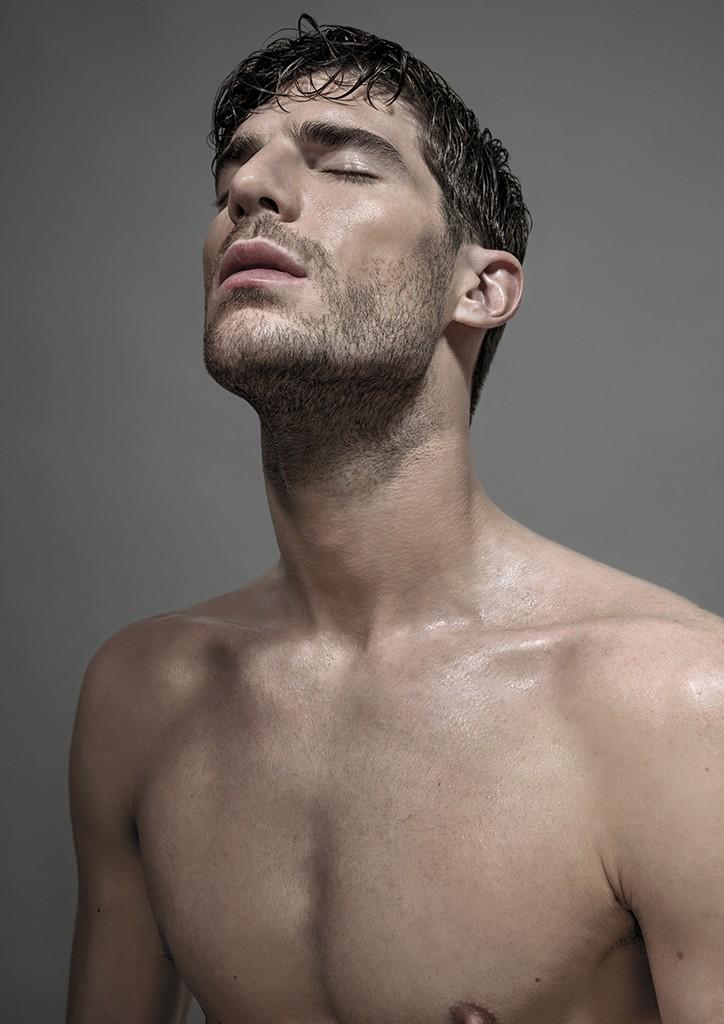
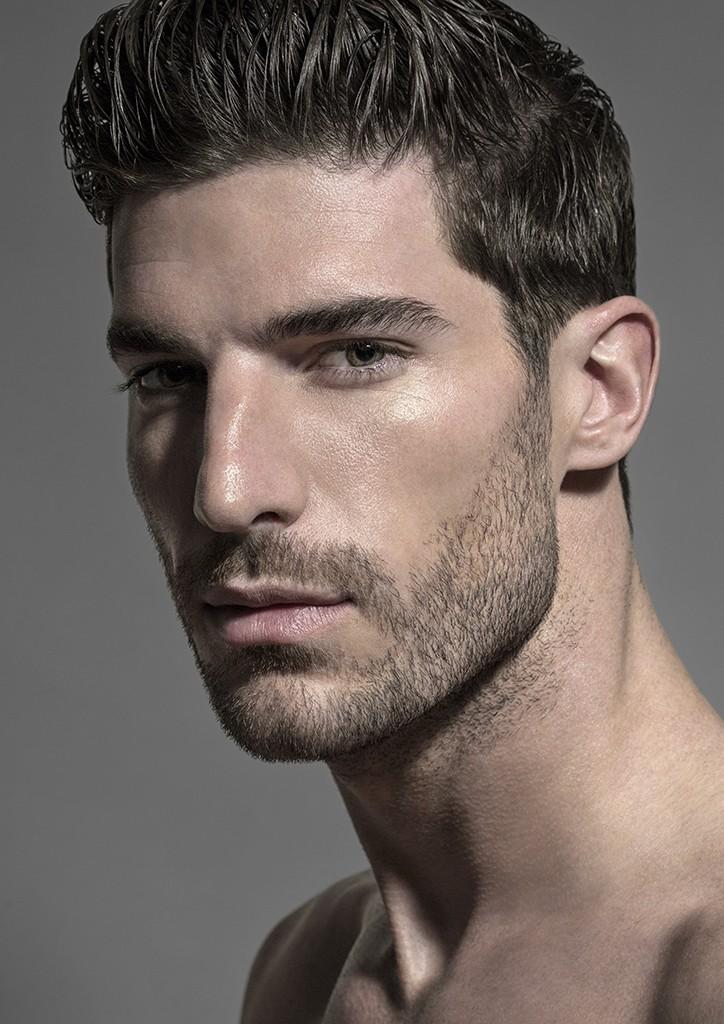
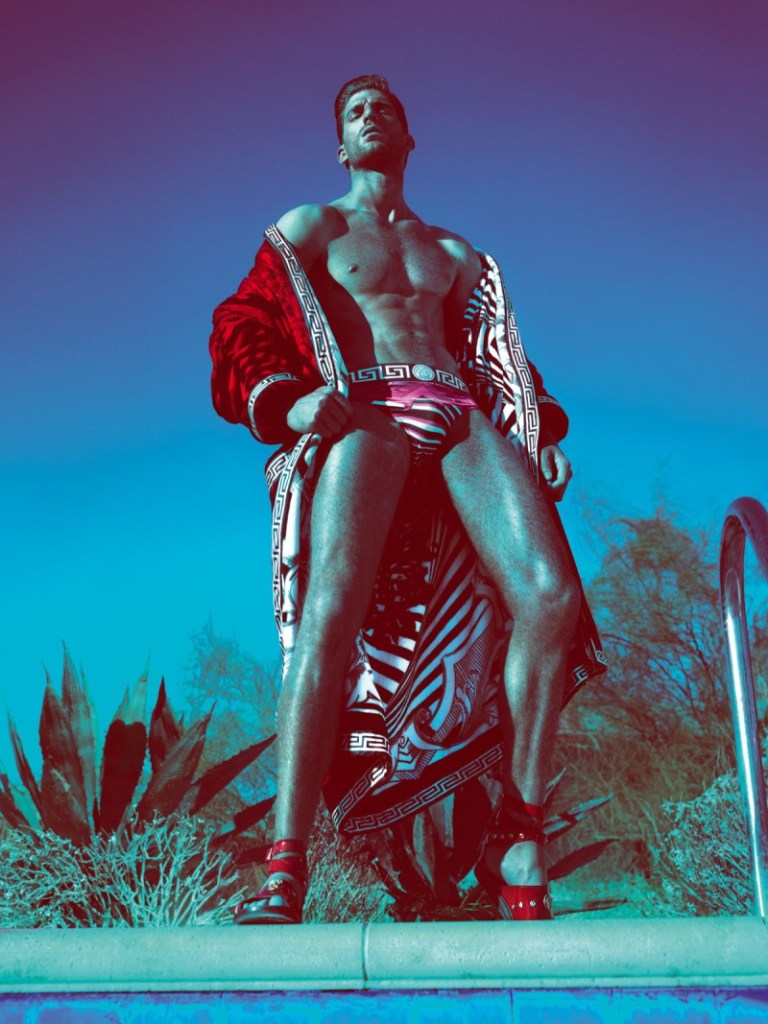
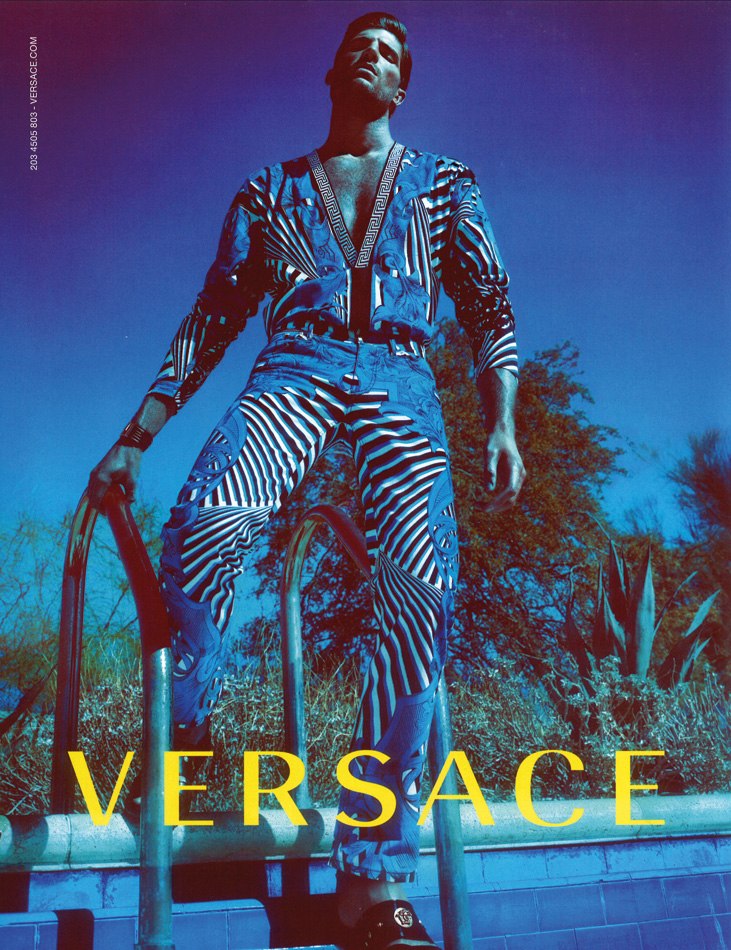
Star of the Versace 2012 ad campaign and fellow Brit, Ryan Barrett is more than just another pretty face. With a Fine Arts degree and a passion for photography, Ryan is diversifying his brand and crafting a life on his terms.  I wanted to get a man’s perspective on the female centric fashion industry in addition to discussing how his life in front of the camera informs his work behind it.  Here, Ryan discusses his life and work.

How has your work as a photographer informed the way you move in front of the camera? 

Being a photographer myself, you learn about light and how light is so important.  On set you sometimes understand what the photographer is wanting to achieve so you naturally progress toward it. It can help a lot on a shoot knowing a few tips.

Modeling is one of the few industries where women command more money and control than men.  How do you feel as a man operating in this environment?

I think it has always been a women’s market, so female models will of course be in a higher demand than men. The male market is fast growing and there are more and more male grooming products and male fashion magazines available.  Now more than before, men are more aware of fashion and trends.

Hedi Slimane ushered in the waif look among male models while David Gandy went against type with his uber masculine physique.  Men are increasingly being subjected to the same issues surrounding body image as women.  Discuss.

One of the current trends is a more masculine aesthetic. Trends come and go so I think it’s hard to physically put pressure on your body and image like that.  A healthy man is a “good-looking” man.  I don’t feel there is anywhere near the same level of pressure placed on men as compared to women in the industry.

What inspires your photography and why have you explored the subjects that you have?

I have always been a creative person and very visual.  I studied Fine Arts – Textiles at university.  I found myself getting frustrated with not being able to be creative with all the traveling I was doing and so I turned to a more mobile medium. Photography is a great source of communication and I love to explore the boundaries of capturing the communication between model and the lens.

Inspiration comes to me in waves and although it’s hard to be inspired all the time when I’m in front of the camera it makes me want to shoot. Modeling has afforded me the ability to travel and explore all these amazing locations and that gets me excited about shoots. I usually never leave anywhere without my camera.

How have you evolved as a photographer?

If you’re not evolving as a person you’re in trouble.  Particularly with fashion photography, it is important to keep up with technology and trends.  I have learned a lot just watching photographers light sets and observe the techniques they use.  Sometimes when I practice, I adapt what I’ve observed and incorporate it into my own techniques.

I recently looked at some of my early photographs that I shot and boy has it been a steep learning curve. The photos were overexposed and over-retouched, but this is how you learn.  Learning from your mistakes, I find, is one of the best ways of learning.  Sink or swim is my motto.

Working in an industry where you are in demand one day and not the next, how do you handle the rejection that is part of the territory?

You have to take the thick with the thin. You can’t be every ones cup of tea.  Rejection is just part of being a model and comes with the job, but you soon grow thick-skinned.

What are your plans for the future?

At the moment modeling is taking up most of my time.  Long-term I would like to pursue photography more seriously and get my head stuck in to it 100 percent, but whatever I do I will keep the creative juices flowing.

What have you learned from your time modeling?

I have learned that nothing is for certain in life; it is what it is.  Meeting so many different types of people all over the place you learn more about yourself and your own personality.  You find out about the person you are.  Modeling can also be quite lonely which in a way I kind of enjoy.  I get a lot of personal work done when traveling, in fact, I’m doing this interview at 3000 feet in the air en route to Ohio.

Legendary model Iman once said, ‘Not all beautiful people are models and not all models are beautiful people’.  Do you agree with her statement and why?

I completely agree with this, but I think every model is beautiful in their own individual way.  It’s the photographers job to find that beauty and use it.  A lot of models are not always stunning in person, but they are photogenic.  Get them in front of a camera and WOW, you see the difference.

Follow him at @RyanBarrettUK


Donald Simrock – The Creator

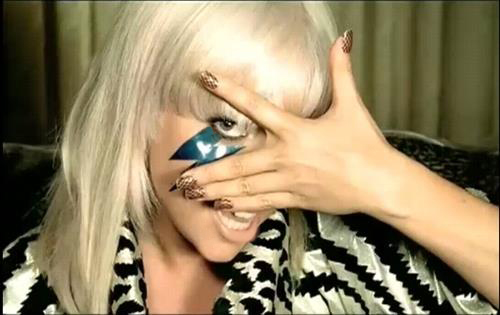
Donald Simrock is at the forefront of the beauty industry creating looks for style bible Flaunt in addition to showcasing his work in publications such as Rolling Stone, Interview, Harper’s Bazaar and VOGUE.   His unique vision has given him the opportunity to work with celebrity clients that include Madonna, Britney Spears and Lady Gaga.  His work is seen in numerous music videos and has been nominated for best makeup at the Mtv Video Music Awards.  Simrock’s wide artistic range has led him to collaborate with renowned directors and photographers alike, from Hype Williams to David LaChapelle.  Donald took time out of his busy schedule to talk to me about his creative process, creating Lady Gaga’s Bowie inspired look for The Fame and how he defines beauty.

You work across various platforms: magazines, music video, runway and the red carpet.  What is your preferred platform and why?

I think one of the perks to this occupation is that you have the ability to slide in and out of all of these different environments: A constantly morphing “office”, with new faces, and different experiences to take on each time.  Really, they all have great qualities.  Rather than having a preferred platform it’s more about a preferred situation for me.  That would be any time there is creative freedom involved.

What does your job as the Beauty Editor of Flaunt Magazine entail?

I produce one or more shoots for each issue based on its content.  I keep a finger on the pulse of the beauty trends and follow beauty companies with their newest creations. It’s a lot of fun!

Your work has been nominated for best makeup at the Mtv Video Music Awards. Do you have aspirations to branch out into film like your former mentor, Pat McGrath, who created Rooney Mara’s look for The Girl with the Dragon Tattoo?

While I’m not mapping out a plan to blaze into the film industry,  I would be willing to take on the challenge.  It’s a completely different machine.  Pat did, as she always does, an incredible job leaving her mark in history yet again.

When you worked with Lady Gaga did you have carte blanche when creating her look or was the effort collaborative?

I was brought on initially by her management to establish a solid look for Gaga.  Sort of a “polishing” to get the ball rolling.  We worked together and she was always very trusting. It was a lot of fun to talk about the game plan with her before each project.  She has worked very hard to get where she is now.  It’s pretty amazing actually.

Gaga channeling Bowie

What is your beauty philosophy?

Honesty, confidence, compassion and diligence reveal true beauty for me.

Advertisers are slowly acknowledging the economic power of older women and catering their advertising as such.  What do you think about the West’s preoccupation with youth?

Advertising plays a major role in creating the ideals of beauty.  We live in a world where breast impants and botox injections are common among teenagers and plastic surgeons have payment plans.  I would say that advertisers are fully aware of who has the greater economic power [women] and advertise accordingly. A younger, successful looking woman in an advert appeals to both a younger market as well as the more mature market for different reasons.  Kind of killing two birds with one stone, if you will.

What are your influences and how do you incorporate them into your work?

I tend to be influenced by all kinds of things: art, nature, history, architecture, culture, you name it.  The fun part is figuring out ways to translate them into another context like make up.  The possibilities are endless.

How have you evolved as an artist over your career?

You learn the mechanics of your industry, you become more efficient, more informed and continue to grow throughout.  It’s a constant state of evolution, a work in progress.

You’re known for your flawless finish and perfecting skin.  What are a few tricks you can share with our readers to achieve that effect at home?

It all starts with what you put in your body.  Eat clean and drink lots of water.  Keep it simple.  Moisturize well before putting any product on.  Make sure to match your foundation and concealor properly.  Work in thin layers rather than coating your face all at once.  Some of my absolute favorite companies are M.A.C,  Tom Ford, Temptu, Lancome, Urban Decay, Yves St. Laurent and Embryolisse.

You’ve been known to take everyday objects and transform them into makeup.  Can you tell us about your process and how you translate the world to the face.

It’s fun to use unconventional items for make up.  A jar of poppy seeds, a piece of string, or a sheet of plastic definitely have the possibility of becoming “makeup”.  The challenge comes in finding the best way to apply these kinds of items and how to display them effectively.  Sometimes the intent is to make the item blend in; to actually belong there.  Sometimes you want to make a statement and be more bold.  Variety is the spice of life.

Follow him at @DSimrock

Kristen Kotik – Model Turned Scouting Director

Kristen moved to Europe when she was 17-years-old to pursue a career in modeling.  Based in Milan, she worked as a model all over Europe and Asia.  In 1992, Kristen began working at Why Not where she was a new faces agent and then Director of Scouting.  Kristen is the Director of Scouting for Stars Model Management in San Francisco where she puts her skills and experience into discovering the talent of tomorrow.  Kristen spoke with me about what she learned during her tenure as a model and why she thinks older models can bring a world experience to the modeling game their younger counterparts can not.   Kristen’s model discoveries/developments include Jamie Rishar, Amy Wesson, James King, Bridget Hall and Danielle Z.

Twenty-seven-year-old Kati Nescher landed the Louis Vuitton spring 2012 campaign.  In industry terms she is considered an advanced age to be starting her career.  What do you think models in their twenties and beyond can offer that teenagers can’t?

A model in her twenties can bring a level of maturity and life experience that will enable them to channel emotions a teenager would not be able to.  She is also out of school and more available to travel and devote herself one hundred percent to being a full-time model.

When scouting models do you take into consideration their look and the markets you think they will work best in e.g. Milan, Paris, New York or Tokyo?

When I look for models I normally do not scout for a specific market.  Although, that is something that comes to mind once I spend time with the model and get a feel of her personality.  Working in a regional market opens up more opportunity to scout more commercial girls too.

You started your career as a model before becoming a scout.  How do you think your experience as a model informed the way you scout and handle models?

My past experience as a model has definitely been an asset.  I can fully prepare them for what to expect but also can sympathize and really understand what they are going through.  My travel to Europe at sixteen was tough but positive so I have some great tips to share.  I can also prepare the mothers for what to expect now that I am closer to their age (yikes) than that of the models.  I sometimes used to scout with my mom, who not only was my biggest fan, but could give a lot of insight as a parent of a young model moving to Italy at such a young age.

What advice would you impart on someone wanting to enter the modeling industry that you wish you knew when you started your career?

Modeling in the 80’s was so different pre-internet.  Young models now have a vast source of information available to them.  I was very lucky to have a supportive family and a great agency to guide me.  I was a model at Why Not in Milan before becoming their scout.

Androgynous model Andrej Pejic is the face of Dutch retail giant HEMA’s push up bra campaign.  Do you think the choice to feature him in this campaign pushes the boundaries of taste or advances issues of gender identity?

To each his own.

What standards would you like to see adopted by the fashion industry to advocate for working models?

The Council of Fashion Designers of America enforcing a minimum age of 16 for New York Fashion Week is a move in the right direction. I have to admit that maybe 18 would not be a bad thing either.  Younger models are not as equipped to deal with the stress and long hours as perhaps an 18-year-old would be.

Much of the focus on models is placed on the girls.  Do you think male models have it easier than their female counterparts and why?

Male models have a tough time as the work is more limited than that of the girls and the rates they are paid are lower too.  Modeling is one of the few industries that a woman is actually paid more than a man.

You were an agent in Milan for Why Not, can you tell us how that prepared you for finding talent in the US?

My experience as an agent inMilancertainly gave me an advantage in theU.S.for scouting girls forEurope.  I know first hand what the clients and agencies are looking for.  I’m also a good judge of character and can tell which girls are ready to make that next step into the high fashion markets like Milan and Paris.  It’s tough!

Models often don’t have any idea what business skills are necessary to become successful.  What are three that you consider to be most important for a model?

1. Keep a detailed record of expenses and receipts

2. Be on time and remember people’s names

3. Be professional and helpful when on set e.g. help the stylist hang the clothing

4. Sending thank you notes is always useful

Once you find a girl your really excited about, how do you distinguish which agency you’ll place her with?

I am the Director of Scouting for Stars Model Management inSan Franciscoand I scout and sign girls for this agency.  When considering where to place a model a lot depends on a girls personality as well as her physical attributes.  An edgy rocker type girl would go to a more editorial agency where maybe a classic beauty would suit another agency better.  After 20 years of doing this I find there is a little voice inside me that always helps me make the right decision.

I also think it is very important that a model visits the agency and the agents before I place them. That way they get a feel for where they will be calling their home away from home for several months out of the year.  Harmony is important!  This is not always possible, but when it is, I have always found it to be a wise way to do business.

Follow her at @krikrik

Learn more at Stars Models Management