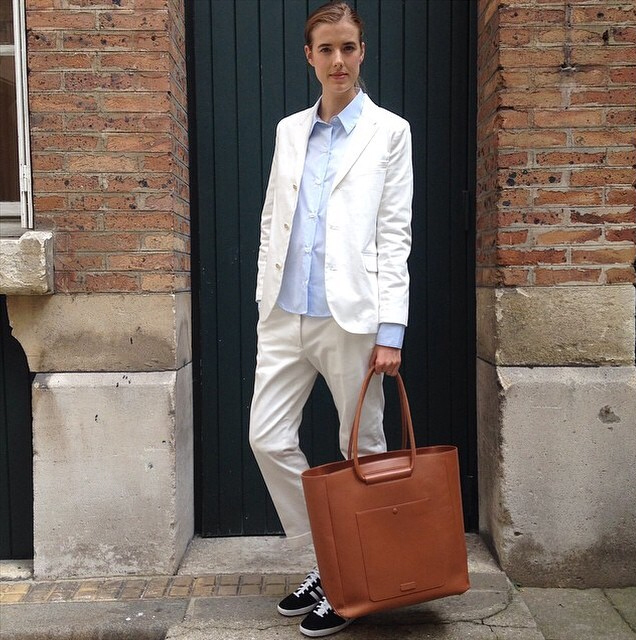
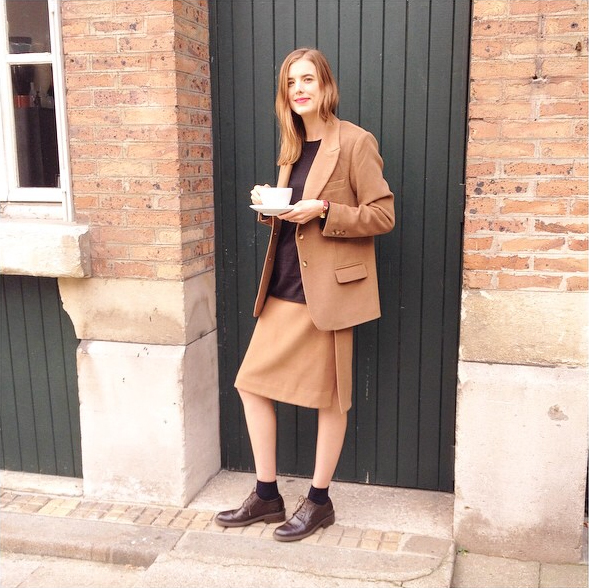
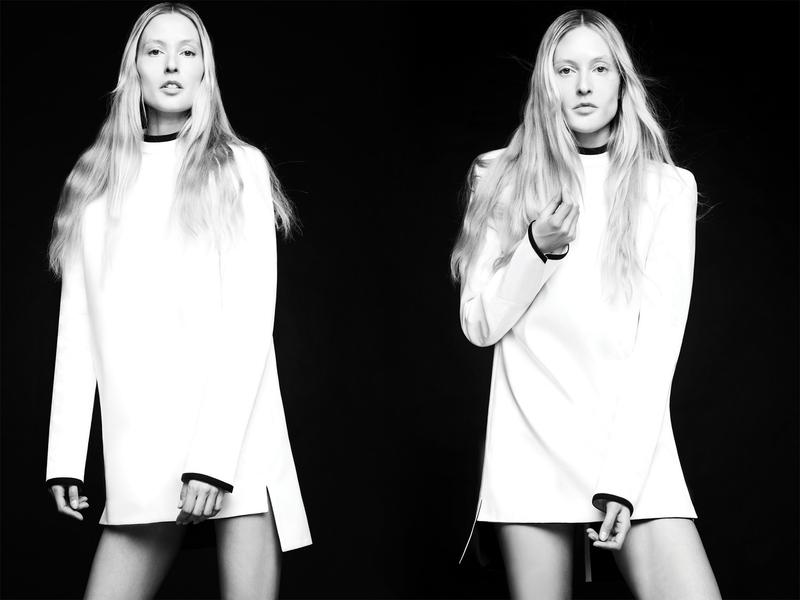
Undeniably one of the most influential models of this decade, Agyness Deyn has generated more column inches than most of her contemporaries. Much of what has been written about her has focused on her style, celebrity friends and love life. Agyness has defied expectation and refused to be reduced to just another one of fashion’s It girls. As the founder of clothing line Title A, Agyness gives us a glimpse into the inspiration behind her latest venture.
You were lauded as a style icon throughout your career. How would you describe your style?
It’s always surreal and a little embarrassing to hear that. My personal tastes have been to the moon and back, but right now I just want an extremely classic and slightly awkward wardrobe.
Before embarking on the development of Title A you collaborated with Uniqlo and Dr. Martens. Has designing always been in your blood?
I’ve been around that world for a while now. I guess I’ve always had an opinion or preference to certain things and maybe maturity has brought out my ability to share it.
What was the inspiration behind Title A?
I wanted to create a place where someone could go and always find what they’re looking for.
How would you describe the blueprint of your line?
There is always a suit to ground the collection and it expands from there. We try to respect craft and detail in womenswear as much as it’s respected in menswear and strip out anything too frivolous.
Can you describe the typical Title A woman?
It’s tricky for me to nail her down; everyone is so different. I imagine the things they would have in common is the desire to have a wardrobe that doesn’t wear them and a love of strong female characters. I’m in love with Joan of Arc.
How do you think your background in fashion has informed your approach to design?
I would guess it helped me to know what I don’t want.
Were you conscious of the model cum designer label and if so did you have any reservations before embarking on this journey?
Ah, yes. I know the stigma but it doesn’t bother me. Probably because this isn’t a licensing deal and we’re pouring our hearts into it like anyone else who’s been insane enough to start a label from scratch.
Do you have plans to expand the line into accessories or menswear at any point in the future?
We do. We are in the middle of finalizing beautiful leather handbags, you can see sneaks of them on our Instagram. Sunglasses are next and we will definitely venture into menswear down the line.
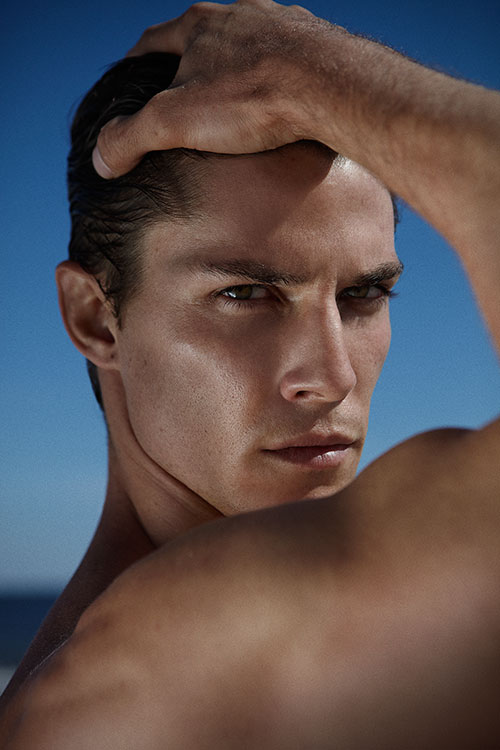
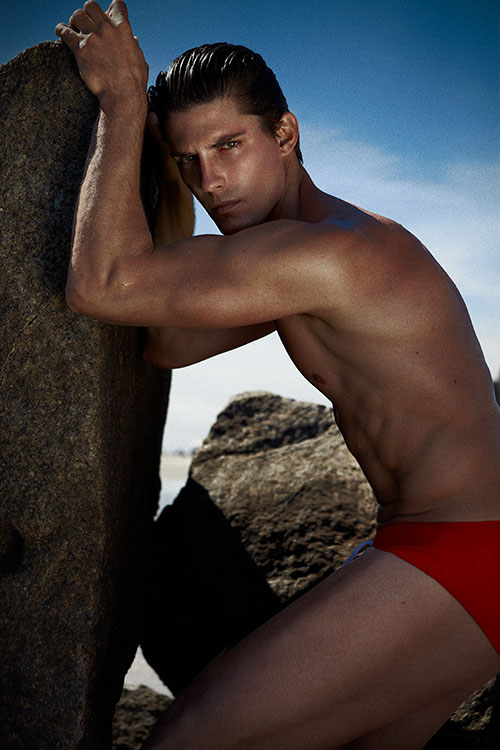
Bart Grzybowski may be a rookie in the modeling game but he brings to the table a wealth of life experience. This Villanova graduate quotes Robert Frost and cites The Fountainhead as inspiration while having the blessing of veteran photographer Bruce Weber. I caught up with Bart as he waxed lyrical about his passions and explains why there’s more to life than being really, really, really ridiculously good-looking.
How were you discovered?
I used to do high-end, residential construction for Laurion Construction in Miami, but after the housing market crashed things slowed significantly and I ended up bartending on South Beach. I was approached by Jose Ochoa, who was an editor at Ocean Drive Magazine, and he told me I needed to start modeling. He sent me over to meet with Christian Alexander at Front Management and they offered me a contract the same day. Since I was planning on moving out to California in six months to try to become a General Contractor, I needed to save some money for the move and I signed the same day.
If you weren’t modeling what would you be doing?
Ever since I read The Fountainhead by Ayn Rand, I was inspired to build and work with my hands, so probably something to do with construction/development. I love the creative expression it allows and also the reward of seeing what you have accomplished at the end of the day. There’s something to be said for busting your ass all day and falling asleep tired. I know that 30 years from now I can go back to a home I helped to build, knock on the door and meet the family that has created memories in something I put on this earth. It means a lot to me to know a part of me will be around even after I am gone.
How do you define success?
That is easy. Are you happy? If yes, then you are successful. If not, keep trying. I think the most important thing a human can do is spend a lot of time with that question: what makes me happy? Once you figure that out, do it. For me, there is always something more that can be done, so I am constantly changing my goals and adapting my game plan to achieve them. When I’m gone I know I will consider myself successful if I have left the people who knew and loved me a little bit happier and more inspired.
How do you handle the scrutiny and rejection that comes with modeling?
You definitely need thick skin when it comes to modeling. When your job is to make money off your appearance, every inch of you will be critiqued. However, I’ve never considered myself to be solely a “model” and so my success in this industry doesn’t define me as a person. I graduated from a good school, Villanova, worked hard jobs in social work and construction, and most importantly, have been through the pain of losing a parent which, all by itself, forced me to evaluate, scrutinize and come to love and cherish the person I’ve become. No matter what kind of rejection I get, I’ve realized that “maybe there’s more to life than being really, really, really ridiculously good-looking.”
What are your goals and aspirations for the future?
Eventually I’d love to be comfortable enough financially where I can provide for my family and help take care of my parents and siblings, but money isn’t the most important thing. It’s just a means to an end. In the meantime I’d love to travel a lot more: Italy, Greece, Spain, South Africa, Brazil, to name a few. I’d like to design and build my own home out West somewhere, probably Colorado or California. I’d like to make an impact on the lives of others and help make this world better rather than worse. After my experience working for a foster care program in Miami, I promised myself that I would adopt a child when the time was right. I guess ultimately though, it is to be a good person and make the ones I surround myself with happier for knowing me.
What has been the highlight of your career so far?
I love all the amazing people and places I have met and seen and I want to send a big thank you to everyone and everything that has made this incredible ride possible. If I had to pick one moment, I guess the highlight of my modeling career was flying out to Dunton Hot Springs in Colorado for the Ralph Lauren Chaps shoot. It’s a small mining town from the late 1800’s that was converted to a nature resort where each miner’s cabin has its own natural hot spring right outside in the back. It’s like a blast from the past, I got to spend a few days with the RL Crew and Richard Phibbs basking in the raw, majestic beauty of our surroundings and really getting to know everyone personally. We had family dinners in the main lodge and we even did a Tommy Boy movie night. It was incredible.
What would people be surprised to learn about you?
Hmm, that my favorite movie is Legends of the Fall? I’m going to get my chops busted for that one.
What do you think is the biggest misconception about modeling?
That it is an easy job. Sure it pays pretty well, and there are a lot of perks, but like most things in life nothing is guaranteed. You never know when you will get booked, or how frequently for that matter. You have to take a leap of faith and have the will power to make your foray into the industry a successful and profitable one. I see a lot of my friends becoming doctors and financial advisors and all sorts of high paying professionals and sometimes I wonder if that route would have been better for me, just based on the security it provides. But then I remember an often over-cited quotation, but one that is very fitting:
“Two roads diverged in a wood, and I — I took the one less traveled by, And that has made all the difference.” Robert Frost
You seemed to bond with Bruce Weber when working together. Did he have any advice for you?
Bruce is a legend in the industry and has a wealth of experience and artistic talent. His style has inspired other photographers for decades. When he took me under his wing, he helped launch my career, as he has so many others: for that I will always be grateful. I can’t say for certain, but after spending time with Bruce on numerous shoots and talking about my life and what I’d been through, I think he saw something more in me: that there was a story there. His best advice to me was to channel that and to never hide it. To come out of my shell and to show it to the world. In fact, it’s probably one of the reasons why I’m so forthcoming with these answers. I guess on that note, I should say thank you so much for the opportunity!
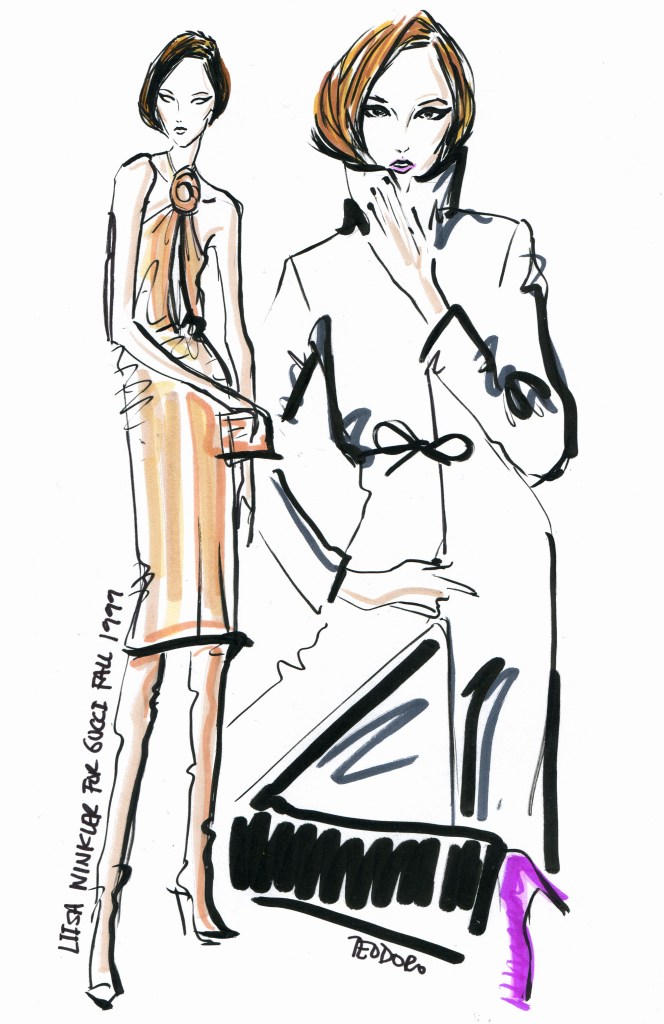
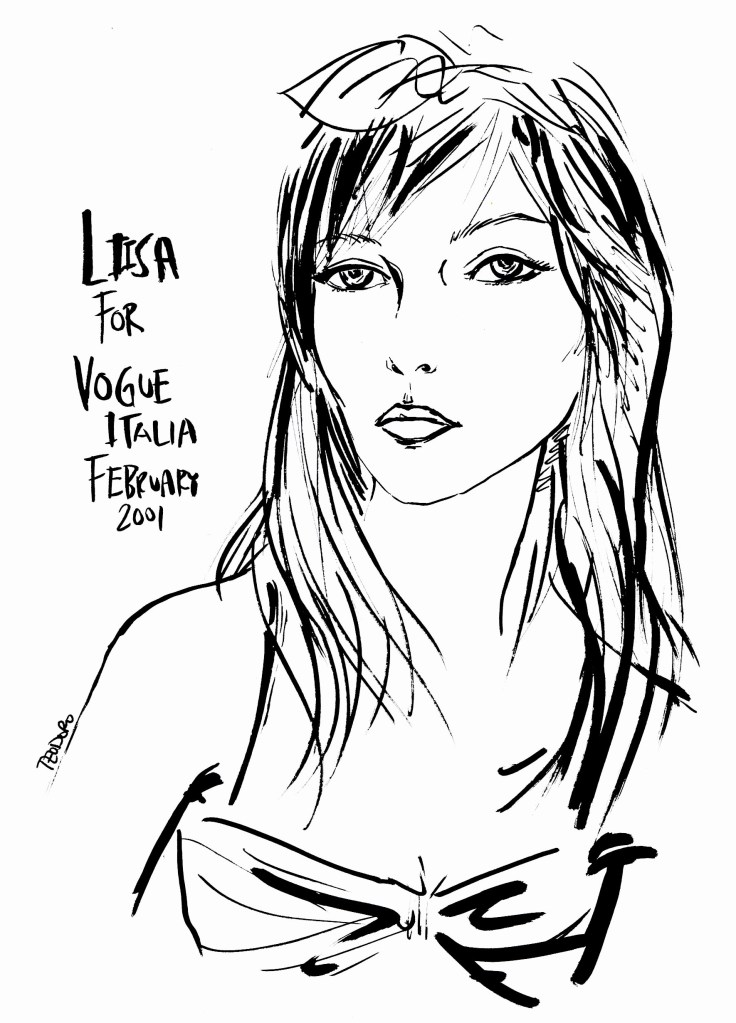
Canadian stunner Liisa Winkler was the star of three consecutive Gucci campaigns during fashion’s love affair with Brazilian models. In addition to starting in campaigns for Balenciaga, Calvin Klein, Valentino and Longchamp, Liisa has graced the cover of Vogue, Numero, Elle and countless others. Dividing her time between modeling and motherhood, I caught up with Liisa to talk about the heady days of her career and to find out what she’s doing now.
Tell us about how you got started in the industry.
I was scouted at a local mall and my best friend convinced me to do some pictures with her. I started in Australia, which was a beautiful place to start, then tried Paris where I lived in a youth hostel and ate macaroni every night with four-dollar wine from a plastic bottle. New York didn’t work all that well either but just as I was contemplating a career switch, I was booked by Tom Ford for an exclusive Gucci campaign. I owe him my career. All the doors that were previously shut began to open.
You studied ballet before entering modeling. What parallels can you draw between the two and how did your background inform the way you modeled?
The two careers are very different. With ballet you can improve with hard work and dedication, but modelling is mostly about physical appearance and not something you can get better at. My ballet training was a real asset at the beginning of my career. I was often referred to as “the ballerina” and mostly ended up doing movement jobs. I remember wishing for a simple portrait style shoot for a long time but later realized that it’s much more creative to be moving. I have always found it very rewarding and exciting to be involved in creating something artistic and beautiful both in dance and in fashion.
How did you remain grounded during the height of your career?
My family and friends kept me grounded and being raised in a small town made me value a simpler life . My dance training taught me that in order to succeed at anything you had to work very hard. I guess I felt that being a model was not enough and I was always searching for something else to work hard at. When you are busy trying to work hard at things, you are more likely to keep your feet on the ground.
How has the industry changed over the course of your career?
Social media has really changed things. Nothing can be forgotten or erased from digital memory. I remember jobs that I did near the beginning of my career that I cannot find anywhere. It’s kind of nice because some things are best left in the past. I would hate to see behind the scenes footage of jobs where I felt less than comfortable. Girls now have to live with every bad decision or backstage half-naked photo ever taken of them. We used to shoot Polaroids and film. Digital really makes things faster and more accurate, but you lose some of the flow and spontaneity that came with using film. People are sometimes so obsessed with looking at the screen to see how the shot looks, that they lose the momentum and creativity that comes when the focus is only on set.
During the rise of the Brazilian models, Models.com refered to you as one of the most underrated models in the business. How do you feel about that sentiment?
At that time, being Brazilian almost guaranteed you an “in” with clients. Drinking champagne backstage was crucial to fitting in. My agent was always hounding me to attend fashion parties, that I never went to, and we often joked that I needed to stage a drug overdose in order to create a buzz. Perhaps I was a little too grounded? Anyhow it served me right I guess.
How do you feel about social media and the branding of models?
I think it kind of makes sense. I like that models now have personalities that are more public and they can speak out about causes and things that they feel passionate about. It creates a better role model for young girls and also gives the model more power to manage and direct her career.
What would people be surprised to learn about you?
I have prosopagnosia- an inability to recognize faces. I sometimes don’t recognize people who I know quite well if they have changed their hair or are wearing a hat.
How has motherhood informed the way you approach modeling?
Having children has balanced my life in a really good way. They are my everything and modeling jobs are like the icing on the cake. Having kids has really put things into perspective and allowed me to have fun with modeling in a way that I was not able to before. I don’t take myself so seriously anymore and am not afraid to take risks and ask questions. I love what I do and that allows me to have fun.
What have you learned about yourself through modeling?
That life is more fun when you just go with things and not take yourself too seriously. Taking risks is pretty important and stepping out of your box can be scary but is totally worth it.
What are you doing these days?
I feel incredibly lucky to still be working as a model. I also work as an ambassador with World Animal Protection, with my main focus on farm animals. We live half in the city, half in the country and try to grow all our own vegetables. I am really interested in medicinal herbs and will be working on my diploma in herbalism this year. Mostly I spend time with my five and eight-year olds, cooking them things that are often not so tasty, sometimes really awesome, but always totally healthy.
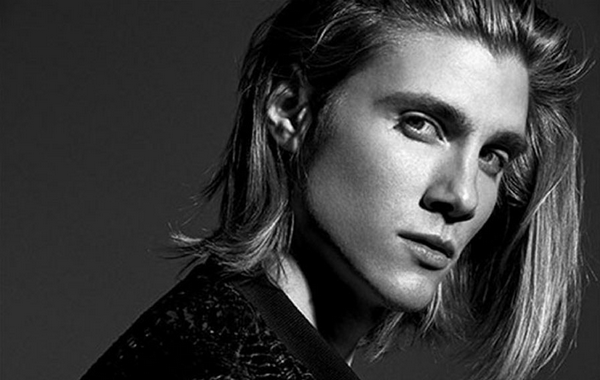
Canadian native Dorian Reeves may just be in his early twenties but he already has a cover of style bible Italian Vogue to his name. In addition to racking up a slew of editorials in covetable magazines, Dorian has walked the runway for Versace, Missoni and Jeremy Scott. I caught up with him to find out about his most memorable moment and how he feels about social media.
Tell us about how you got started as a model.
Dress up games were a favorite of mine since I was a toddler. Now my favorite game has turned into a career. I auditioned at Mode Models—a Canadian agency—it took them a while to call me back but they finally did.
What do you hope to get out of modeling?
I want to experience everything. I want to grow, flourish and become myself. I am opening the doors to the career I’ve always dreamed of, a full-time actor. Making many friends and traveling as much as possible is a delight.
What has been the most memorable moment of your career thus far?
Working with Steven Meisel, one of my favorite photographers, for the cover of Italian Vogue alongside supermodel Raquel Zimmerman is one of my most memorable moments.
What would people be surprised to learn about you?
How incredibly curious and happy I am all the time.
If you weren’t modeling what would you be doing?
I would be biking throughout Europe, studying nutrition and most likely helping my mom garden.
What are your goals and aspirations for the future?
I’d like to race on my bike in the 200 meter sprint next summer in Quebec City. I also dream of living in Paris for at least a month.
US Vogue featured a host of models on their September cover touting their heavy social media presence. How integral do you feel social media is to a model’s career nowadays?
I am delighted you asked. I absolutely loved the cover! Social media, without a doubt, is taking strides in a model’s career – whether they like it or not.
At just 18-years-old, Conor Clinch is an emerging talent and one to watch. Conor has built an extensive portfolio of clients including Topman, Hunger magazine and Vogue.com in addition to being mentored by iconic photographer Rankin on Sky 1’s The One’s To Watch. I caught up with Conor to talk about his influences and the inspiration behind his exhibit Fresh, an exploration of lad culture.
Where did your interest in photography begin?
I grew interested in photography at the age of 14. I bought my first camera online before I knew how to use it. I began experimenting and learned from my mistakes.
What challenges have you faced as a photographer being so young?
The fashion circle in Dublin is quite tight-knit and a lot of people say it’s very difficult to break into. I know quite a few people who began farther afield and left Ireland to pursue a career in fashion. I think that Dublin is a great starting ground as a young photographer, however like anywhere I found it very difficult to break into it as a teenager. A crucial part about starting young is keeping your head on your shoulders and taking every bit of criticism in your stride. You need to prove yourself so it’s important to be mature and professional but don’t be afraid to try new things.
What influences and inspires you?
At the moment I’m very inspired by the north side of Dublin. There’s a unique culture here that often goes unnoticed so recently I’ve been working on incorporating it into some personal projects. I look to the works of Alasdair Mclellan, Walter Pfeiffer and Boo George for inspiration.
How would you describe your aesthetic as a photographer?
I’d like to think of my work as quite honest and raw. I’m starting to take things down a notch with my personal work but still challenge myself on a technical level.
Rankin said about you,“Rarely does a very talented young photographer stop me in my tracks. Conor Clinch is one of those rarities.” What does this sort of recognition mean to you?
It was such an honor to hear those words from an iconic photographer like Rankin, it keeps you really determined.
How has appearing on The Ones To Watch on Sky 1 changed things for you?
After The Ones To Watch I came back to Dublin to sit my final year exams. Since, I’ve been working full-time in Dublin which is amazing! I’m planning to exhibit Fresh in Dublin this September and then making the move to London at the end of the month. I’m looking forward to opening new chapters abroad and start working on some new ideas.
Tell us about the inspiration behind Fresh.
Fresh is based around the concept of how lads perceive fashion. The idea derived from lad culture here in Dublin and how they take pride in what they wear. Whether it’s the huaraches craze or the latest barber cut, lads like to look good.
What can we expect to see from you in the future?
Lots of exciting new projects! I’m looking forward to making a start on some new ideas and challenging myself in new areas of photography and film.