Esther de Jong: How a Chance Discovery Led to a Trailblazing Fashion Career

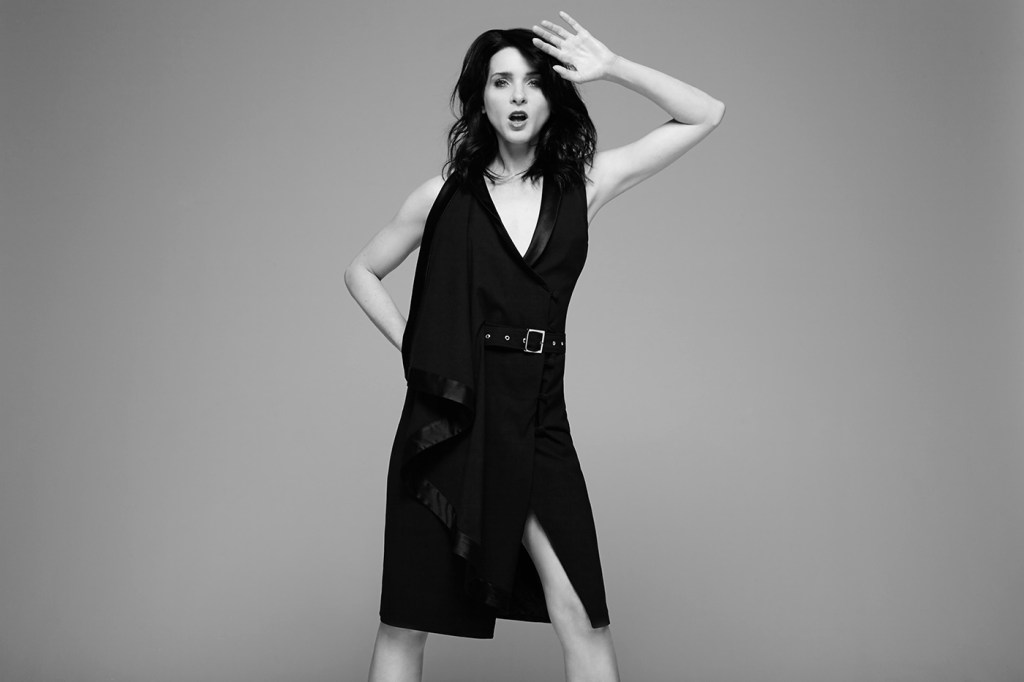
Esther De Jong emerged on the fashion scene in the nineties after a serendipitous meeting with photographer Anette Aurell. As fate would have it, Esther soon found herself at the epicenter of fashion’s coveted models of time. Still in demand some twenty years later, I caught up with her by phone as she reminisced on that magical moment in fashion.

I thought we could start when you were discovered. Tell us about that.

In 1995 I was studying in Holland and I felt immature and not quite ready for university, so I decided to go to Paris. I had friends from England, whom I met in Holland when they were exchange students, and now they were living in Paris. I bought a one way ticket and never looked back.  About a month into back packing around and staying in hostels and on sofas I ran out of money. My friend suggested I become an au pair like her so I went to a nanny agency in Paris. They sent me on my first interview with Anette Aurell, a professional fashion photographer, and Richard her husband and their two wonderful children and they hired me. Annette had an editorial to shoot for i-D magazine and we all went to England while I looked after the children. The model didn’t show up and I was asked to step in and the rest is history.

So it was serendipity.

Yes it was.

When did you sign with an agency?

The pictures were published and I was introduced to the Marilyn Gaultier agency in Paris and I signed with them and their amazing team. My career  took off pretty fast and I shot my first cover story after i-D magazine with Steven Meisel for Italian Vogue.

Was working with Steven the point that things really took off?

Correct, Steven is a big influence in the fashion business. He really helped me get started and gave me a lot of advice on the side as well.

You arrived on the scene during the post supermodel era. What was that time in fashion like and how would you contrast that to how things are now?

It was very different. The girls were much more individual looking. If you compare models like Nadja Auermann, Cindy Crawford, Carla Bruni, Naomi Campbell, Amber Valletta and Kate Moss, they were all very different. I think individuality was much more celebrated. The supermodels really carried the designers, shows and magazines and were the center of the business.

One of the big shifts is the move into digital.  Do you feel that creativity has been stifled and the process is less organic?

I would suppose it has. I remember the days of shooting with Polaroids.  Then you would shoot tons of film and sometimes you would get amazing results and surprises.  Now you can look over the shoulder of the photographer and see what’s going on, and that way you try to get the picture you want. I also think retouching became much more prevalent, which is not always a positive gain.

How do you feel about that?

I am not a big fan. Often with retouching it is overdone, especially in beauty ads, and everybody starts to look alike.  It’s more beautiful to see real women and girls with personality.

Illustration: Justin Teodoro

The nineties are in fashion again.  How do you feel about the renewed interest in that period and how do you feel to be working all these years later?

I think it’s great. It has come full circle but I don’t think it will ever be the same. Some of us girls have stuck around and I think it’s wonderful. I just love seeing Cindy, Michele Hicks, Kirsten Owen, just to mention some, popping up left and right in great projects.

A lot of the models that are still working are now mothers and they have things going on outside of fashion. How do you feel about fashion embracing, I hate to use the term, older women?

I guess it is a very personal word and it is up to everyone’s interpretation what to think or feel with the term. We are older women and most of us have children and a past with fashion and I think it’s beautiful. I believe the consumer can relate . There was a time in fashion when models were getting very skinny and very young. Maybe that is when actors got a lot of advertising campaigns and covers. Which was also beautiful, real woman, like Cindy and Claudia.

Yes, gorgeous!

Those are not skinny girls. They are beautiful women, and always were and will be forever. I have always been naturally too skinny in my opinion and I’m happy I’m not as skinny because I am a little older and have a beautiful son. It feels really good.

I agree. I think that our societies preoccupation with youth is quite damaging. I think there has been a shift of late but it is still pervasive.

Yes it is.

Now that you are a mother, how has that changed the way that you model and the way that you see things?

It changed in a lot of aspects. I can’t just jump on a plane anymore.  I am a single mother and whenever there is a job and I have to go anywhere I have to organize a babysitter or a tween-sitter in case Oscar is reading this.

Becoming a mother has  matured me tremendously.  I’ve always been a late bloomer and I never really saw myself having children until I got older. Then, after Oscar was born, I kept seeing myself having ten children, which unfortunately did not happen.  Having a child changed a lot for me in a very positive way. Even though it has not been easy as a single mother, I think becoming a mother was the best thing that could have happened to me.

Illustration: Justin Teodoro

How has motherhood affected the choice of jobs you do? For example is nudity something that you wouldn’t do now that you are a mother?

I grew up in an environment where nudity was very much accepted. I have no problem with nudity, as long as it is elegant of course. I’ve shot nudes with photographers before and I would still for the right projects. We are all born naked and I think the body is beautiful no matter what age or gender.

Let’s talk about social media. It’s something that didn’t exist 15 years ago and now you kind of have to embrace it. What are your thoughts on social media?

I have to admit I probably should do more on social media. I like Instagram and I have my Facebook account but I don’t spend a lot of time on it. I use it to promote my modeling and connect with friends as everybody else does.  Social media is great but I probably don’t embrace it as much as I should, which I am okay with actually.

I understand, I’m totally in agreement with you.  Now you are living in New York and you have your son and you breed thoroughbreds, is that correct? 

Correct.

Have horses always been a passion of yours? How did you get into that?

I grew up in Holland and my family raised and raced horses. When I had the opportunity to buy my own farm in France I imported Andalusians from Spain. I decided instead of the white Andalusians I wanted to breed the black ones. I imported four black mares and one stallion while I was modeling.  Then I moved to the United States and brought some of the horses with me. I have always had horses no matter where I was, even when Oscar and I moved to Los Angeles for three years we would go riding at Griffith Park . We would spend hours in the park going up and down the hills and when we came back to the east coast I kind of stumbled into the thoroughbreds and bought my first mare and I was hooked.

Looking back on your career what advice would you give to your younger self?

My career took off very quickly. I went from being this naive girl from the countryside in Holland to being this naive high fashion model shooting four campaigns in one season. I might have been a little bit overwhelmed but I was very lucky and thankful I had a wonderful career and am still working.  What would I have done differently?  I turned down jobs that I should have said yes to because I didn’t understand the scope entirely. Maybe I should have rested more and partied less but you know, I had a wonderful career, met so many amazing people and nurtured wonderful friendships, so in retrospect I don’t think I would want to do anything different.  I had a career that was dropped in my lap and I was very blessed with that. Hopefully I can enjoy it for some more time to come.

Follow her on Instagram
Why Model Rachel Thomas Is On A Mission To Spread Kindness

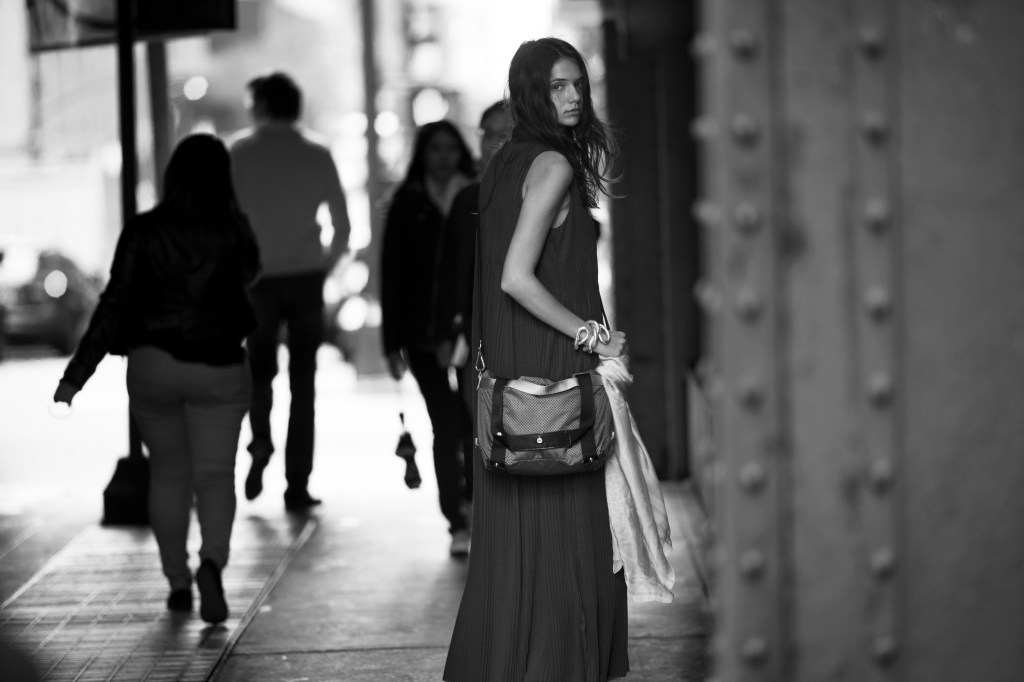
Model Rachel Thomas has appeared in the pages of Interview, L’Officiel and Black magazine, but it is her work with non-profit Life Vest that has transformed the way she engages with the world. I caught up with her as talked about her role as a Kindness Ambassador for Life Vest and discussed her future plans.

How did you get started in the fashion business?

I got started in the fashion business by competing in the Kim Dawson Model Search 2009 in my hometown Dallas, Texas. I was a finalist in the competition and received a contract afterward. I then started to learn about the industry and work in Dallas while I was finishing high school.

How did you get involved with Life Vest?

I came across Live Vest and instantly was drawn to it because I support anything that spreads kindness throughout the world. When they offered me the role of Celebrity Kindness Ambassador I was thrilled.

What does your role as an ambassador for Life Vest entail?

My role as an ambassador at Life Vest requires me to perform a specific act of kindness that I receive by email every Monday. Along with that, I spread kindness to those around me everyday. I love empowering others and working with Life Vest allows me to do that.

How can people get involved?

Anyone can get involved with Life Vest by simply going online and clicking Get Involved. They are always looking for Kindness Ambassadors. Kindness is contagious so the more people who get involved the better.

What impact has social media had on your career?

Social media is starting to have a huge impact on my career. I’ve noticed that clients take social media very seriously and they’re paying attention. They want to book girls with a strong following. I treat social media professionally as part of my job as a model but I also recognize that there is huge potential. I’m also using social media as part of a growth strategy for my career beyond modeling.

What upcoming projects can you share with us?

I have some really exciting upcoming projects in the near future. I am doing an Instagram takeover for Serendipity Casting  on October 24 and 25 and I am working on a design project which has always been a dream of mine.

Follow her on Instagram

Matthew Marden – The Devil Is In The Details

Perhaps my longest relationship to date began as a teenager in the nineties. I grew up on a steady diet of magazines pouring over their pages for inspiration. The most notable of them being Details magazine. Through its various incarnations our relationship held fast and true. You can imagine my joy when I had the opportunity to speak with their Fashion Director Matthew Marden. I caught up with him as he talked about his role at Details and why there’s always the CIA to fall back on if things go wrong.

Tell us about how you got started in the industry.

My first job out of college was at the Staley-Wise Gallery in Soho, which was a gallery that specialized in fashion photography. The gallery has an amazing collection so I ended up learning a lot about the history of fashion through the artists they represented. A friend of mine was doing PR for Manolo Blahnik at the time and she hooked me up with a meeting with Michael Cannon at Town & Country. He was looking for someone to help him with the men’s fashion pages. We hit it off and I was hired as their Associate Men’s Fashion Editor. That was my first magazine job.

Describe your role at Details.

As the Fashion Director I am ultimately responsible for all the fashion in the magazine. Everything from what goes on the cover to what we shoot inside.

When storyboarding ideas how much does the collaborative process shape the outcome?

The outcome of an idea is always the result of a collaboration. That’s what I love about my job the most. Being able to work with such cool, creative, talented people. I’m really lucky in that regard. Of course it doesn’t always turn out the way I expected but that’s not always a bad thing. You have to be open to ideas from the photographer or the Creative Director or sometimes it’s the model and their style that will influence a shoot or even the way the groomer does the hair can often take it to the next level.

What are some of the biggest misconceptions about what you do?

That it’s all glamorama. Yes, of course we are lucky to be in some extraordinary situations but in the end it’s a job and like any job you have to be prepared to pull your weight and work hard. And willing to do the work. There are no shortcuts.

How has the shift to digital changed the nature of what you do?

The best thing about digital and social media is that it allows you to reach a boarder audience. Also, there is an immediacy that exists now which is really exciting.

What qualities do you possess that you think have served you well in your role?

Patience.

Where do you source your inspiration?

Everywhere; movies, books, history, music videos, art, photography, people and nature.

At work what are the biggest challenges you face?

Sometimes the personalities of creative people can be a challenge. Mine included.

What would you be doing if you weren’t a Fashion Director?

I feel like I would have made a really good double agent for the CIA.

What advice would you give someone wanting to break into this industry?

Work hard and always write a hand written thank you note.

Follow him on Instagram

Photo credit: Jennifer Livingston

Laura Kampman’s Life Through A Lens

Dutch beauty Laura Kampman broke onto the fashion scene in Balenciaga’s spring 2012 ad campaign. A slew of editorials in magazines from ELLE to W and a cover of Italian Vogue lensed by superstar photographer Steven Meisel followed.

After a short hiatus, Laura reemerged on the fashion scene with a new focus, signing with The Lions. I recently caught up with her to discuss modeling and her photography.

Tell us how you got started in fashion.

I was fourteen when a woman walked up to me in a restaurant and said I should be a model. Aside from taking artistic self-portraits I never thought about modeling. After finishing high school I gave it a serious try as it has always been my dream to travel the world and meet people. Within two weeks I had my catwalk debut in New York. That’s the beginning of the fairytale.

You’re a model, photographer and a writer. How would you define yourself?

I wouldn’t know how to describe myself other than just Laura, a living human being on planet earth. I try to do as many things that warm my heart.

What is it about the medium of photography that you connect with?

I always struggle to find an answer for that. Photography feels like a body part, like my kidneys or something. It’s just here and I don’t know why. It feels unnatural not doing it. I’ve been doing it since I was very young.

How do you think being in front of the camera as a model has helped you as a photographer?

I’ve worked with so many different photographers from professional to beginners, digital to film. By experiencing all these differences, I was able to discover what I like. I’ve learned lots of stuff about lighting and how to approach people in front of your camera to be able to capture them in a certain way. Before I started modeling I was planning on going to art school, but this has been the best photography class I could ever be exposed to.

How would you define your aesthetic?

It’s very personal and somewhat dream like. Introspective and raw. It’s the fragile things that touch me deep inside. Little seconds that turn into memories you’ll never forget. A stranger, smiling at me without telling me the reason. I like mystery, creating something that makes everyone feel something different.

What inspires you?

Anything that touches me. Not necessary beauty but pureness. Purity is beauty to me. It could be a view, the eyes of an old man shining like little stars, the freckles on the skin of a young girl, a person I had an amazing conversation with, the composition of garbage, the people I love, minds I find interesting. I could go on forever.

Who has been the biggest influence on you?

It hasn’t been one person, but a mix of different people and places in my life. If I had to choose two it would be Paolo Roversi and my boyfriend. I shot my first editorial ever with Paolo when I was sixteen and we spent an hour talking about photography and showing each other pictures. Ever since then I visit him once in a while and always leave the studio with a ton of magical inspiration.

My boyfriend is a painter and photographer too. He gave me my favorite camera and taught me a lot about film. We’ve done many exciting projects that we hope to publish in the right place one day.

Where do you see yourself in 10 years?

I don’t have an answer for that. I take life day by day. I try to live every day in love and awareness. So many inner changes will happen in 10 years. Maybe by then I will be living somewhere on a mountain with my own chocolate cookie bakery and  eating all the cookies myself. There’s a big chance that will happen.

What would people be surprised to learn about you?

My big secret dream is to perform one day, singing and playing in a band. Whenever I close my eyes I see myself standing on a stage, singing my song while the crowd sings with me. The sun is just going down and makes the whole sky look like a rainbow. One day.

Follow her on Instagram


Michele Hicks Reflects On Modeling & Talks Public Morals

As one of my favorite models, Michele Hicks was a fixture on runways and magazines in the nineties before transitioning into acting. I recently caught up with her by phone to discuss modeling, roles for women in TV and her advocacy work.

Let’s start with you living in New York and getting into fashion.

I was in New York working in the night club business before I got into the fashion business.  I worked the door, was a bar tender and then a manager. It was all timing you know. A lot of people in the fashion industry visited the club. People kept telling me I should try modeling. It was the early nineties and the look had changed. My look was more what was happening at that time so I took some pictures and I met with a couple of people and things happened quickly.  At that point I left the night club business.  

Was that when you were introduced to Steven Meisel and the point that your career took off?

Yeah. I went to an agency and there was an agent who took pictures of me and sent them to Steven. They asked me to come in and meet them and once that happened the agency was interested in signing me. My first two shoots were the safe sex campaign with Steven Klein and an Italian Glamour shoot with Steven Meisel.

That seems to be a theme among models I speak to. Once Steven gets into the mix that catapults them into the stratosphere.

I’m not sure how it is right now but definitely during that time.  You know, if he is interested in you and shooting you then everybody else wants to shoot you too. I think it was a catalyst for a lot of people’s careers or at least in taking them to the next level.

Was modeling an aspiration of yours?

I tried to model earlier but my look just wasn’t in fashion at the time. I had to support myself so I didn’t have the option to keep pursuing something that wasn’t fruitful. I wouldn’t say it was a childhood dream, but it was definitely something I was interested in. I was always very interested in fashion, photography and clothes so it was a little aspirational but it didn’t seem realistic because I wasn’t getting any response. I put it on the back burner until people started telling me that I should really do it again.  

At what point did you decide to transition into acting?

That was in the late nineties. I took a bunch of acting courses and intensive workshops to feel it out and see if it was something I was interested in. I  knew I wanted to do something else. I knew I couldn’t model full-time forever. I also felt like I wanted to do something that creatively expressed myself better. L’Wren Scott told me about a script that her friends were trying to produce and said I’d be perfect for it. She told them about me and then I read the script and I was just obsessed with the part. That ended up being my first role. I remember calling my agent in Paris and saying this is what I’m doing next, this is my next career.

Did you have any reservations or concerns about the model-cum-actor label?

I did at first. It’s so different now, I wouldn’t care one bit today because everything is so mixed together. At the time models weren’t doing what actors were as much. I remember when I first started I stopped modeling because I thought I had to so I could be taken seriously.  It probably wouldn’t have mattered.

What were some of the challenges with your transition into acting?

I didn’t really have too many. I was well known in the fashion business but people outside of the business didn’t know me as a model.  I knew that my career as a model was going to end at some point so I had to make a transition. I have been lucky I have been able to model up until now and I’m forty.  I also think doing other things keeps you interesting.  

It certainly shows you to be a more dynamic individual. You have taken a lot of calculated risks in your life, one of them being opening a Pilates studio in the late nineties. How does risk factor into your decision-making?

You have to listen to your gut. With Pilates, I felt like it was an opportunity.  There were no Pilates studios downtown and it hadn’t really hit in the media. The timing felt right.  If you believe in something it doesn’t feel as much of a risk. It felt that it would be a missed opportunity if I didn’t do it.

Is it a fair assessment to say that you are somebody that trusts their instincts?

Yeah, whenever I don’t trust them it’s always bad. I’m not all calm and zen about it. I trust my instincts but I have the same anxieties that everybody else has. When you put things on the line you don’t know if it’s going to work out.

Let’s go back to acting. You have Public Morals on TNT coming out soon.

Yes, I do. I went to the premiere two days ago. It’s a huge cast of amazing actors. It’s a great part to play too. It’s set in 1960’s New York and there is a division called Public Morals in the police department that deals with vice crimes like gambling, prostitution and all of that.

Tell me about your character.

I play the wife of a mobster and her son is a cop.

Do you have a preference in terms of working in TV or movies?

Not anymore. Television is just offering so many opportunities, especially for women. A lot of time the characters are more interesting.

Many actors are talking about the lack of roles for older women. Maggie Gyllenhaal was told she was too old to play the love interest of an actor twenty years her senior.

I remember that.

You don’t hear it happening to men. I think it’s so absurd to say that a woman is not viable once she hits some arbitrary number.

Did you see the Inside Amy Schumer episode “Last Fuckable Day”?

Yes, I love Amy.

That was really funny.  I’m sorry, I love that skit and what they did.  It’s something that’s not talked about. There are women that are given amazing characters. I think, especially as you get older, that there are more interesting characters on TV for women.

I think there are parallels between modeling and acting.  I interviewed Cameron Russell and one of the things that we discussed was her TED Talk. She talked about the power of image. I think as you age you gain experience, but for women in this industry that’s not valued. They want some ingénue portraying somebody with the experience of a forty-year-old which seems ridiculous.

That always looks ridiculous when they do that though. You see it in their face and in their eyes.  You can’t fake that kind of life experience and wisdom, so I think talented directors don’t do that for the most part. I understand what you are saying but I think that’s where TV and especially cable TV has come in and been able to offer more opportunities.  One of the top dramas on TV is the Good Wife. Julianna Margulies is the lead and she’s in her late forties. Maggie Gyllenhaal was amazing in The Honourable Woman. I think TV is giving women more opportunities and more interesting characters but there is a double standard that has been going on like you said.

Yeah. There is one other thing I want to cover. I know you are heavily involved with the Treatment Advocacy Group. How did you get involved with them?

You know, it’s a very personal story for me. My brother is schizophrenic so I have seen what that does and how families are affected by that and what kind of support families need to help deal with that. We are in a situation in this country right now where the whole mental health system has basically been dismantled. Most of our seriously mental ill are either homeless, in prison or have families that are so drained trying to deal with it and it’s appalling. For twenty years I’ve advocated for my brother and tried to get him the services that he needed. The Treatment Advocacy Group are affecting policy change. There are two bills in Congress right now, one in the House and one in the Senate. They are trying to implement some kind of change in the system.

Is part of the work also destigmatizing mental illness?

They are doing a lot of work on that front too. Everybody I know knows somebody or has friends who have a family member that’s dealing with it so it’s pretty widespread. It should be an open conversation and it shouldn’t be something that people stigmatize.

Follow her on Instagram